Which Insulation Suits Pakistani Buildings: Rockwool or Glass Wool?
The short answer: glass wool is cheaper and sufficiently thermally insulating for the dry climate. Therefore, it is the better option for the majority of buildings in Pakistan. However, for soundproofing and fire resistance, which is prioritized in commercial, industrial, or high-rise residential buildings, rockwool is preferred.
The rapid growth in the construction sector in Pakistan is exemplified by the multitude of tall buildings under construction in Lahore (apartments) and Karachi (commercial). As buildings increasingly focus on energy efficiency, this growth is easier to understand. Electricity costs more. Summers are hotter. Demand for energy efficient buildings that keep indoor environments comfortable is rising.
The center of this problem, and potential improvement, is insulation. Rockwool (mineral wool) and glass wool (fiberglass insulation) are the most dominant insulation types. Both are widely available and effective in Pakistan. However, they are not the same.
Poor insulation leads to heating and cooling costs, and potentially loses the comfort of the indoor environment. This guide discusses the main differences of rockwool and glass wool, and helps provide the best option for your project.
What Is Rockwool and How Is It Manufactured?
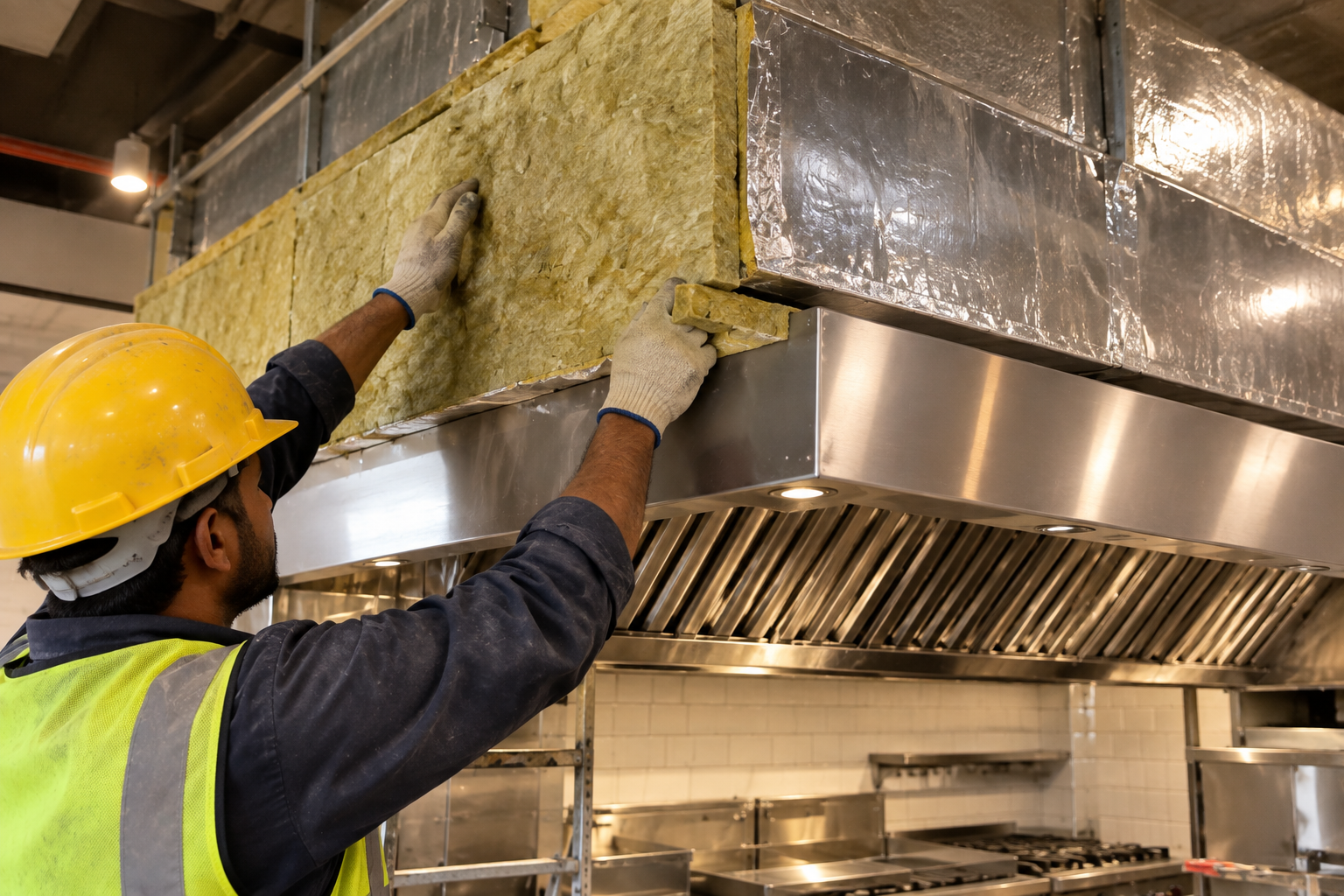
Basalt and slag are melted and spun to create the wool that is rockwool insulation. This process is also what gives rockwool insulation its rigidity. This insulation also has great thermal insulation, and excellent properties for sound and fire resistance.
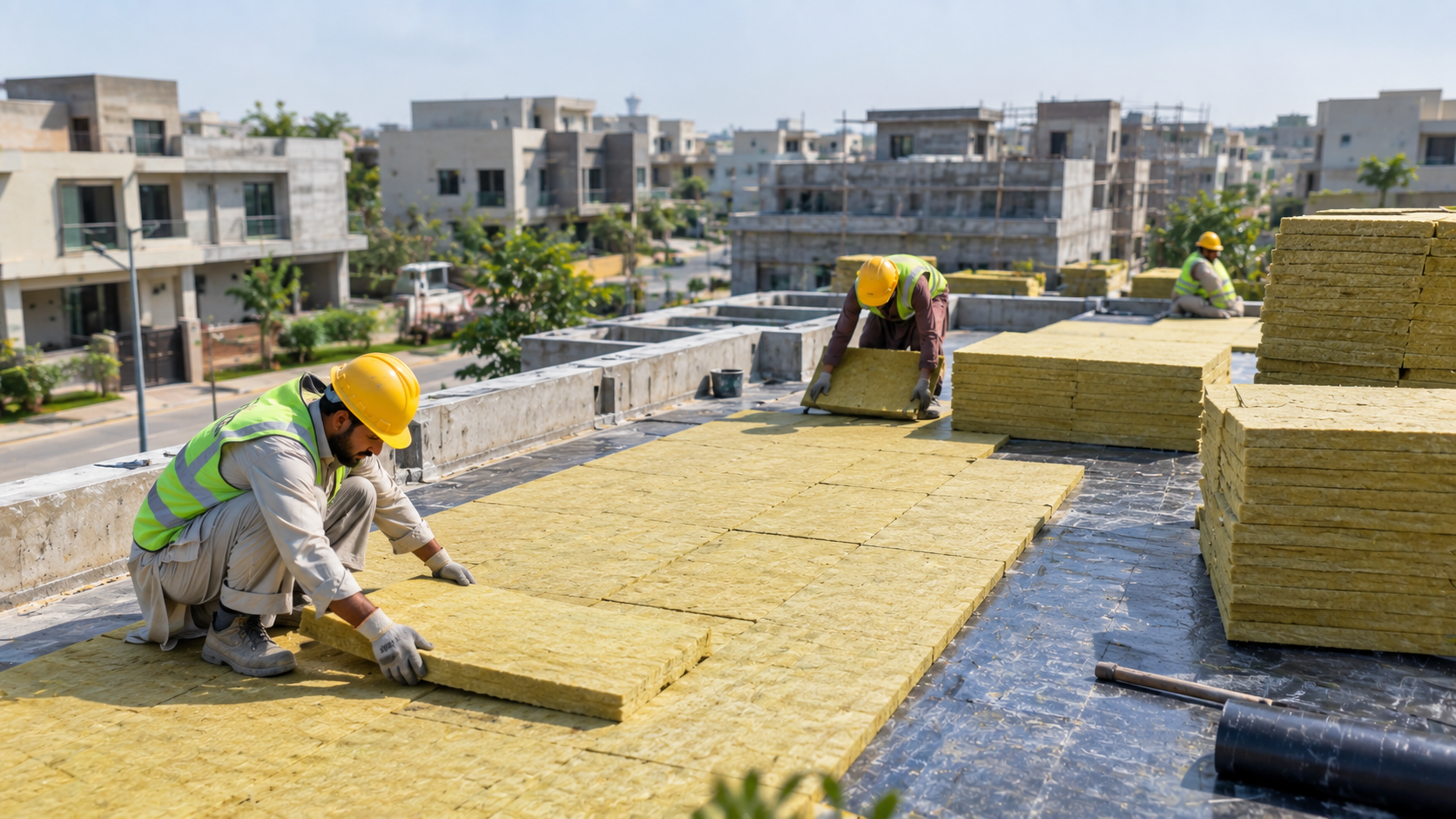
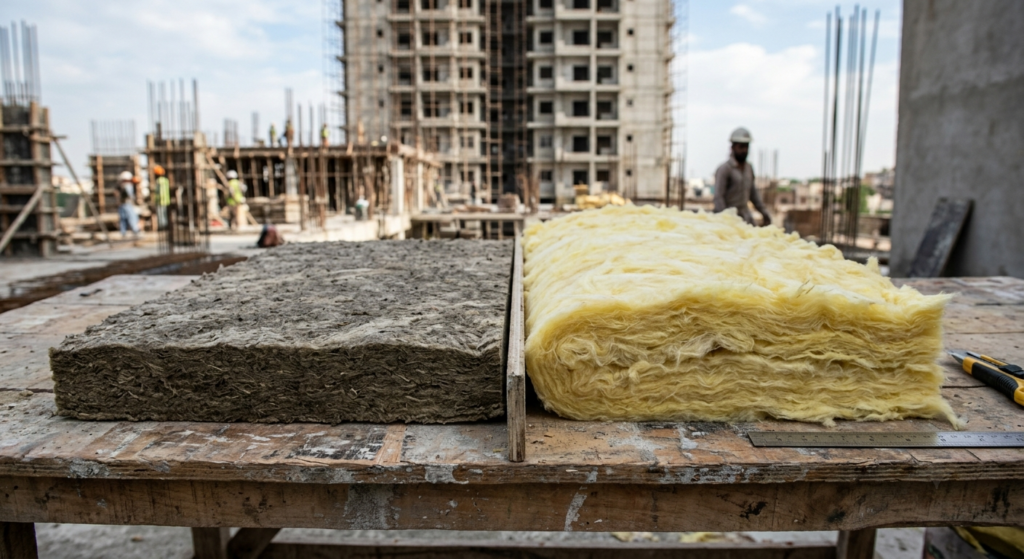
At a density of 40 and 200 kg/m³, Rockwool’s rigidity provides an advantage over glass wool. As a result, Rockwool is used in applications for insulation that needs to bear load or maintain shape over time, such as in external wall cladding or in flat roof systems.
Glass Wool: Composition and Production
In Glass wool production, Sand and recycled glass are melted and drawn into fibers. In comparison to rockwool, the glasswool production process is more or less the same, however, there is a significant difference in the characteristics of the end product.
Compared to rockwool, glass wool is more flexible, lighter, and less dense, typically between 10 and 48 kg/m³. Glass wool is supplied in rolls or batts. This enhances glass wool’s ease of installation to wall cavities, ceilings, or pitched roof systems. Compared to rock wool, the square meter price of glass wool is noticeably lower in Pakistan because it is the more commonly stocked insulation material.
Comparative Analysis of Glass Wool and Rockwool
Glass Wool and Rockwool Insulation in Pakistan’s Hot Climate
In terms of thermal insulation, both materials are good options, but they have differing performance.
For Rockwool, the thermal conductivity (lambda value) is 0.033–0.040 W/m·K, while for glass wool, it is in the range of 0.030–0.044 W/m·K. For most applications in a residential setting, this difference is negligible. Instead, how thick the insulation is installed and how it is sealed to minimize air gaps is more important.
In Multan, Hyderabad, and Quetta, both materials can be effectively used if applied properly. In Pakistan, the biggest thermal adversary is not the insulation material, but rather the concrete columns, rooftop water tanks and junctions that are thermally unsealed.
Fire Resistance: Where Rockwool Has a Clear Advantage
In terms of fire resistance, rockwool pulls ahead of glass wool substantially. Rockwool is non-combustible and can stand up to 1,000°C without melting and without releasing toxic gases. Although glass wool is non-combustible, it starts to soften and lose its integrity at temperatures of 300–400°C.
For fire rated buildings such as hospitals, hotels, schools and commercial high-rises, rockwool is the more appropriate choice. Rockwool is more appropriate for the assemblies mandated by the fire rated requirements of section 2 of Pakistan’s National Building Code.
Sound Insulation: Rockwool Again
Also, due to its higher density, rockwool makes a much better acoustic insulator. If the project in question includes various types of partition walls such as those between apartments, hotel rooms, offices or even home theaters, rockwool, at the same thickness as its glass wool counterpart, will provide far superior sound insulation.
In high density areas such as DHA in Karachi or Gulberg in Lahore, noise pollution is a concern and specifying rockwool for partition walls can help improve tenant comfort, and create a competitive advantage for the property through a better rental or resale value.
Moisture Resistance
Both rockwool and glass wool perform poorly when saturated with water, though rockwool performs marginally better and is treated to make it hydrophobic, so water beads and rolls off rather than being absorbed into the fibers. Persistent moisture in glass wool can lead to water absorption and a decline in thermal performance.
In the coastal areas of Pakistan especially, Karachi and Gwadar, water ingress as well as the high humidity poses a challenge. Due to the lack of adequate vapor barriers, rockwool would be a more appropriate choice, although barriers are still required.
Cost and Availability in Pakistan
Rockwool is the more expensive of the two insulation options. Products that are comparable in performance to rockwool can be priced 20-40% less than rockwool, and glass wool is also more readily available.
Rockwool needs to be imported more and can have longer lead times. For large, tight budgeted projects, the price of rockwool is a strong consideration. For small commercial projects that are placed in a higher value context, the cost can be justified.
Which Insulation is Right for Different Pakistani Building Types?
Residential Apartments and Houses: Glass wool is typically the right choice for insulation in these types of buildings. It is favorable in cost, simple and quick to install in wall cavities and sloped roofs, and performs well for thermal comfort in the majority of the climate zones in Pakistan.
Commercial and retail buildings: If fire rating and acoustic performance are key considerations, Rockwool is a good option for ceiling tiles and partition walls. For cost-effective roof insulation, a bulk fill of glass wool combined with a Rockwool facing layer is a good hybrid solution.
Industrial facilities and warehouses: In general, Rockwool is preferred, particularly for fire resistant, steel-framed buildings where acoustic performance is not critical.
High-rise residential towers: For external façade systems and party walls to meet the fire compartmentalization requirement, Rockwool is often the better choice.
What are the Health and Installation Considerations?
Both products can be irritating to the skin and to the respiratory system during the installation process. Glass wool and Rockwool both require PPE, however, glass wool has a finer fiber and can be more irritating.
Rockwool is more rigid and can maintain its shape. Glass wool batts and rolls require more care during installation to ensure that the insulation is not compressed.
Frequently Asked Questions
Which is better Rockwool or glass wool for roof insulation in Pakistan?
For flat concrete roof slabs (the most common roof type in Pakistan), Rockwool rigid boards are generally preferred because they are not compressible. Glass wool batts are better for non-walkable roof spaces, such as pitched or timber framed roofs.
What insulation is easiest to find in Pakistan?
Glass wool is less likely to be imported and can be procured through local suppliers and distributors in most major cities in Pakistan. Rockwool is more likely to be imported and has longer lead times, especially for specific densities and thicknesses.
Is glass wool or rockwool safe if I want to insulate wet areas like a bathroom?
Both glass wool and rockwool should not be in direct contact with water. If you are insulating walls next to a wet area, use a proper vapor barrier and consider rigid foam boards that are moisture resistant.
Do I need to follow any insulation standards for Pakistan?
The National Building Code (NBC) of Pakistan has sections that address both energy and fire standards. For fire-rated assemblies of public buildings, the NBC fire sections must be complied with. For the larger commercial and residential buildings, it is better to engage a licensed architect or a structural engineer who is familiar with the local practices.
What is the cost of insulation in Pakistan?
Pricing can be quite variable, especially for different Grades of the product and in different locations. As a general rule of thumb, glass wool batts can be procured for about PKR 150 – 300 per square meter and rockwool boards can be about PKR 300 – 600 per square meter and above, depending on thickness and density.
Making An Informed Choice For Your Project
There is no clear winner between rockwool and glass wool as there is no way to tell which is better, it is wholly dependent on your project needs, location and goals. For example, glass wool is the optimal choice for the majority of residential projects in Pakistan. In contrast, if you are undertaking a project where fire safety, acoustic privacy, or moisture are of the utmost importance, you should opt for rockwool.
It is best to speak to a project engineer or an insulation expert who understands local climates and building codes before you specify either of the insulation materials. The choice you make at the project specification stage is likely to impact the energy efficiency, comfort levels and building code compliance of the building for many years to come and will, therefore, need to be as optimal as possible.
Contact Pakistan Insulations today for a free consultation and quote.
Phone: +92-21-34529722
Email: [email protected]
Website: www.pakinsulation.com