Insulation for Textile Dyeing & Wet Processing Units in Pakistan
Textile is Pakistan’s largest export sector, and most of the conversations I have with mill owners about insulation are in the context of weaving and spinning sheds large roofs that require large amounts of air conditioning. Dyeing and wet processing units receives considerably less attention, even though it’s where much of a mill’s energy is actually spent, and where the wrong insulation choice fails fastest. Steam, hot water, humidity, and chemical vapor, make this one of the harshest environments an insulation system will ever face.
Why Wet Processing Isn’t Like the Rest of the Mill
A spinning or weaving shed is basically a dry, hot space with the goal of controlling heat and dust; the dyeing and finishing unit is the complete opposite, a hot, wet, steamy environment containing dye vats, jet dyeing machines, stenters, boilers, and kilometers of pipework carrying steam, condensate, and hot water. Heat is created and distributed on purpose here, and every bare surface along the way is a place where that expensive energy leaks out.
This is why insulation in a wet processing unit is as much about ensuring process efficiency as building comfort; fuel, whether gas, coal, or biomass, is one of the largest running costs in the entire mill, and a sizeable chunk of it is lost as heat from uninsulated or poorly insulated pipes, valves, tanks, and equipment surfaces.
Steam and Hot Water Pipework: The Biggest Opportunity
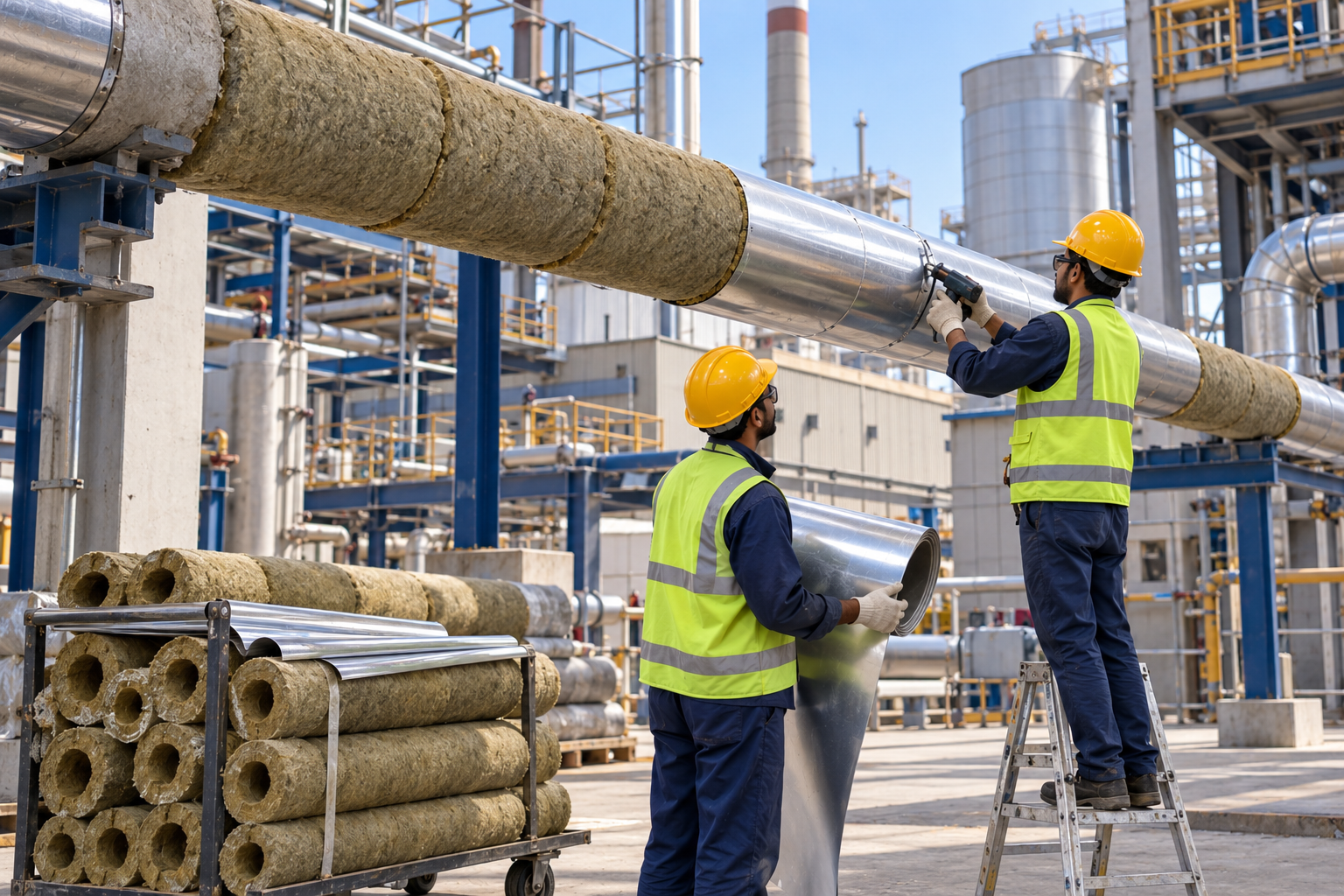
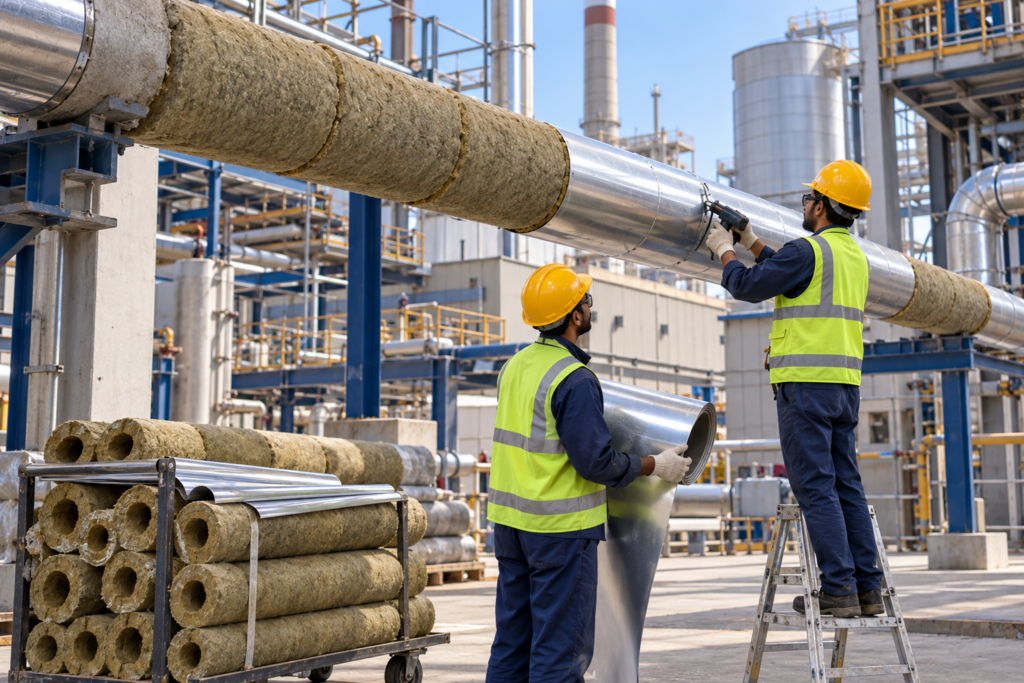
Steam lines running from the boiler house to dyeing machines, and hot water and condensate return lines are typically the single largest source of recoverable heat loss in a processing unit. A bare steam pipe continuously radiates heat, which necessitates the boiler house burning more fuel just to make up the difference. Properly insulating these lines using pre-formed rockwool pipe sections, finished with a metal or weatherproof cladding typically pays for itself quickly through reduced fuel consumption.
Valves and fittings are the places most commonly left bare, because they are awkward to wrap and removed during maintenance and never put back. A single uninsulated flange can lose as much heat as several meters of bare pipe, making removable insulation jackets for these fittings worth specifying as part of the original job, rather than an afterthought.
Dye Vats, Tanks, and Process Equipment
Dye baths, storage tanks for hot water and chemicals, and finishing equipment, such as stenters and dryers, all operate at elevated temperatures for long hours. Insulating the outer surfaces of these tanks and machines reduces the amount of energy required to maintain the process temperature, increases consistency of temperature from batch to batch, and just as importantly, reduces the amount of heat radiating out into the working area where operators spend entire shifts.
Consistency of process temperature matters directly to product quality in dyeing, as shade variation between batches is often attributable to temperature instability. Insulation isn’t a quality-control tool as such, but a well insulated system maintains temperature more reliably than a bare one.
Humidity and Corrosion: Where Standard Insulation Fails
The air within a dyeing unit is permanently humid, and often contains acidic or alkaline chemical vapors from the dyeing and finishing process. This is challenging for insulation in two ways; moisture absorbed into the insulation destroys its thermal performance, and chemical vapors attack both the insulation facing and the metal pipes and equipment underneath, accelerating corrosion.
It is therefore important to pay more attention to material and cladding choices in a wet environment, compared to in a dry industrial building. Insulation on pipes and equipment in wet processing areas would benefit from having a sealed, weather-, and vapor- resistant outer cladding, typically aluminum or stainless steel sheeting, with properly sealed joints so that humid air and chemical vapor cannot access either the insulation or the surface beneath. Where insulation gets wet, it needs to be replaced, as it will both cease insulating and trap moisture against the metal, causing corrosion under insulation that may be unnoticed until a pipe fails.
Roof and Wall Insulation in the Processing Hall
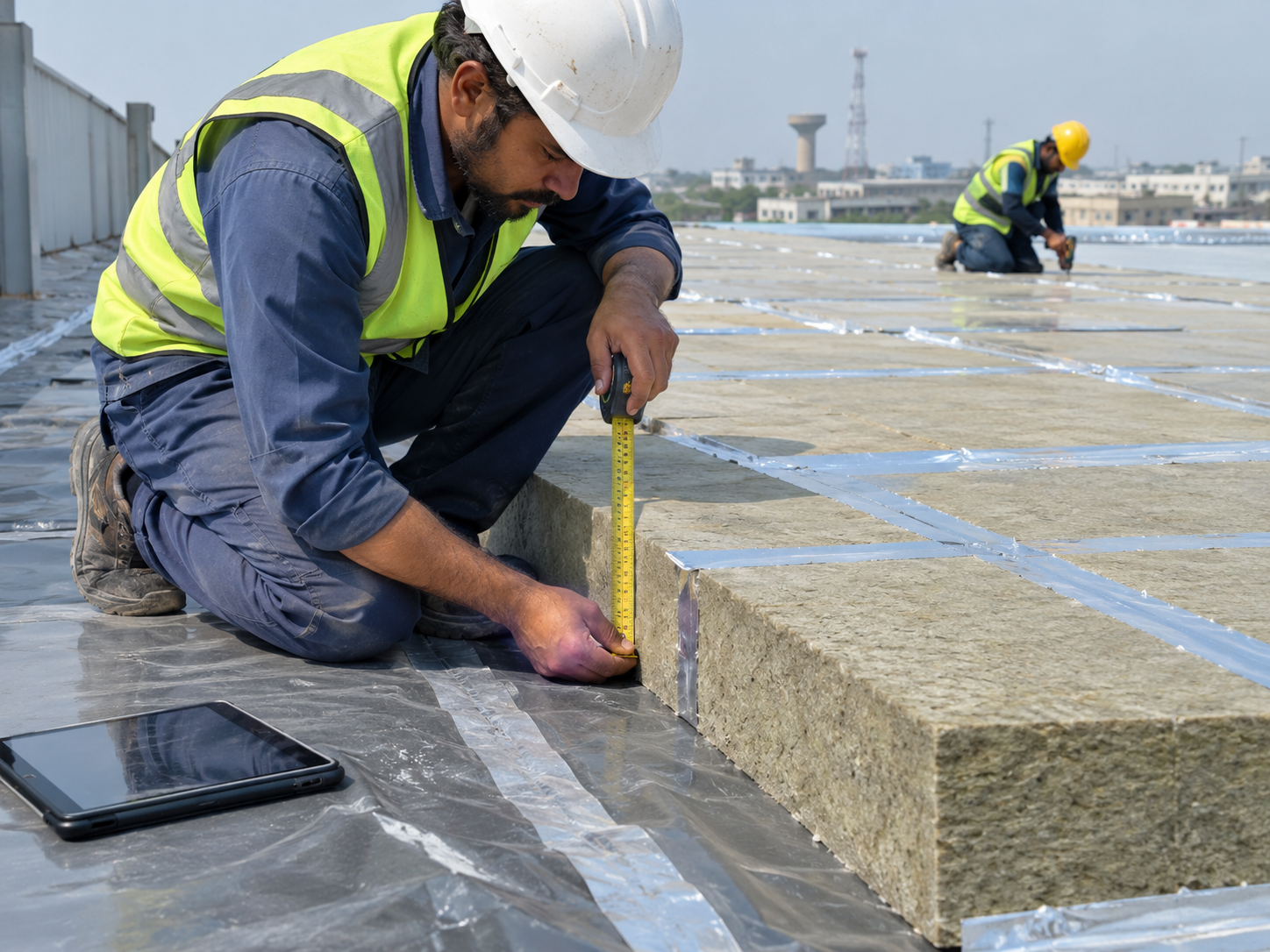
The building envelope of a dyeing unit still matters, but priorities differ from a dry shed. Steam and humidity rising to the roof create a serious condensation risk on cold surfaces, and an uninsulated metal roof in a processing hall can drip condensed water back onto machines, fabric and workers. A properly specified roof insulation system with an effective vapor barrier reduces this problem, protects the structure from corrosion, and maintains a more comfortable working area.
Vapor barrier detailing is particularly important here, as moisture will seek any gap in the barrier and condense inside the roof assembly, necessitating careful sealing of seams and penetrations, rather than the casual attitude that may be taken in a dry warehouse.
Worker Safety and Comfort
Uninsulated hot surfaces pose a direct burn risk in a space where people work close to pipes, tanks, and machines for long shifts. Insulation will bring surface temperatures down to a safe level, reducing the risk of contact burns, and lowering the radiant heat load on the people working nearby. In Pakistan’s summer heat, when a processing unit is already uncomfortably hot, removing the extra heat radiating from bare steam lines and vats makes a noticeable difference to working conditions, and over time, to productivity and retention of skilled operators.
Fire and Process Safety
Dyeing and finishing units manage chemicals, fuels, and fine, readily-burning textile fibres; non-combustible insulation, such as rockwool, is the standard choice of hot pipework and equipment in these settings due to it not adding fuel to a fire, and maintaining its integrity at high temperatures. Combustible insulation materials, near heat sources, steam lines, or boilers, introduces a risk that the other safeguards in the plant should not need to compensate for.
What Gets Specified Wrong Most Often
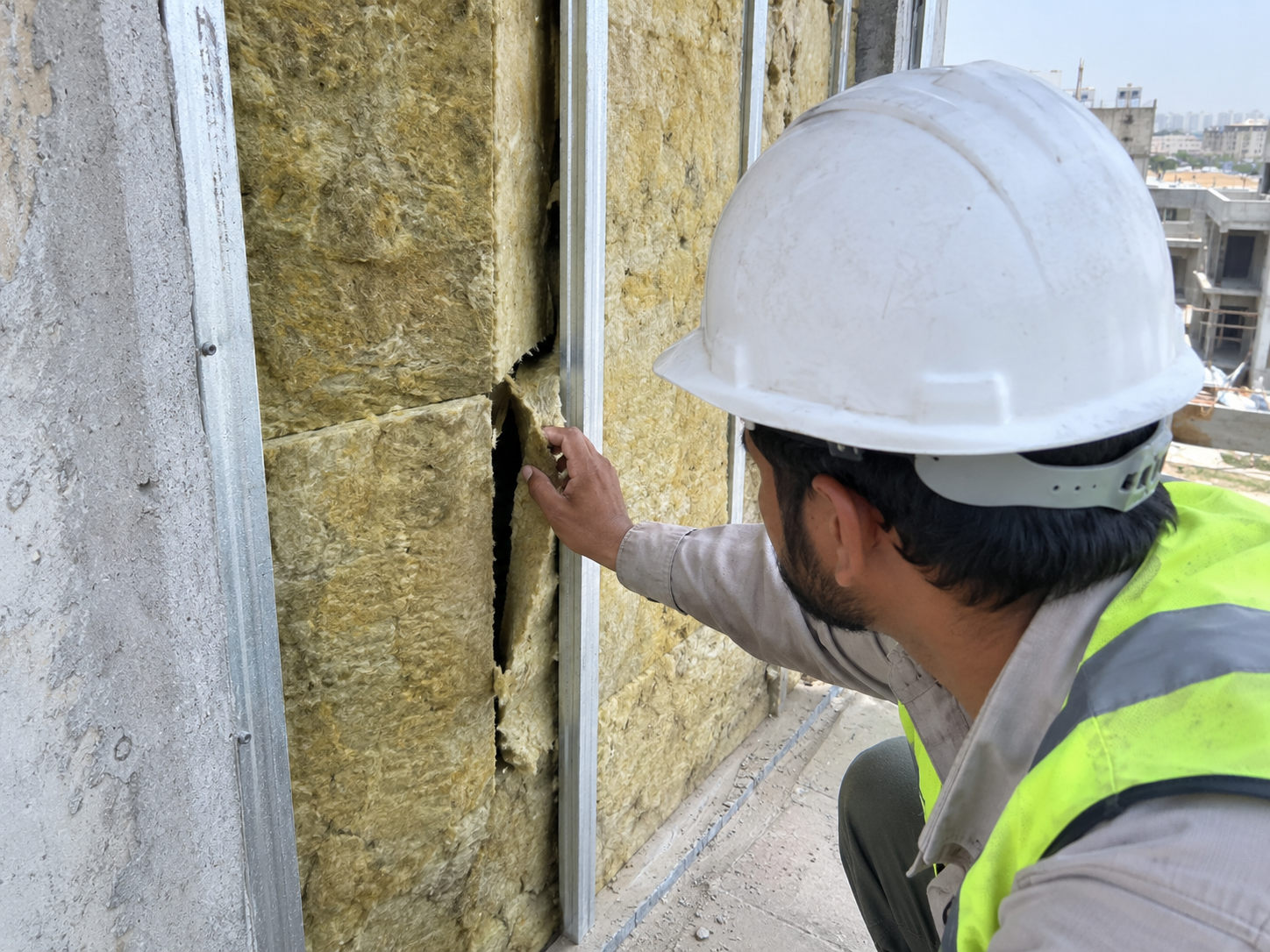
The most common mistakes are to leave valves, flanges, and fittings uninsulated, which quietly waste a significant chunk of the energy the rest of the pipe insulation is saving. It is also a common mistake to use the same insulation and cladding in the wet processing area that was used in the dry sheds, not accounting for the permanent humidity and chemical vapor, which causes wet insulation and corrosion under insulation within a few years. Finally, maintenance is often ignored, so that cladding damaged by washdowns or impact is never repaired, allowing moisture in and degrading a system that was working well when it was installed.
Why This Matters for Pakistan’s Textile Sector
Pakistan’s textile exporters compete on cost, and are increasingly asking for environmental performance as international buyers question energy and emissions in their supply chains. Fuel is one of the largest controllable costs in a processing unit, and well-specified insulation is among the most reliable ways of reducing it without changing the process itself. Getting the material, cladding and detailing right for a wet, humid, chemical-laden environment is what separates an insulation system that continues to pay back for years from one that quietly fails and needs replacing.
Frequently Asked Questions
Why is insulation different in a textile dyeing unit than in a spinning or weaving shed?
Dyeing and wet processing units manage steam, hot water, constant humidity, and chemical vapor, which makes moisture control, corrosion protection, and pipe and equipment insulation more critical than in the mostly dry, hot environment of a spinning or weaving shed.
What insulation is used on steam pipes in textile mills?
Pre-formed rockwool pipe sections, finished with an aluminum or stainless steel cladding are the standard choice, as rockwool is non-combustible and handles high temperatures; the metal cladding protects it from moisture and mechanical damage.
Do valves and flanges need to be insulated?
Yes. Uninsulated valves and flanges can lose as much heat as several meters of bare pipe. Removable insulation jackets allow them to be insulated while still allowing access for maintenance.
What is corrosion under insulation and why does it matter in dyeing units?
It occurs when moisture gets into insulation and sits against the metal surface beneath, corroding it – it is hidden from view and so may not be discovered until a pipe fails. In humid, chemical-laden dyeing units the risk is higher, which is why sealed cladding and prompt replacement of wet insulation is important.
Does insulating process equipment improve product quality?
It can help indirectly. Insulated dye vats and equipment maintain a more consistent temperature, which supports batch-to-batch consistency although insulation is not a substitute for proper process control.
Contact Pakistan Insulations today for a free consultation and quote.
Phone: +92-21-34529722
Email: [email protected]
Website: www.pakinsulation.com