Retrofitting Insulation in Older Buildings in Lahore & Karachi
TL;DR: Older buildings in Lahore and Karachi were rarely built with modern insulation standards in mind, leaving them vulnerable to extreme heat, high energy bills, and poor indoor comfort. Retrofitting insulation – using materials like Rockwool or polyurethane foam – is one of the most cost-effective ways to fix these issues without major structural overhauls.
Pakistan’s two largest cities are also two of its most energy-demanding. Karachi’s coastal humidity and Lahore’s dry, scorching summers push air conditioning systems to their limits – and in buildings constructed decades ago, those systems work even harder than they should. Much of the existing building stock in both cities was designed with little to no thermal insulation, a gap that now costs building owners significantly in energy bills, occupant discomfort, and structural wear.
Retrofitting insulation into these older structures isn’t a luxury upgrade. For many property owners, it’s fast becoming a practical necessity.
Why Older Buildings in Lahore and Karachi Lose So Much Energy
Buildings constructed before the 1990s – and many built after – rarely complied with modern thermal performance standards. In Karachi, flat rooftops and single-brick walls absorb heat throughout the day, radiating it back into interiors well into the night. In Lahore, the same construction patterns create buildings that are freezing in winter and nearly unbearable in summer.
The core problem is simple: heat moves freely through uninsulated walls, roofs, and floors. Without a thermal barrier, cooling and heating systems run continuously to compensate, driving up electricity consumption and accelerating equipment wear. According to energy audits conducted across South Asian commercial buildings, poorly insulated structures can lose up to 40% of their conditioned air through the building envelope alone.
Older industrial and commercial properties face an added layer of complexity. Pipe networks, boilers, and process equipment installed decades ago often lack any insulation whatsoever, resulting in both energy waste and safety hazards.
What Does Retrofitting Insulation Actually Involve?
Retrofitting means adding insulation to an existing structure – one that was either never insulated or inadequately insulated at the time of construction. Unlike new builds, retrofit projects must work around existing walls, ceilings, mechanical systems, and occupants.
The good news is that modern insulation materials and installation methods make this far more achievable than it once was. The key is selecting the right material for the right application.
Rockwool for Walls, Roofs, and Industrial Pipes
Rockwool – a mineral wool product manufactured from volcanic rock – is one of the most versatile retrofit solutions available in Pakistan. Pakistan Insulations (Pvt.) Ltd., established in 1986, has been manufacturing Rockwool under the Termolan brand for nearly four decades and remains the country’s leading Rockwool producer.
Rockwool is well-suited for retrofitting because it:
- Provides strong thermal resistance across a wide temperature range
- Offers fire resistance, an important factor in older buildings with limited fire safety infrastructure
- Absorbs sound, reducing noise transmission between floors and rooms
- Comes in flexible formats – blankets, rigid boards, and pre-formed pipe covers – that adapt to irregular surfaces common in older construction
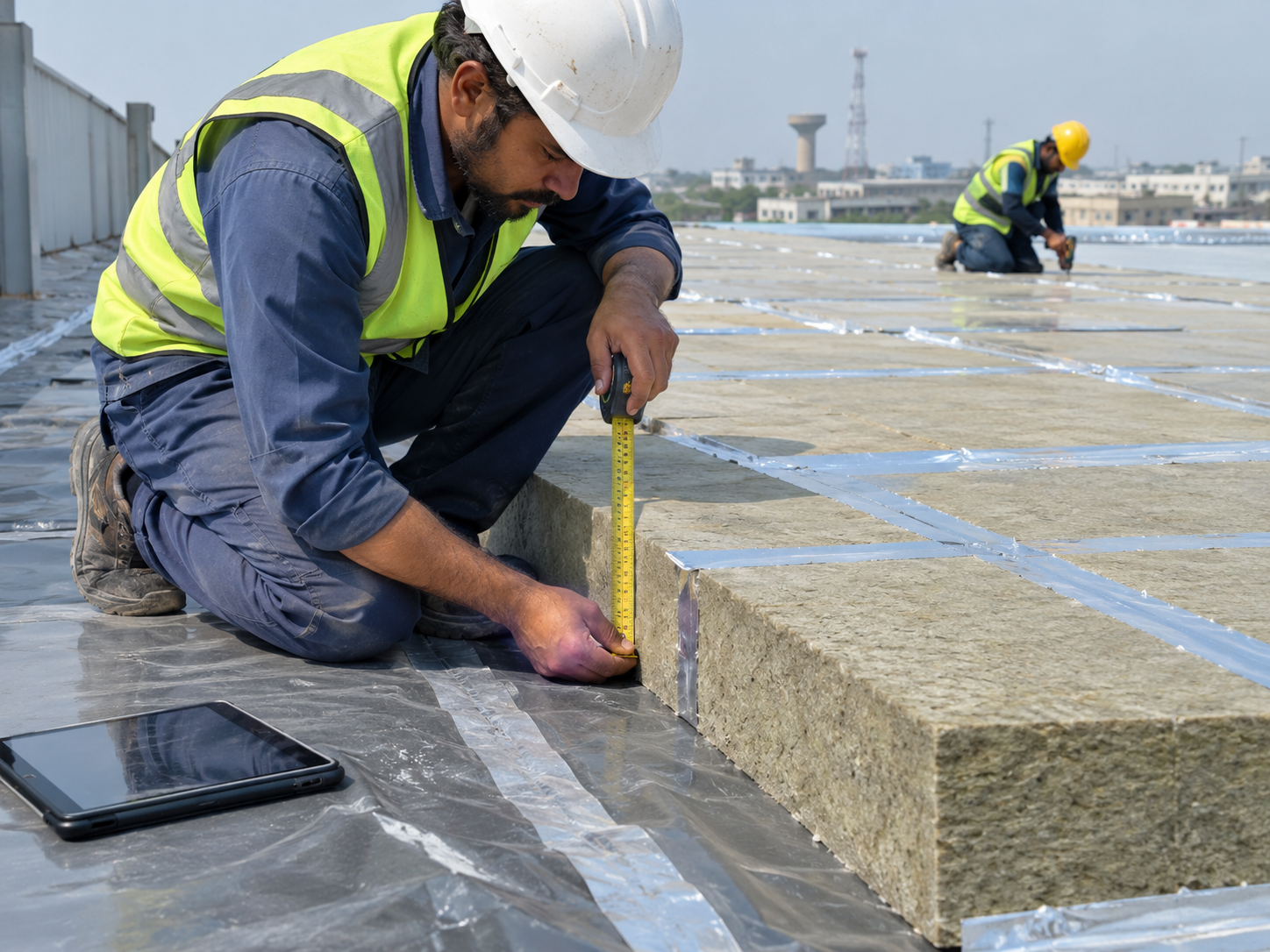
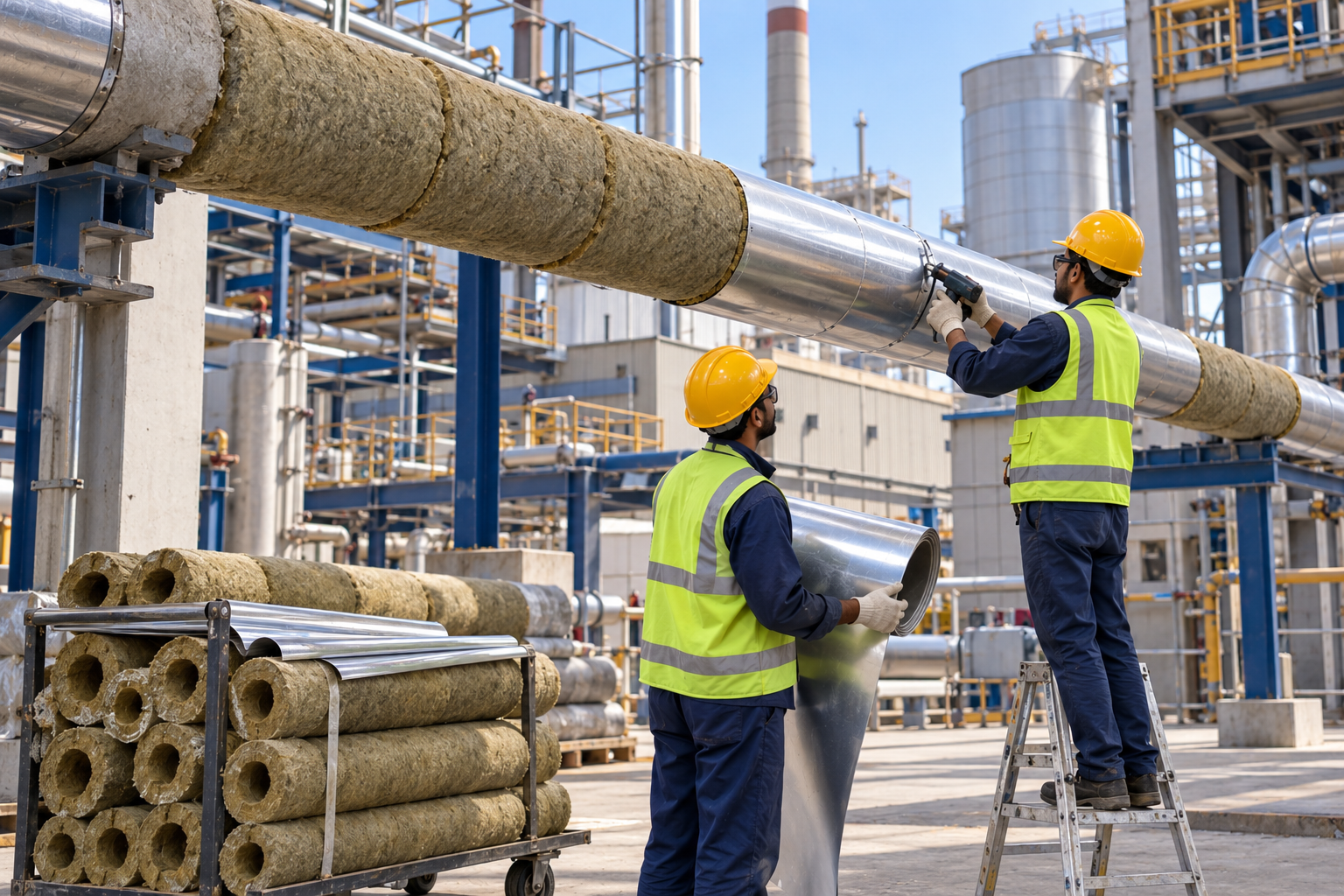
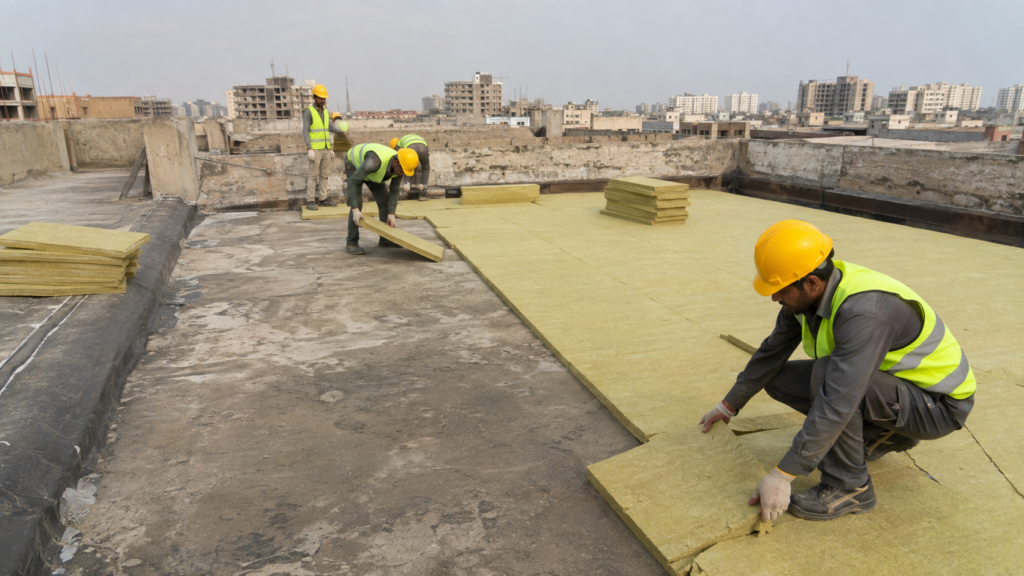
For rooftop applications in Karachi, Rockwool boards can be installed beneath waterproofing membranes to form a continuous thermal barrier. In Lahore’s colder winters, the same rooftop treatment prevents heat loss from top-floor spaces. For industrial pipe networks, pre-formed Rockwool pipe covers are installed directly over existing pipework with minimal disruption to operations.
Polyurethane Foam for Cold Storage and Sealed Applications
For cold storage facilities, food processing plants, and pharmaceutical spaces requiring precise temperature control, polyurethane foam insulation offers superior thermal performance in a compact thickness. Pakistan Insulations has been installing polyurethane foam solutions since 1995, covering cold rooms, cold boxes for fishing vessels, and cryogenic applications across the country.
In retrofit scenarios, polyurethane foam is particularly useful where space is limited and maximum thermal efficiency is required per centimeter of material.
How to Approach a Retrofit Project in an Occupied Building
One of the most common concerns building owners raise is disruption. Can insulation be installed while the building is still in use? In most cases, yes – but the approach matters.
Prioritize the roof first. Roof retrofits typically have the highest impact on thermal performance and can be completed without disturbing interior spaces. In both Lahore and Karachi, rooftop heat gain accounts for a substantial portion of overall cooling load, making this the highest-value starting point.
Address pipe and equipment insulation in phases. Industrial and commercial buildings with exposed pipe networks can have insulation installed in sections, working around operational schedules. Pre-formed pipe covers are designed for fast installation with minimal downtime.
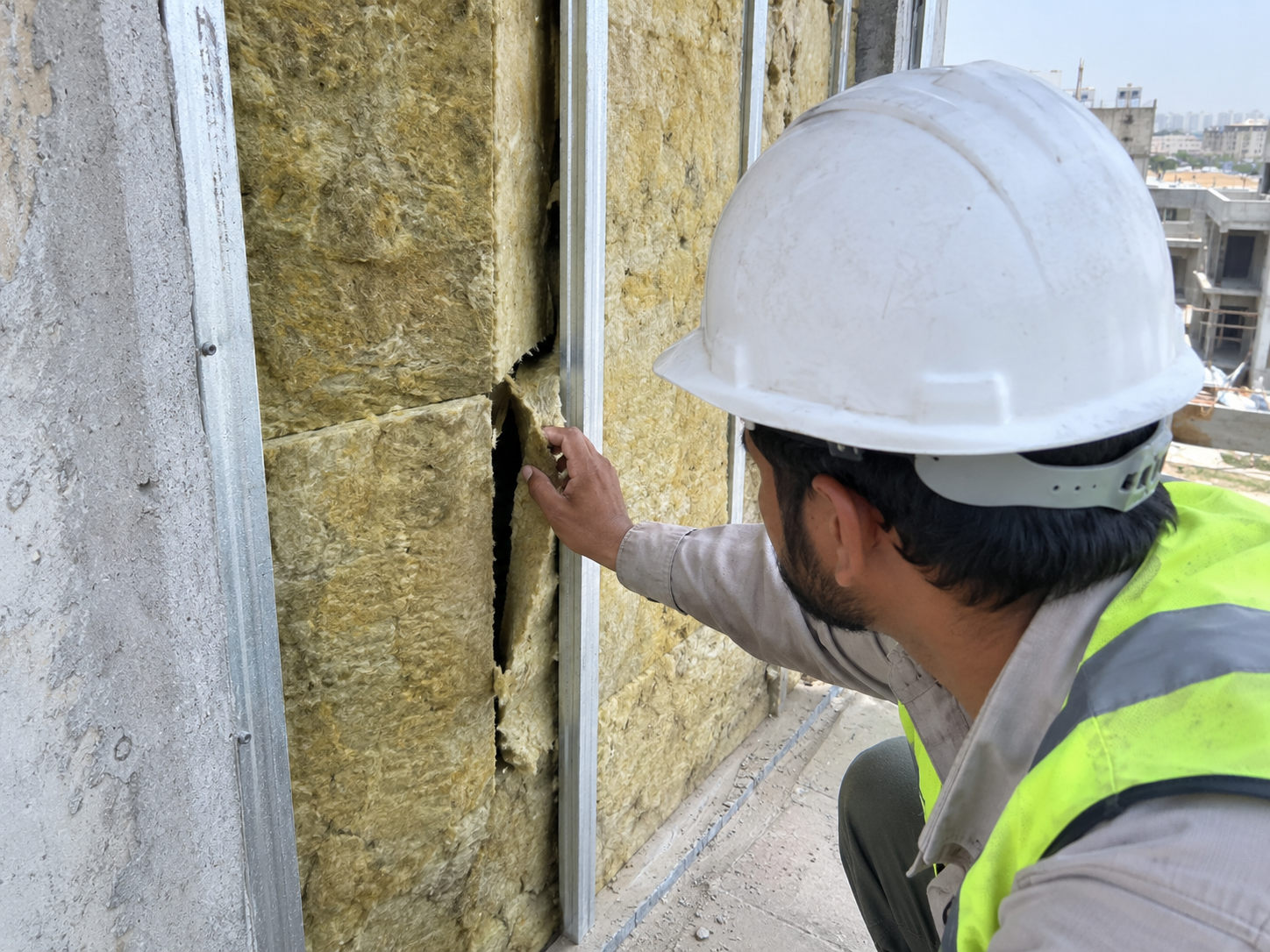
Consider wall insulation as a longer-term phase. Interior wall insulation requires more significant intervention, often involving removal of existing finishes. For most commercial and residential building owners, this is better tackled during a planned renovation rather than as a standalone project.
Engage a qualified insulation contractor early. Retrofit projects involve structural, thermal, and sometimes fire compliance considerations that require professional assessment. An experienced contractor can identify which materials and configurations will deliver the best results for a specific building type and usage pattern.
What Are the Long-Term Benefits of Insulation Retrofitting?
The case for retrofitting comes down to three outcomes: lower energy costs, better indoor conditions, and longer building life.
Energy savings are typically the most immediate and measurable benefit. Reducing heat gain through the roof and walls means air conditioning systems cycle less frequently, cutting electricity consumption. In cities where industrial electricity tariffs have risen sharply, the payback period on a well-executed insulation retrofit can be surprisingly short.
Occupant comfort improves significantly when surface temperatures inside a building are stabilized. Rooms that were previously unusable during peak summer months become functional. In commercial settings, this directly affects productivity and tenant satisfaction.
Structural protection is a less obvious but equally important benefit. Uninsulated concrete and brick surfaces in Karachi’s humid coastal climate are prone to condensation, which accelerates corrosion of embedded steel reinforcement over time. Proper insulation reduces moisture-related deterioration, extending the effective lifespan of the building envelope.
Choosing the Right Insulation Partner for Lahore and Karachi Projects
Not all insulation materials or contractors are created equal. For older buildings with specific structural characteristics, working with a manufacturer that understands local conditions, building typologies, and installation requirements is critical.
Pakistan Insulations (Pvt.) Ltd. has worked on retrofit and new-build projects across industrial, commercial, and cold chain sectors – including major projects for clients such as Engro, PARCO, and Rousch Power. With 38+ years of experience, the company brings both material expertise and on-site installation capability to retrofit projects of varying scale and complexity.
Start with a Professional Assessment
Retrofitting insulation in an older building is not a one-size-fits-all exercise. The right solution depends on the building’s construction type, current condition, how it’s used, and what outcomes the owner is prioritizing. A professional energy or insulation assessment is the most reliable starting point – it identifies where heat loss or gain is greatest and maps out a phased upgrade plan that fits both the building’s needs and the owner’s budget.
If your building in Lahore or Karachi is costing you more to cool and heat than it should, the problem is unlikely to resolve itself. Contact Pakistan Insulations to arrange a consultation and find out what retrofitting insulation could do for your property.
Frequently Asked Questions
What types of insulation are best for retrofitting older buildings in Karachi and Lahore?
Rockwool (mineral wool) is the most widely used retrofit insulation material in Pakistan due to its thermal performance, fire resistance, and versatility across wall, roof, and pipe applications. Polyurethane foam is preferred for cold storage and sealed environments requiring high thermal efficiency in limited space.
How long does a building insulation retrofit typically take?
Timeline varies by scope. A rooftop insulation retrofit on a mid-sized commercial building can be completed in a few days. Larger industrial pipe insulation projects are typically phased over weeks to minimize operational disruption. A qualified contractor can provide a project-specific timeline after an initial site assessment.
Will retrofitting insulation require structural changes to the building?
Roof and pipe insulation generally require no structural changes. Interior wall insulation may involve removal and reinstatement of wall finishes, which is usually planned around scheduled renovation works rather than carried out independently.
Is Rockwool safe to use in occupied commercial buildings?
Yes. Rockwool is a non-combustible material with a melting point above 1,000°C, making it one of the safer insulation choices for occupied buildings – particularly older structures with limited fire safety systems. It does not support the spread of flame and can contribute to improved fire compartmentalization.
How do I know if my older building in Lahore or Karachi needs insulation retrofitting?
Key indicators include high electricity bills driven by air conditioning load, rooms that remain uncomfortably hot despite cooling systems running continuously, visible condensation on interior walls or ceilings, and aging pipe networks with no insulation cladding. An energy audit or professional insulation assessment will confirm the extent of heat loss and the most cost-effective remediation options.
Contact Pakistan Insulations today for a free consultation and quote.
Phone: +92-21-34529722
Email: [email protected]
Website: www.pakinsulation.com