Insulation’s Role in Green Certifications LEED & EDGE in Pakistan
More and more developers are seeking LEED or EDGE certifications in Pakistan, and most of them would be surprised to know the amount of points that actually come down to specifying the right insulation. Solar panels on the roof and low-flow showerheads contribute only a small percentage to the overall score of a project, while insulation, the unglamorous white stuff tucked away in walls and ceilings, actually determines the building’s performance after completion.
Having assessed dozens of building applications for credits, I’ve seen many a project with exemplary fixtures fail the energy modeling portion due to insufficient information on the envelope. The building’s envelope is precisely where the score is made – the performance is compared to standard energy-saving practices in the region, and its percentage determines the project’s point category in LEED or EDGE. Let’s talk numbers.
Why Do Certification Bodies Focus On It?
LEED and EDGE are, ultimately, performance-based certifications. It doesn’t matter how many energy-saving devices you specify; it only matters how much energy is saved and the building’s overall efficiency. In LEED, the latter is measured against ASHRAE 90.1, while EDGE has its own framework and tools. However, both certifications have building envelopes, insulation, and thermal performance as integral elements.
A developer cannot affect the operation patterns of an occupied building; they can only design their future tenants’ behavior in theory through the building’s performance. Essentially, you specify the envelope insulation to influence the amount of energy wasted on heating and air conditioning and achieve the desired score.
On the other hand, EDGE appears to be a more feasible option for Pakistani developers since it requires a 20% reduction in energy, water, and embodied materials compared to conventional buildings in the region and offers a simpler energy model. For most local commercial and residential projects, an EDGE certification is a realistic goal, and the points for insulation contribute significantly to the overall percentage.
Where Does The Energy Go?
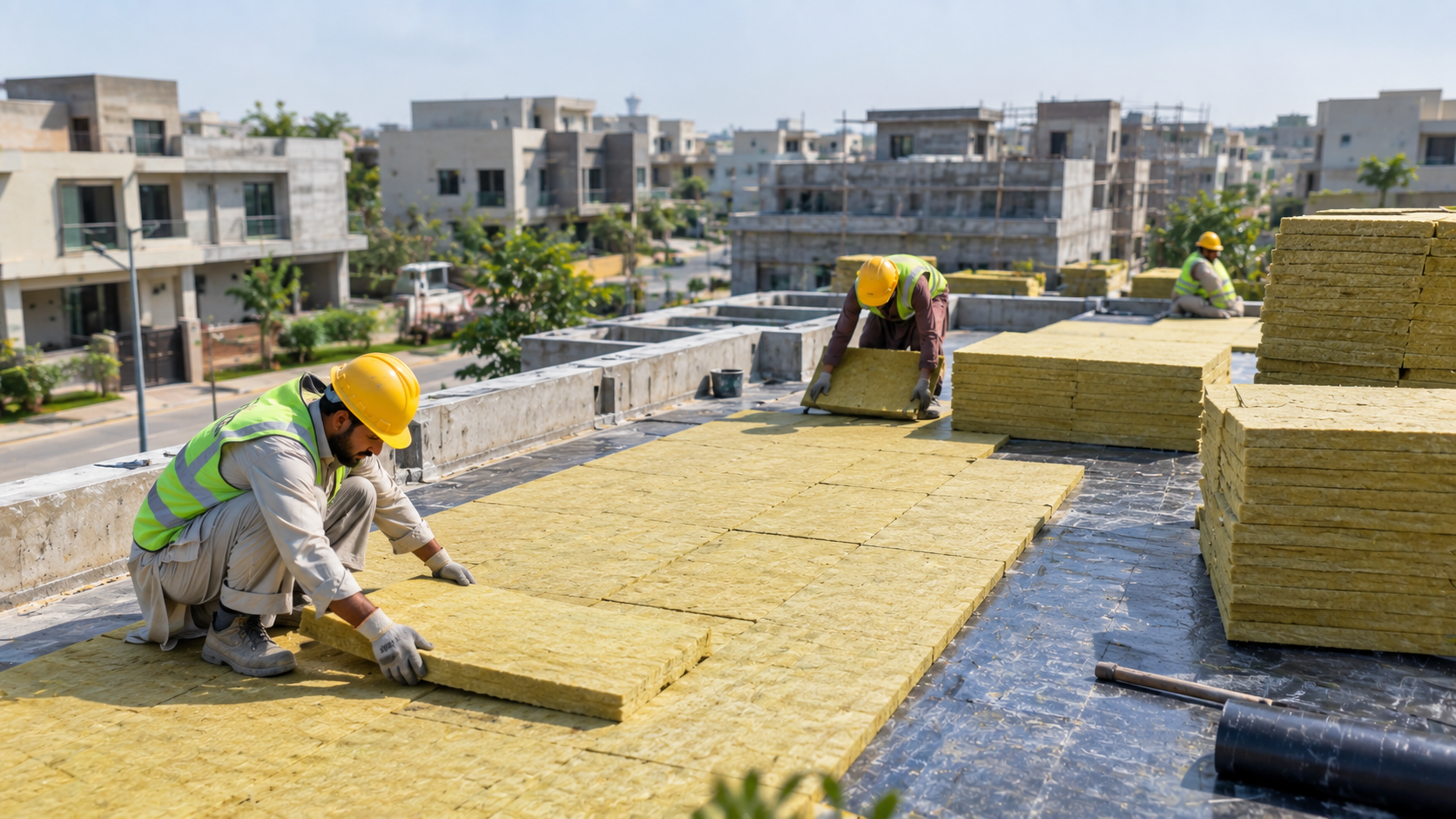
Lahore, Islamabad, and Karachi have an average of eight months of cooling period per year, and the unchecked heat that comes through flat reinforced concrete roofs in uninsulated buildings makes up a considerable portion of it. Even with evening temperatures dropping by several degrees Celsius, the concrete continues to radiate the heat it soaked up during the day.
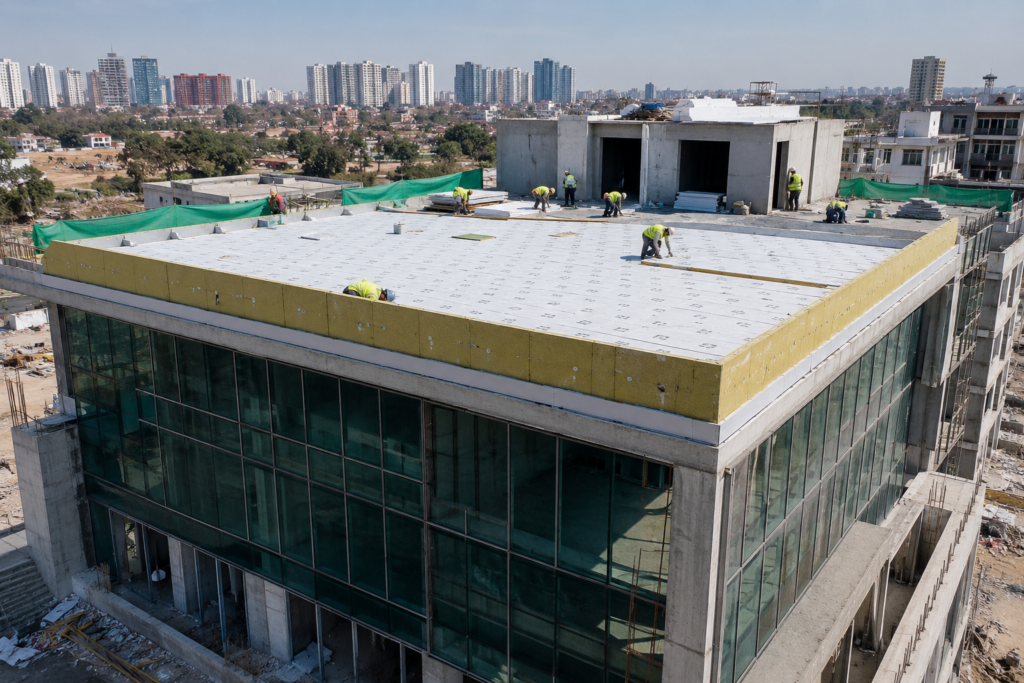
Adding another layer to a flat roof is usually sufficient to reduce the temperature inside the building by several degrees – thus, cutting the load on the building’s air conditioning system enough to gain EDGE points for energy efficiency and make a measurable difference in LEED’s optimization. A simple rigid insulation board or reflective membrane with rockwool under the waterproofing layer can be enough to achieve this.
While walls also play a part in insulation, especially west-facing ones facing the late afternoon sun, roof insulation is generally less expensive and offers more score points due to the lack of attention paid to it in Pakistani construction. Let’s talk about the actual scoring.
LEED Credits That Depend On Insulation
There are several credit categories in LEED that involve the building’s insulation.
First and foremost, this is Energy and Atmosphere, where projects score points for optimizing energy performance. The actual percentage of points depends on how much you can reduce the energy consumption below the ASHRAE baseline for similar buildings. Upgrading the insulation is typically one of the most economically viable ways to do so, compared to optimizing the equipment and power systems.
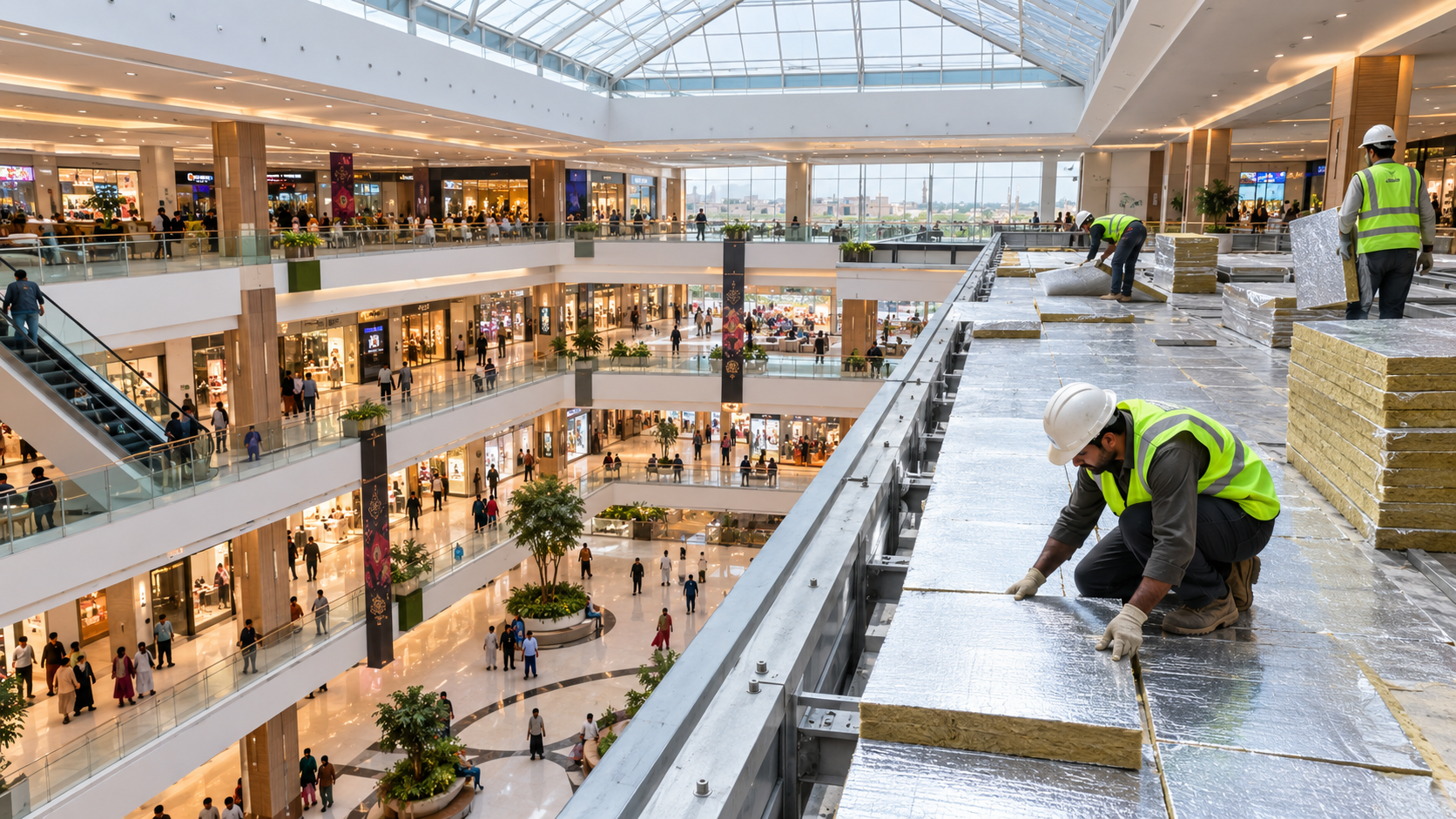
Some LEED rating systems offer points for Enhanced Envelope Commissioning – verifying the correct installation of all envelope components to ensure that no gaps or weak spots in insulation allow unwanted air or heat to enter or escape the building. Thermal imaging and other tools are used in the process, so a project that scored high on paper but had substandard work performed can find itself struggling to prove its performance.
Indoor Environmental Quality is another category that may benefit from insulation, albeit indirectly – some soundproofing insulation options such as rockwool have excellent acoustic performance and contribute to noise reduction between adjacent buildings or units.
EDGE’s Easier But Still Demanding Calculations
Similarly to LEED, EDGE’s calculations are primarily based on the characteristics of the building envelope.
While certifying a project under EDGE, developers should rest assured that the software they use to estimate a project’s energy savings is built on fundamental principles of physics. It uses information on the U-value of the walls and roof, the efficiency of heating and air conditioning systems, the characteristics of the glazing, and the lighting power density.
The U-value of the building envelope elements is basically determined by the thickness and material of insulation – which makes it the simplest and most economical way to improve energy performance and achieve a higher score in EDGE. Developers frequently attempt to increase the efficiency of their chillers and air conditioners to reach the 20% threshold, but neglect the state of their building envelope – and they are surprised to find that an additional layer of insulation would have brought them right to the necessary level.
How To Approach Specification
If you plan to pursue either of the two certifications, keep in mind that insulation cannot be left out as an after-thought. It must be included in the design specifications based on calculations.
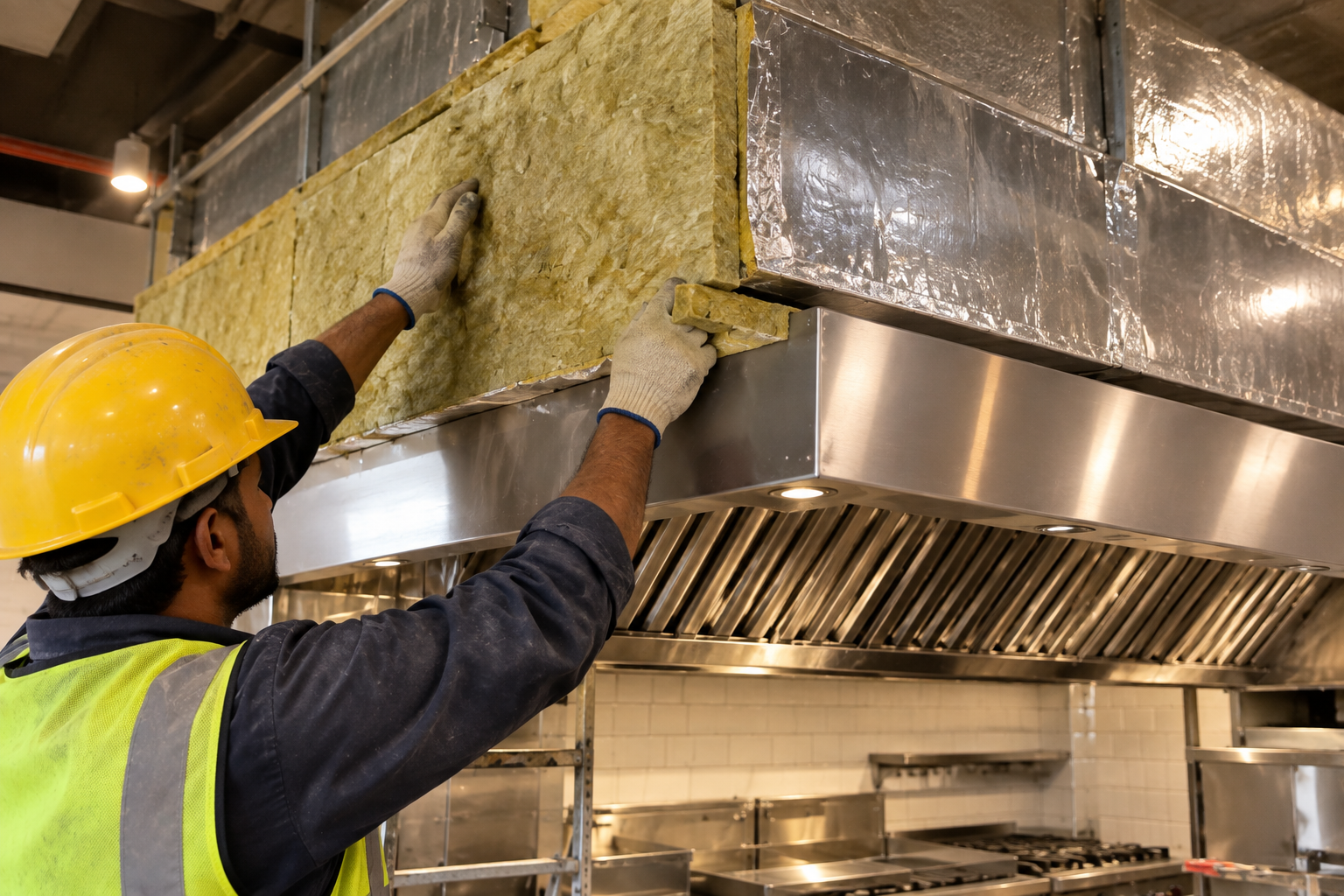
Furthermore, when choosing the thickness and material for the insulation, remember the fire safety regulations – the local building codes often stipulate particular standards for materials used in large buildings, such as high-rises, and rockwool often proves to be the better choice.
The continuity of the insulation is frequently more critical than its general presence – the junction between the roof and walls often acts as a thermal bridge, reducing the overall efficiency of the insulation. Moreover, you can expect certification assessors to ask you about it. Rockwool’s performance benefits in terms of sound insulation frequently allow it to fulfill more than one purpose and score additional points during the commissioning process.
The Question Of Value
One critical question that often arises concerning green building certification is whether or not the cost of insulation upgrades is justified – in other words, if and when this investment can be recovered through decreased energy expenditures.
In the case of EDGE, it generally pays for itself in a matter of years – not only does the building save on cooling costs, but there are also tax incentives in Pakistan for buildings that reduce their energy consumption by at least 20%. On the other hand, the value of a LEED certification frequently extends beyond direct savings through decreased power costs. A company holding an international presence with ESG compliance requirements, for example, may be particularly interested in leasing space within a LEED-certified building. From this perspective, insulation’s costs are a tiny fraction of overall expenditures, but they enable ongoing financial gains through reduced power expenses.
Common Specification Mistakes
When it comes to common mistakes, there are several things developers tend to do wrong when specifying insulation for a project that is to be certified.
They provide general information on insulation but fail to comment on the quality of work performed. A thinner layer of compressed batts or the lack of insulation near penetrations can considerably impact the performance.
They also overlook the importance of continuity and treat the insulation as a singular component, ignoring the interplay between different elements. The benefits of higher-performance wall insulation, for instance, would be negligible if the roof insulation failed.
Finally, developers frequently fail to address the issue in time, waiting to consult a professional who understands both the local market and the requirements of the chosen certification system.
The State Of The Market For Developers In Pakistan
It is becoming increasingly common for buyers to request particular certifications for the buildings they lease or purchase, and local institutional investors or export-focused multinationals may soon follow suit.
I believe that the insulation will be one of the most vital aspects of green certification in Pakistan for years to come due to its unique position between a relatively low impact on the building’s overall construction costs and exceptionally high efficiency. Developers who want to score points via insulation should address a specialist in building physics when discussing the design with an architect and structural engineer.
FAQ
Can insulation earn a building LEED or EDGE certification?
Insulation is a critical component of a building’s energy performance. While it will not directly earn a building certification, it enables it by contributing to the project’s overall score.
Is rockwool necessary for LEED and EDGE, or can glass wool suffice?
LEED and EDGE do not specify which insulation material should be used for certification. The key performance indicators, as well as fire safety regulations if applicable, must be met regardless of material. Rockwool, therefore, is a viable option in those cases when fire safety regulations coincide with thermal performance requirements.
How do insulation’s characteristics impact an EDGE certification score?
It depends on the building’s needs and design, but generally speaking, it is one of the most cost-effective ways to improve the energy performance of a building in Pakistan.
Does the insulation thickness need to be verified after construction for certification purposes?
It depends on the required level of detail for a specific project, but for LEED it can be necessary to prove the Enhanced Commissioning credits. For EDGE, it is a requirement for certain levels of certification.
Is it more expensive to construct a certified building in Pakistan, considering insulation?
For the majority of projects, the additional costs constitute a minor percentage of the overall construction costs and are easily justified by the benefits of a certified building.
Contact Pakistan Insulations today for a free consultation and quote.
Phone: +92-21-34529722
Email: [email protected]
Website: www.pakinsulation.com