Insulation for Shopping Malls & Retail Complexes in Pakistan
Shopping malls and large retail complexes in Pakistan are amongst the most energy intensive buildings in the country. High footfall, continuous lighting, escalators, food courts and the constant running of HVAC systems all contribute to an enormous electricity consumption, much of it driven by heat coming in through uninsulated or poorly insulated roofing and walls.
In cities such as Karachi, Lahore and Islamabad where summer temperatures regularly exceed 40°C, a retail complex without adequate insulation is fighting a losing battle against heat. Air conditioning systems are working at full capacity, electricity bills soar, tenant complaints rise and shopper comfort — the single most important factor in retail dwell time — is compromised.
This guide covers the insulation challenges specific to Shopping Malls and Retail Complexes in Pakistan, the materials that perform best and the considerations for developers, mall operators and facility managers when specifying or retrofitting an insulation system.
Why Shopping Malls in Pakistan Struggle with Heat
The construction of most large retail complexes in Pakistan follows one of two patterns; multi-storey reinforced concrete structures with flat RCC roofs or single to double-storey pre-engineered steel buildings with metal sheet roofing. Both present significant thermal challenges when left uninsulated.
Flat concrete roofs absorb solar radiation throughout the day and radiate heat down into the occupied floors well into the evening. In a multi-level mall, the top floor — typically home to food courts, entertainment zones and anchor tenants — receives the greatest thermal load and is the most challenging to cool adequately without roof insulation.
Metal sheet roofing, common to retail warehouses, hypermarkets and single-storey retail complexes, is even more aggressive in its heat transfer. An uninsulated metal roof in direct summer sun can reach surface temperatures of over 70°C, rendering the interior almost unusable without mass cooling.
The impact goes beyond occupant discomfort; overworked HVAC systems wear out sooner, maintenance costs rise and the energy consumption required to maintain acceptable indoor temperatures becomes an operational burden for mall operators.
Where Heat Loss and Gain Occurs in Retail Complexes
Understanding where heat comes in and goes out of a retail building is the first step towards an effective insulation strategy. In most Pakistani shopping malls and retail complexes, the main sources of heat gain are the:
- Roof: the single largest contributor to heat gain in both flat concrete and metal sheet retail buildings. Solar radiation directly onto the roof surface drives the majority of the cooling load in top-floor spaces.
- West and south facing walls: In large retail complexes with substantial wall surface area exposed to afternoon sun, uninsulated external walls contribute meaningfully to overall heat gain.
- Food court and kitchen areas: These zones generate internal heat loads from cooking equipment in addition to external solar gain, making insulation even more critical in these areas.
- Cold storage and back-of-house refrigeration: Supermarkets and hypermarkets within retail complexes operate cold rooms and refrigerated display areas that require well-insulated envelopes to maintain temperatures and control compressor energy consumption.
- Loading bays and service areas: Frequently overlooked, these areas often lack any insulation and contribute to heat infiltration into the main retail envelope.
Insulation Materials for Shopping Malls and Retail Complexes in Pakistan
The right insulation material depends on the roof type, the specific zone within the mall, fire safety requirements and the level of thermal performance targeted. The two most widely used solutions in Pakistan’s commercial retail sector are Rockwool and polyurethane foam.
Rockwool for Roofs, Walls and Fire-Rated Applications
Rockwool — mineral wool manufactured from volcanic rock — is the most commonly specified insulation for shopping malls and retail complexes in Pakistan. Pakistan Insulations (Pvt.) Ltd, established in 1986, manufactures Rockwool under the Termolan brand and has supplied insulation to major commercial and industrial projects across the country for nearly four decades.
Rockwool is particularly well suited to retail applications because:
- It is non-combustible. Shopping malls are high-occupancy buildings with strict fire safety requirements. Rockwool withstands temperatures above 1,000°C without igniting or contributing to fire spread — a critical advantage in a building type where fire compliance is non-negotiable.
- It provides strong acoustic performance. Food courts, entertainment zones and anchor stores generate significant noise. Rockwool’s dense fibrous structure absorbs sound and reduces noise transmission between floors and zones within the mall.
- It maintains long-term thermal performance. Rockwool does not sag, settle or compress over time, ensuring consistent insulation values across the service life of the building.
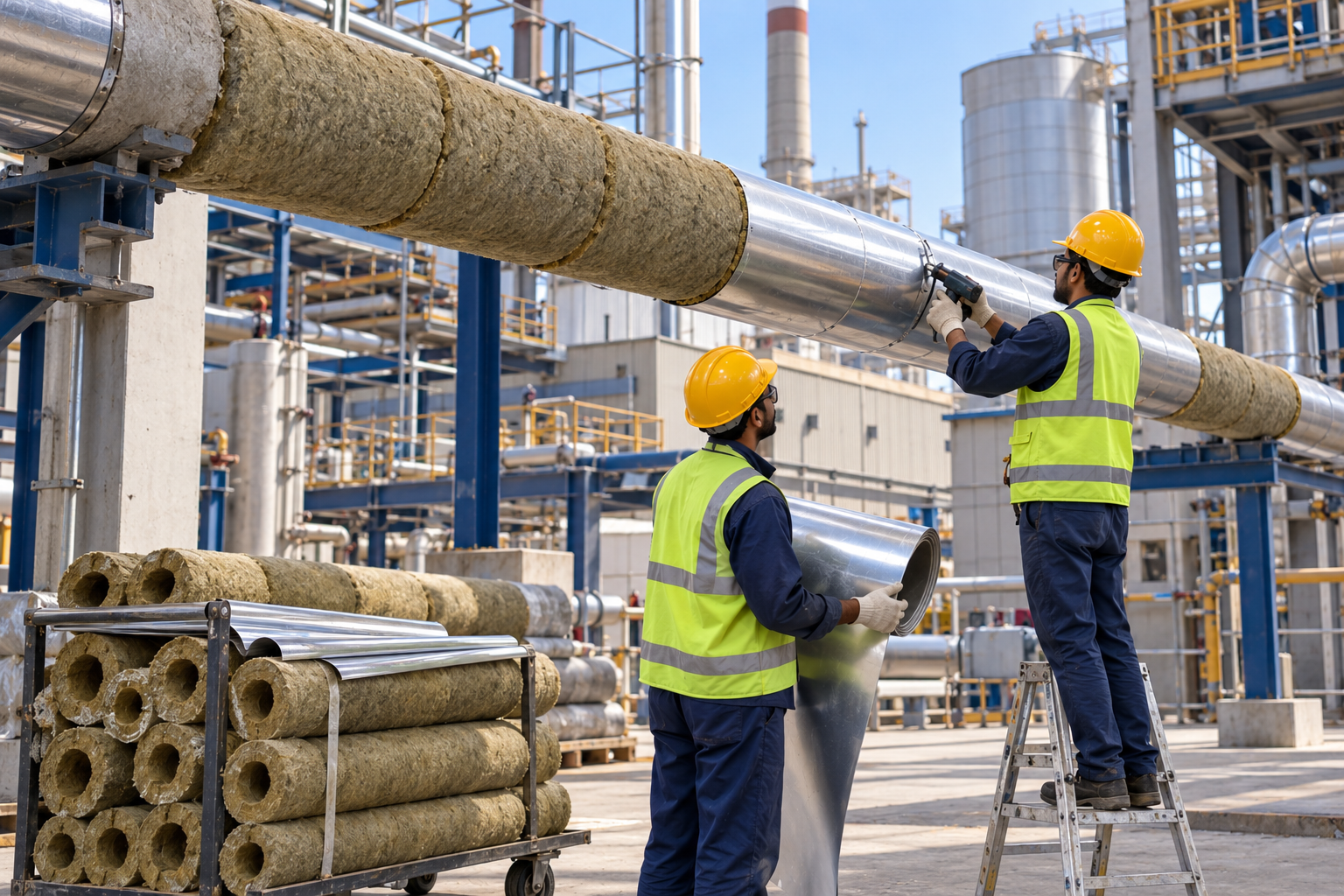
- It is available in formats suited to both roof and wall applications. Rigid boards for flat concrete roofs, blankets for metal sheet PEB roofs and pre-formed pipe covers for mechanical services.
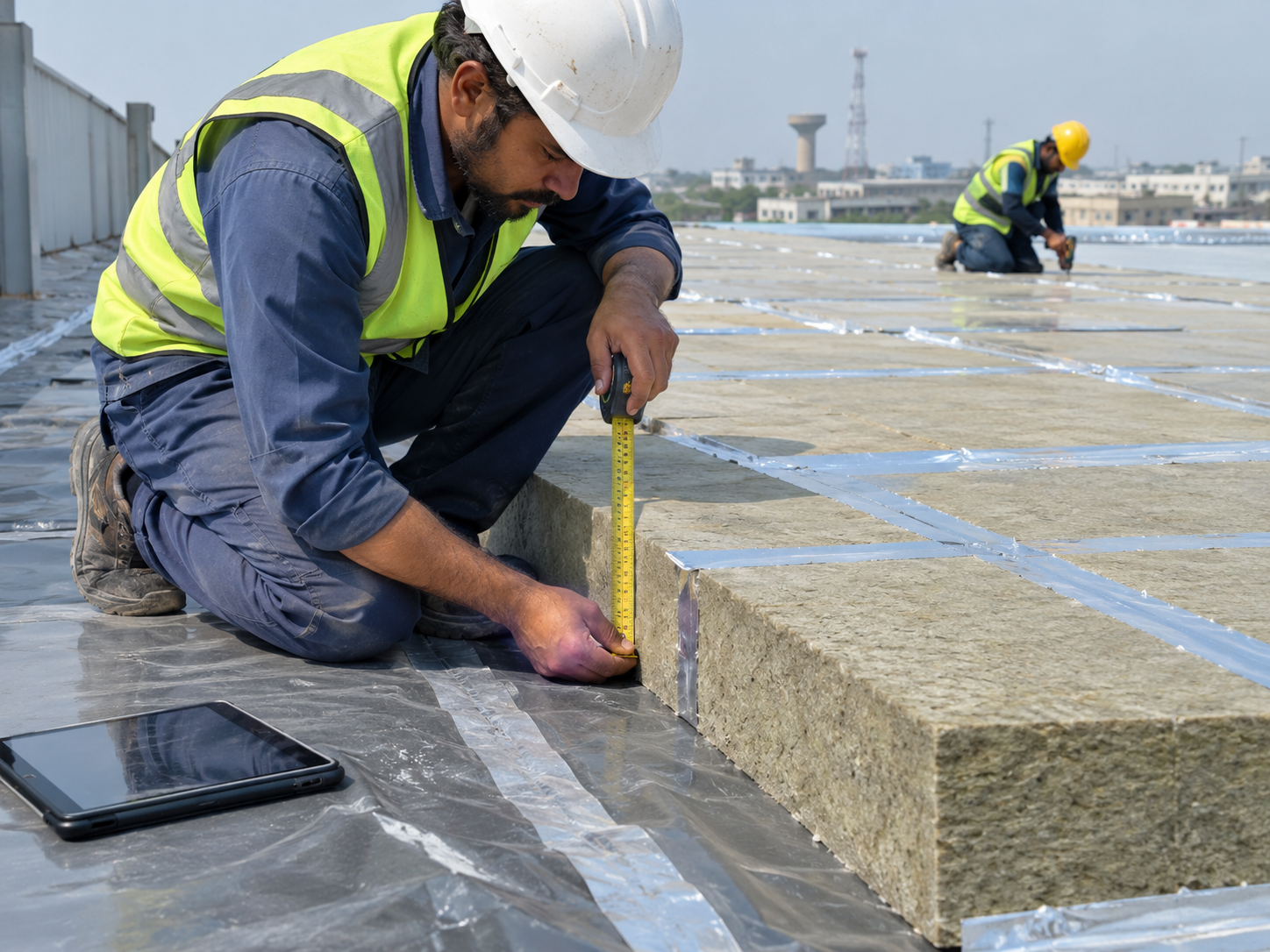
For flat concrete retail roofs, Rockwool rigid boards are installed on top of the structural slab as part of a warm roof assembly, covered by a waterproofing membrane and protective screed. For metal sheet roofs in single-storey hypermarkets and retail warehouses, Rockwool blanket insulation is installed between the outer metal sheet and an inner liner panel.
Polyurethane Foam for Cold Storage and High-Efficiency Applications
Polyurethane foam (PUF) is the preferred insulation for cold storage rooms, refrigerated areas and back-of-house food preparation zones within supermarkets and hypermarkets. Pakistan Insulations has been supplying and installing PUF solutions since 1995, covering cold rooms, food processing environments and cryogenic applications across the country.
PUF panels offer higher thermal resistance per unit thickness than Rockwool, making them the standard choice where maintaining precise temperature ranges is the primary requirement. In a retail context this means supermarket cold rooms, walk-in chillers, frozen food storage areas and any zone where temperature control directly affects product quality and food safety compliance.
Standard PUF is combustible, so fire-rated grades or additional fire protection measures must be specified for areas within occupied mall structures. A qualified insulation contractor can advise on the appropriate specification for each zone.
Roof Insulation for Shopping Malls: What to Specify
The roof insulation specification for a shopping mall should be determined by the roof construction type and the target thermal performance, not by what has been used on comparable buildings. The following guidance applies to the two most common roof types in Pakistani retail construction:
Flat Concrete Roofs
Rockwool rigid boards installed as a warm roof system on top of the structural slab, covered by a compatible waterproofing membrane and protective screed or paving. Thickness should be calculated to achieve the target U-value based on HVAC design requirements. For most commercial retail buildings in Pakistan, 50mm to 75mm of Rockwool rigid board achieves adequate thermal performance, though larger or more energy intensive malls may warrant greater thickness.
A vapor control layer on the warm side of the insulation is recommended for malls in Karachi and other coastal locations, where high ambient humidity increases the risk of moisture migration into the insulation assembly.
Metal Sheet Roofs (Pre-Engineered Buildings)
Rockwool blanket insulation installed between the outer metal roof sheet and an inner liner panel. For retail buildings operating continuous cooling throughout the day, 75mm to 100mm is the recommended minimum thickness. Foil faced Rockwool products provide an additional radiation barrier and are commonly specified for metal roof applications in Pakistan.
Wall Insulation for Retail Complexes
While the roof represents the highest priority for insulation in most retail buildings, west- and south-facing external walls in large mall structures can contribute meaningfully to overall heat gain, particularly in upper floors where wall area is significant.
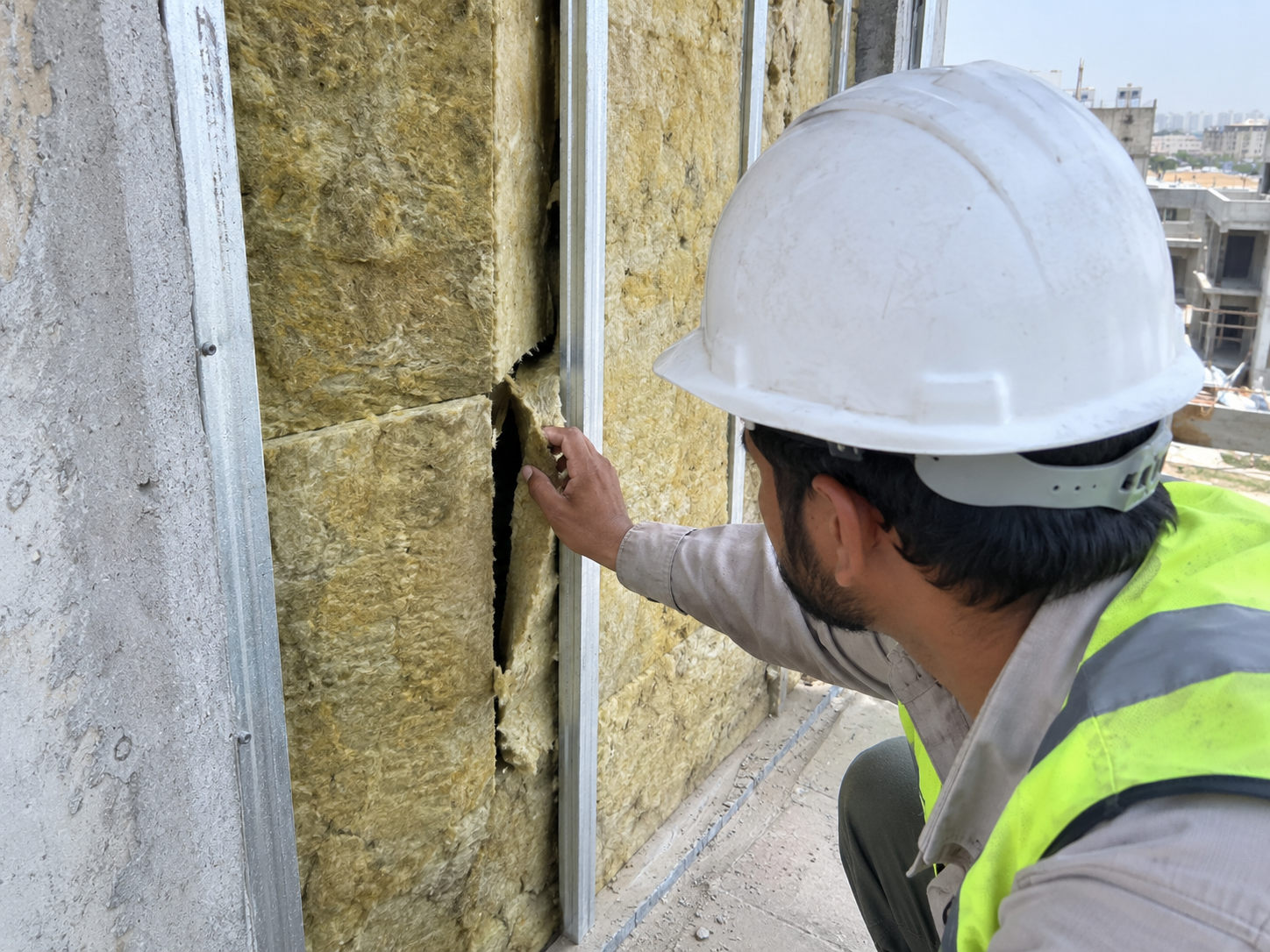
For new retail developments, incorporating wall insulation at the design stage — either as a cavity wall system or as external insulation — is considerably more cost effective than retrofitting after construction. For existing malls, external wall insulation can be added during planned façade refurbishment works with minimal disruption to retail operations.
Cold Storage Insulation for Supermarkets and Hypermarkets
Supermarkets and hypermarkets within retail complexes operate refrigerated areas that must maintain precise temperatures regardless of ambient conditions. In Pakistan’s climate, where ambient temperatures during summer can exceed 40°C, the thermal envelope of cold rooms and refrigerated zones must be carefully specified to avoid excessive compressor loads and temperature fluctuations that affect product quality.
PUF panels with moisture-resistant facings are the standard specification for cold storage in retail environments. Joint sealing is critical — poorly sealed panel joints allow moisture ingress that degrades insulation performance over time and creates conditions for mold growth, a food safety risk in any retail food storage environment.
Pakistan Insulations has experience with cold storage insulation for retail and food processing applications, and can advise on specifications appropriate for specific temperature requirements and building configurations.
Long-Term Benefits of Insulation for Mall Operators
The business case for insulation in shopping malls and retail complexes rests on three outcomes that directly impact the profitability and competitiveness of the retail asset:
Lower Operating Costs
Reducing heat gain through the roof and walls means HVAC systems operate at lower loads and for fewer total hours, directly reducing electricity consumption. In Pakistan’s current electricity tariff environment, these savings are substantial. For a large retail complex spending significantly on HVAC electricity, a well-specified insulation system typically recovers its cost within two to four years and delivers net savings thereafter, for the life of the building.
Better Shopper and Tenant Experience
Shopper dwell time — the amount of time a visitor spends in a mall — is directly linked to indoor comfort. A mall that is uncomfortably hot in its upper floors, food court areas or any part of the retail floor will see shorter dwell times, lower spend per visit and higher tenant turnover. Proper insulation maintains the indoor environment that underpins the commercial performance of the mall.
Reduced Maintenance Costs
HVAC systems operating at lower loads cycle less frequently, reducing wear on compressors, air handling units and associated mechanical equipment. The maintenance cost reduction and extended equipment life resulting from a properly insulated building are significant contributors to the total return on the insulation investment over a ten to twenty year horizon.
Choosing the Right Insulation Partner for Your Retail Project
Insulation performance in a shopping mall or retail complex depends as much on correct installation as on material specification. Thermal bridges at penetrations, poorly lapped joints or missing vapor control layers will significantly reduce the effectiveness of even a well-specified system.
Pakistan Insulations (Pvt.) Ltd brings together in-house Rockwool manufacturing under the Termolan brand and on-site installation capability — a combination that is important for retail projects, where specification accuracy and installation quality both matter. With nearly four decades of experience across commercial, industrial and cold chain sectors, the company is well positioned to advise on and deliver insulation solutions for shopping malls and retail complexes of varying scale and construction type.
Frequently Asked Questions
What is the best insulation for a shopping mall roof in Pakistan?
For flat concrete roofs, Rockwool rigid boards installed as a warm roof system are the most widely specified solution. For metal sheet roofs in pre-engineered retail buildings, Rockwool blanket insulation between the outer sheet and inner liner panel is the standard approach. The recommended thickness is 75mm to 100mm for retail buildings with continuous cooling requirements.
Is Rockwool fire safe for use in a shopping mall?
Yes. Rockwool is non-combustible with a melting point above 1,000°C. It does not ignite, does not contribute to fire spread and does not produce toxic gases in a fire. These properties make it the appropriate insulation choice for high-occupancy retail buildings, where fire safety compliance is a priority.
Can insulation be retrofitted to an existing shopping mall without closing the mall?
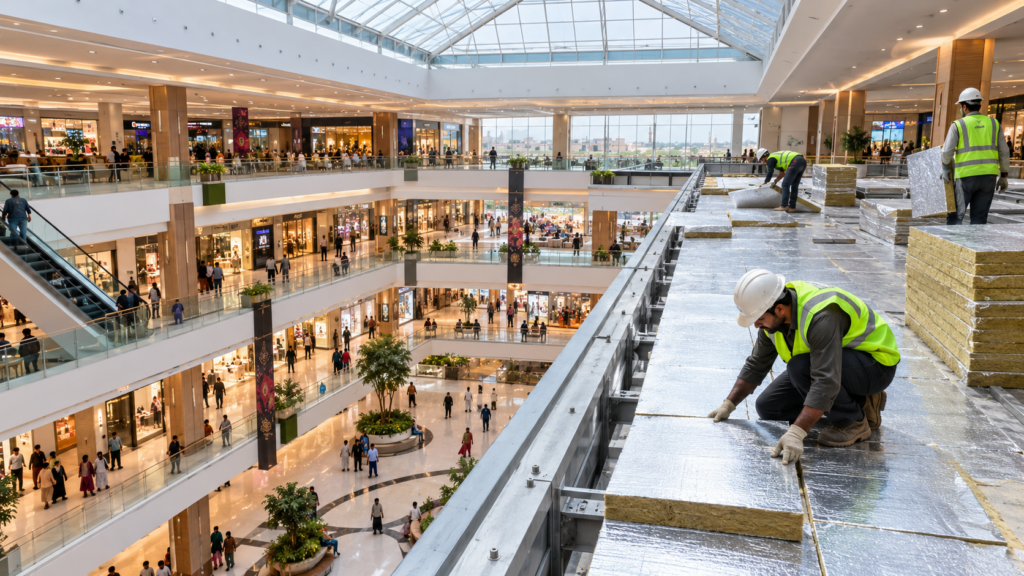
In most cases, yes. Roof insulation can be installed on flat concrete roofs from the rooftop without disturbing interior retail operations. Metal roof insulation is more disruptive and is best addressed during planned re-sheating or maintenance works. Cold storage insulation retrofits are typically carried out during off-peak hours or during scheduled maintenance shutdowns.
How much can insulation reduce electricity costs in a Pakistani shopping mall?
The reduction depends on the mall’s current thermal performance and the insulation system installed. In retail buildings with no existing roof insulation, a correctly specified system can reduce cooling related electricity consumption by 20 to 40%. The payback period is typically two to four years, in Pakistan’s current energy tariff environment.
What insulation is used for cold rooms in supermarkets in Pakistan?
Polyurethane foam (PUF) panels are the standard insulation for cold storage in supermarkets and hypermarkets in Pakistan. PUF’s closed-cell structure provides high thermal resistance per unit thickness, and resists moisture absorption, making it suitable for the demanding conditions of refrigerated food storage environments.
Who supplies and installs mall insulation in Pakistan?
Pakistan Insulations (Pvt.) Ltd manufactures Rockwool insulation under the Termolan brand, and provides supply and installation services for commercial insulation projects across Pakistan. The company has experience with retail, commercial and cold chain insulation projects, and has been operating since 1986.
Contact Pakistan Insulations
If your shopping mall or retail complex is facing high energy costs, occupant comfort issues or cold storage performance problems, contact Pakistan Insulations to arrange a site assessment and receive a project specific insulation recommendation.
📞 +92-21-34529722
✉ [email protected]
🌐 www.pakinsulation.com