Insulation for Restaurants & Commercial Kitchens in Pakistan
Restaurant fit-outs often leave insulation consultants as the last resort, and that is the issue. With the design of the dining room, brand image, and layout of the kitchen equipment, insulation is often relegated to something the mechanical contractor handles quietly in the background if at all. A commercial kitchen will produce more concentrated heat, grease, and fire risk per square meter, than almost any other space in a building, and it’s not just comfort that is impacted, but safety and compliance if the insulation is specified incorrectly.
Why a Commercial Kitchen Isn’t Just a Hot Room
A kitchen line with multiple burners, fryers, tandoors, and grills running throughout service hours will produce continuous, intense heat in a way that is fundamentally different to generalized building heat gain through a roof or wall. This is a concentrated source rather than a distributed area, and that is further combined with airborne grease particles that settle on surrounding surfaces including, if it is not properly protected or specified for the environment, insulation.
This combination of concentrated heat plus grease accumulation is what makes commercial kitchen insulation a genuinely different specification exercise compared to a standard commercial building, and it is why generic insulation choices that would work fine in an office or retail space can become a fire hazard in a kitchen environment.
Fire Safety Around Cooking Lines
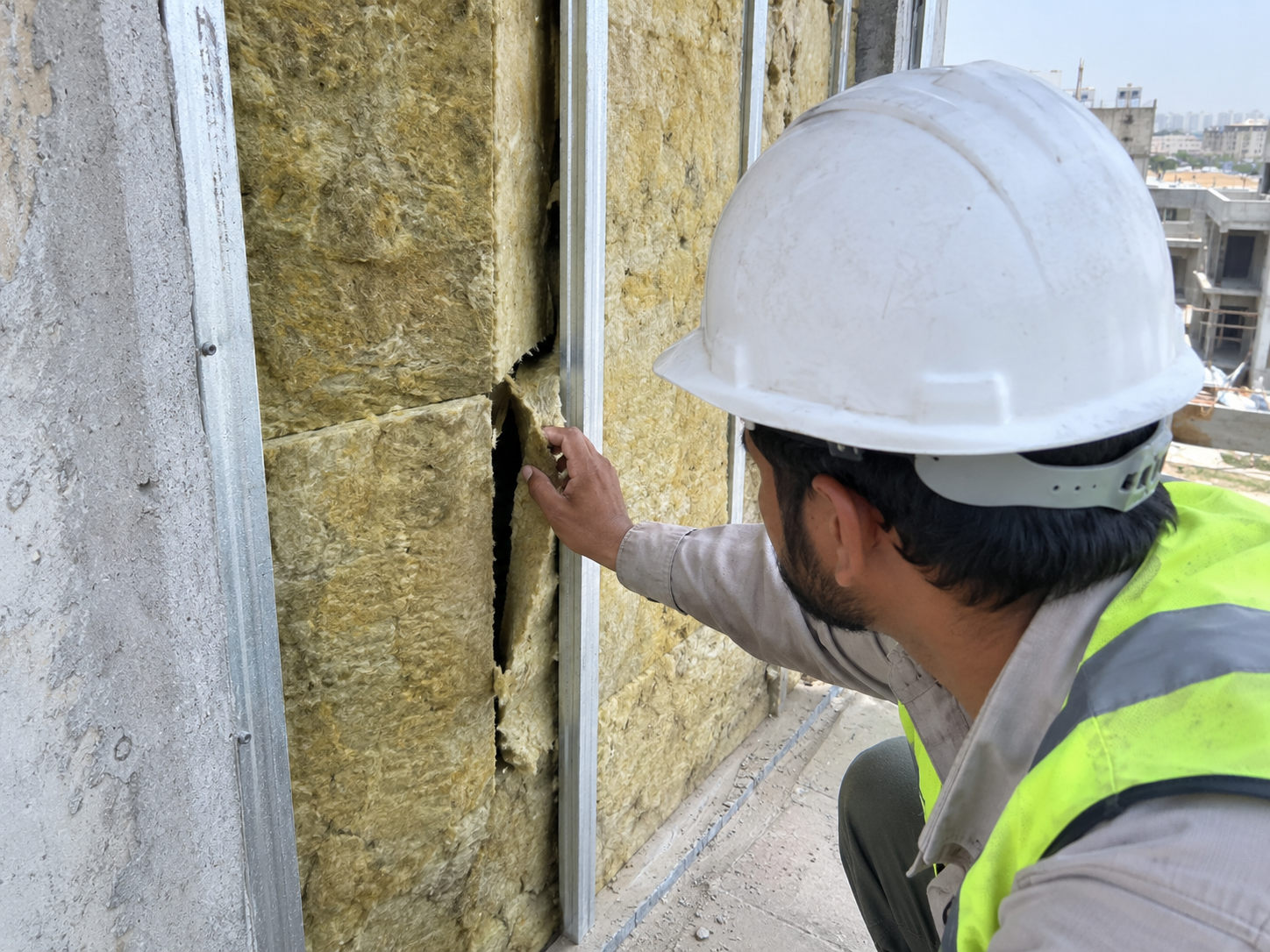
Grease fires are one of the most common commercial fire risks in the food service industry, and around cooking equipment, exhaust hoods, and nearby walls, insulation needs to be specified with this specifically in mind. Combustible insulation around a heat source that regularly deals with grease build-up presents a very real ignition risk, which is why non-combustible insulation like rockwool is the standard choice for any wall or ceiling assembly adjacent to a cooking line, rather than a cheaper combustible alternative that might be acceptable elsewhere in the same building.
Fire-rated compartmentation between the kitchen and dining areas, and between the kitchen and any storage or back-of-house spaces, is taken seriously in restaurant construction for the same reason that it is in any high-occupancy commercial space – a kitchen fire needs to be contained for the right amount of time for evacuation and suppression, not allowed to spread freely into a dining room full of customers.
Exhaust Duct Insulation – Often Skipped Requirement
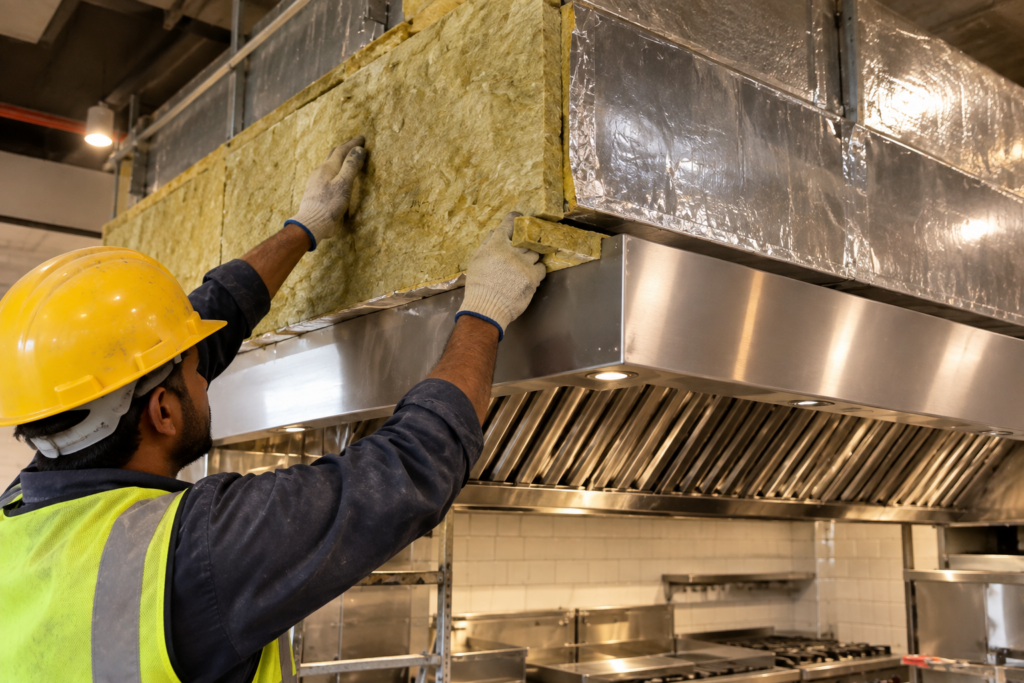
Kitchen exhaust ducts carry hot air, grease-laden vapor and in some cases, direct exposure to flame during flare-ups, making them one of the more demanding insulation applications in the entire building. Insulating these ducts serves two purposes at once – reducing heat transfer into the surrounding ceiling void or adjacent spaces, and providing fire resistance along the duct run, so that a fire inside the duct doesn’t extend into the building structure it passes through.
This is frequently overlooked in smaller restaurant fit-outs where the exhaust system is installed as a functional necessity without much consideration given to the insulation wrapping around it, if any is specified at all. Rockwool based duct wrap or pre-formed sections are the standard solution, chosen specifically for their fire performance rather than purely for thermal efficiency.
Managing Heat Transfer to Adjacent Spaces
A busy kitchen running through lunch and dinner service will generate enough heat that, without proper insulation on shared walls and ceilings, adjacent dining areas, storage rooms or even neighboring tenant spaces in a shopping mall and commercial plaza can feel the effects. This is a common complaint in food court settings across Pakistan, where poorly insulated kitchen partitions between adjacent restaurant units allow heat to bleed into common areas or neighboring businesses, creating comfort complaints that trace directly back to an insulation gap rather than an HVAC capacity issue.
Rockwool partition walls between the kitchen and dining areas, or between adjacent kitchen units in a shared food court kitchen row, address this heat transfer issue, while also contributing to fire compartmentation and, as a secondary benefit, reducing noise transfer from a busy kitchen into the dining experience.
Humidity and Grease – A Material Selection Problem
Commercial kitchens run humid, greasy environments that most insulation facings and finishes aren’t designed to tolerate long term. Insulation installed in or near a kitchen needs a facing or covering that can be cleaned regularly without degrading and needs to resist grease absorption that could otherwise create both a fire hazard and a hygiene issue over time. This is one more reason generic commercial insulation, chosen without consideration for the kitchen environment specifically, under-performs or needs premature replacement in this environment.
What Gets Specified Wrong Most Often
The most common mistake is treating kitchen insulation as identical to dining room or general commercial insulation, without accounting for the elevated fire risk from grease and open flame cooking equipment. The second is skipping exhaust duct insulation entirely, particularly in smaller restaurant fit-outs on tight budgets, where it is seen as an invisible cost rather than a fire safety requirement. The third is ignoring heat transfer to adjacent tenant spaces in food court or shopping mall settings, where the insulation decision impacts not just the restaurant itself, but neighboring businesses and shared common areas.
Why This Matters for Pakistan’s Restaurant Industry
Pakistan’s food service sector has grown rapidly, with new restaurants, food courts, and commercial kitchens opening across major cities at a steady pace. As this growth continues, fire safety compliance and basic thermal comfort in these spaces are becoming more visible concerns, both to restaurant operators managing insurance and liability, and to mall developers responsible for the shared spaces multiple kitchen tenants sit within. Getting insulation specified correctly at the fit-out stage, particularly around cooking lines and exhaust systems, is a modest cost relative to the fire risk and comfort problems it prevents down the line.
Frequently Asked Questions
Why can’t standard commercial insulation be used in a restaurant kitchen?
Kitchens combine concentrated heat, open flame cooking equipment and airborne grease in a way that most commercial spaces don’t, creating a genuine fire risk if combustible insulation is used nearby. Non-combustible materials like rockwool are the standard choice, around cooking lines specifically for this reason.
Does kitchen exhaust ductwork need to be insulated?
Yes. Exhaust ducts carry hot, grease-laden air and sometimes direct flame exposure during flare-ups, so insulating them reduces heat transfer to surrounding spaces and provides fire resistance along the duct run, containing a potential fire within the duct.
What insulation material is recommended near cooking equipment?
Rockwool is the standard choice for walls, ceilings and duct insulation, near cooking lines for its non-combustible rating, reducing fire risk compared to combustible insulation alternatives.
Can poor kitchen insulation affect neighboring restaurants or shops?
Yes, particularly in food court or shopping mall settings, where an under-insulated kitchen partition can allow heat and noise to transfer into adjacent tenant spaces or shared common areas.
Does insulation in a kitchen need to withstand grease and moisture?
Yes. Insulation facings near a kitchen need to tolerate regular cleaning and resist grease absorption, as standard facings not designed for this environment, can degrade faster and create additional fire or hygiene concerns over time.
Contact Pakistan Insulations today for a free consultation and quote.
Phone: +92-21-34529722
Email: [email protected]
Website: www.pakinsulation.com