Insulation for Airports & Aviation Hangars in Pakistan
Aviation projects are not frequently my brief, but when such ones are I am dealing with a combination of problems peculiar to the type of constructions and not met elsewhere: gigantic clear-span roofs, fire and fuel hazards absent from any typical construction, and noise levels which nullify most acoustic guidelines. Both hangars and terminal buildings fall under these categories, for somewhat differing reasons, and should not be addressed as regular large industrial sheds.
The Scale Problem: Why Hangar Roofs Aren’t Standard Warehouse Roofs
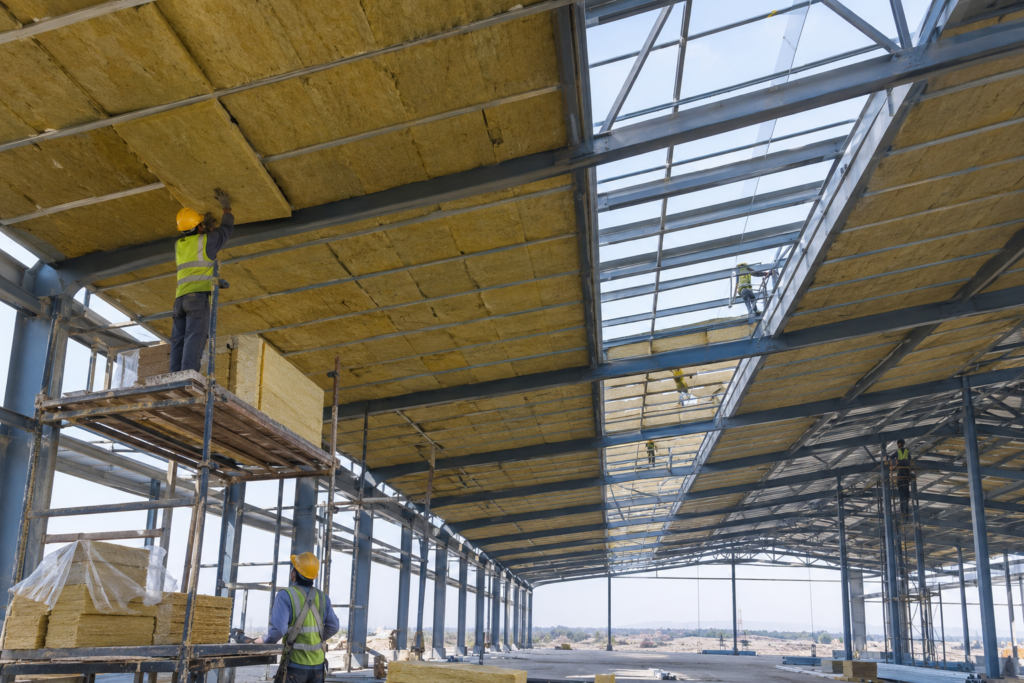
A hangar constructed to house wide-body or mid-size commercial aircraft requires clear-span roof structures usually 60 to 100 meters and more in length, without any internal columns interrupting their space. Such structural demands dictate a different approach to insulation detailing. Long-span steel trusses and purlins flex more under thermal and wind loads than regular warehouse frames, and insulation, its vapor barriers and facings, must accommodate the flexing to avoid tearing or delamination at fastener points on a much larger unsupported span than typical for an industrial building.
Roof insulation still plays an important role in such a construction for the same reason as in any large industrial shed in Pakistan’s climate: an uninsulated metal roof over a hangar the size of a football field becomes an enormous radiant heat source, both for workers inside the hangar and the aircraft, whose extremely high surface temperatures may affect maintenance conducted on composite materials or sensitive avionics.
Fire Safety: A Different Risk Category Entirely
Hangars store aircraft with fuel systems, hydraulic fluid, and occasionally large quantities of stored aviation fuel and solvents used in maintenance work. Such hazards dictate fire safety requirements well beyond those of a standard industrial warehouse. Fire-rated insulation at compartment walls separating maintenance bays, fuel storage and administrative or office sections within a hangar complex are regarded as critical life-safety and asset-protection measures, given the enormous value concentrated in a single aircraft and the catastrophic potential of a hangar fire spreading uncontained across an open hangar floor.
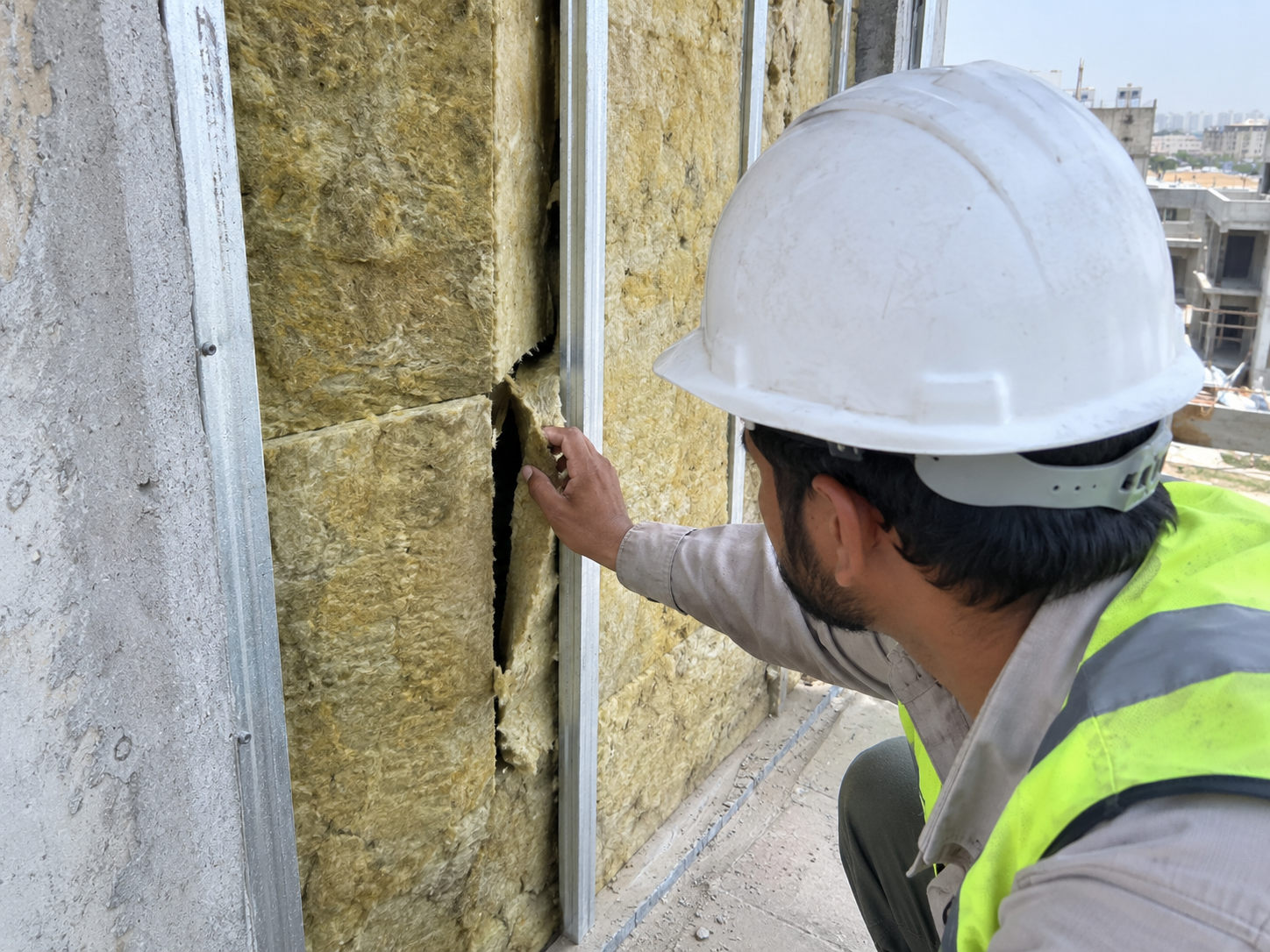
Rockwool is the standard material here, for the same reasons it’s specified in other high-value, high-risk industrial applications: its non-combustible rating and ability to maintain its structural integrity under extreme temperatures make it suitable for compartmentalizing risk in a building type where a fire needs to be contained quickly instead of spreading across an open hangar floor.
Noise: An Aviation-Specific Acoustic Problem
Jet engine noise during ground running and testing operate at sound pressure levels far beyond any standard commercial acoustic design needs to address. Hangars used for engine runs or maintenance testing often require specialized acoustic treatment, sometimes including dedicated engine run-up enclosures or acoustic barriers, constructed out of rockwool or similar high-density acoustic insulation, designed to withstand much higher sound energy than a cinema wall or office partition would encounter.
This is as much for occupational health considerations of ground crew and maintenance working near running engines, who face genuine hearing damage risk without proper acoustic mitigation built into the facility design, not just personal protective equipment worn on a per-individual basis.
Terminal Buildings: A More Familiar but Still Distinct Problem
Airport terminal buildings share more similarities with large commercial or retail structures than hangars do, but they have their own particular thermal challenge: extensive glazing for natural light and views onto the apron, along with large open volumes and continuous, near round-the-clock HVAC operation to manage passenger comfort, as well as fluctuating occupancy from a nearly empty terminal at 3am to a packed departure hall during peak travel periods.
Roof and wall insulation in terminal buildings needs to be considered alongside glazing performance, rather than in isolation: a well-insulated roof paired with poorly specified glazing will still leave a terminal fighting significant solar heat gain through its window walls, undermining much of the benefit gained from the opaque envelope insulation.
Ground Support and Ancillary Buildings
Airports include a variety of ancillary structures: ground support equipment maintenance buildings, fuel farms, cargo warehouses, and administrative blocks, each with their own insulation priorities closer to standard industrial or commercial practice than the hangar or terminal itself. Fuel farm insulation has its own specific fire safety considerations tied to fuel storage tank insulation and fire protection, distinct from general building envelope insulation, and should be treated as its own specification exercise, rather than folded into a generic airport-wide insulation approach.
What Gets Missed on Aviation Projects
The most common miss is to specify hangar insulation using standard industrial warehouse detailing without considering the greater structural spans and resulting flexing, leading to insulation and vapor barrier failures at fastener points over time. The second is to underestimate fire compartmentation requirements between maintenance, storage, and administrative areas within a single hangar complex, treating the whole structure as one uniform fire risk category while acknowledging that fuel storage and maintenance bays have greater risk than an attached office block. The third is to overlook acoustic design for engine run-up areas specifically, assuming that general hangar acoustic treatment, if specified, will adequately address the much higher sound energy levels generated during testing operations.
Why This Matters for Pakistan’s Aviation Sector
Pakistan’s aviation infrastructure, from major international airports to private aviation and maintenance facilities, still sees continued investment in both new construction and upgrades to existing facilities. These are high-value, safety-critical buildings where the cost of getting insulation wrong manifests not just in terms of energy bills or fire risk, but also durability and occupational health considerations of the people working inside them on a daily basis. Bringing the insulation specification into the design conversation early, with someone who understands both the aviation-specific fire and acoustic requirements and standard building envelope physics, is a small design investment relative to the scale and value of the facilities involved.
Frequently Asked Questions
Why is hangar roof insulation different from standard warehouse insulation?
Hangar roofs typically span much greater distances without internal columns, which means that the structure flexes more under thermal and wind loads. Insulation systems and their fasteners need to accommodate the movement across a larger unsupported span than a typical warehouse would.
What insulation material is used for fire-rated walls in aircraft hangars?
Rockwool is the standard choice for fire-rated compartment walls separating maintenance bays, fuel storage areas, and administrative sections within a hangar, due to its non-combustible rating and ability to maintain integrity at high temperatures.
Do hangars need special acoustic insulation for jet engine testing?
Yes. Ground engine running and testing generate sound pressure levels far beyond standard commercial noise levels, and often require dedicated acoustic barriers or enclosures built with high-density insulation to protect both nearby personnel and surrounding areas.
Is insulating an airport terminal different from insulating a hangar?
Yes. Terminal buildings deal more with extensive glazing and continuous HVAC operation, while hangars deal with large clear-span roofs, fire risk from fuel and maintenance operations, and extreme noise from engine testing.
Do fuel farms and ground support buildings at airports need separate insulation specifications?
Yes. Fuel storage areas carry specific fire protection and tank insulation requirements, distinct from general building envelope insulation, and should be specified separately rather than folded into an airport-wide insulation approach.
Contact Pakistan Insulations today for a free consultation and quote.
Phone: +92-21-34529722
Email: [email protected]
Website: www.pakinsulation.com