Vapor Barriers Explained: Why Insulation Alone Isn’t Enough
Quick answer: A vapor barrier is a protective layer that prevents moisture from penetrating the walls, roofs and floors of a building. In Pakistan’s coastal and monsoon-influenced areas, insulation without vapor barriers can lead to condensation, affecting both the thermal performance of the building and its structural integrity.
Many building owners in Pakistan are well acquainted with the process of insulation. They carefully select the products for their buildings, taking care of their thermal comfort and the reduction of cooling costs. After a year or two, they discover that somewhere in the walls or roof, there has developed mold or unpleasant odor. The culprit was not the insulation, but the missing vapor barrier.
Insulation reduces heat transfer at the expense of thermal conductivity of insulation products. The vapor barrier prevents the transfer of moisture through walls, ceilings and floors. By themselves, these two elements are not capable of protecting the structure from dampness and mold. A combination of insulation and vapor barrier is a simple solution to many problems associated with climatic conditions in Pakistan.
What Is a Vapor Barrier and How Does It Work?
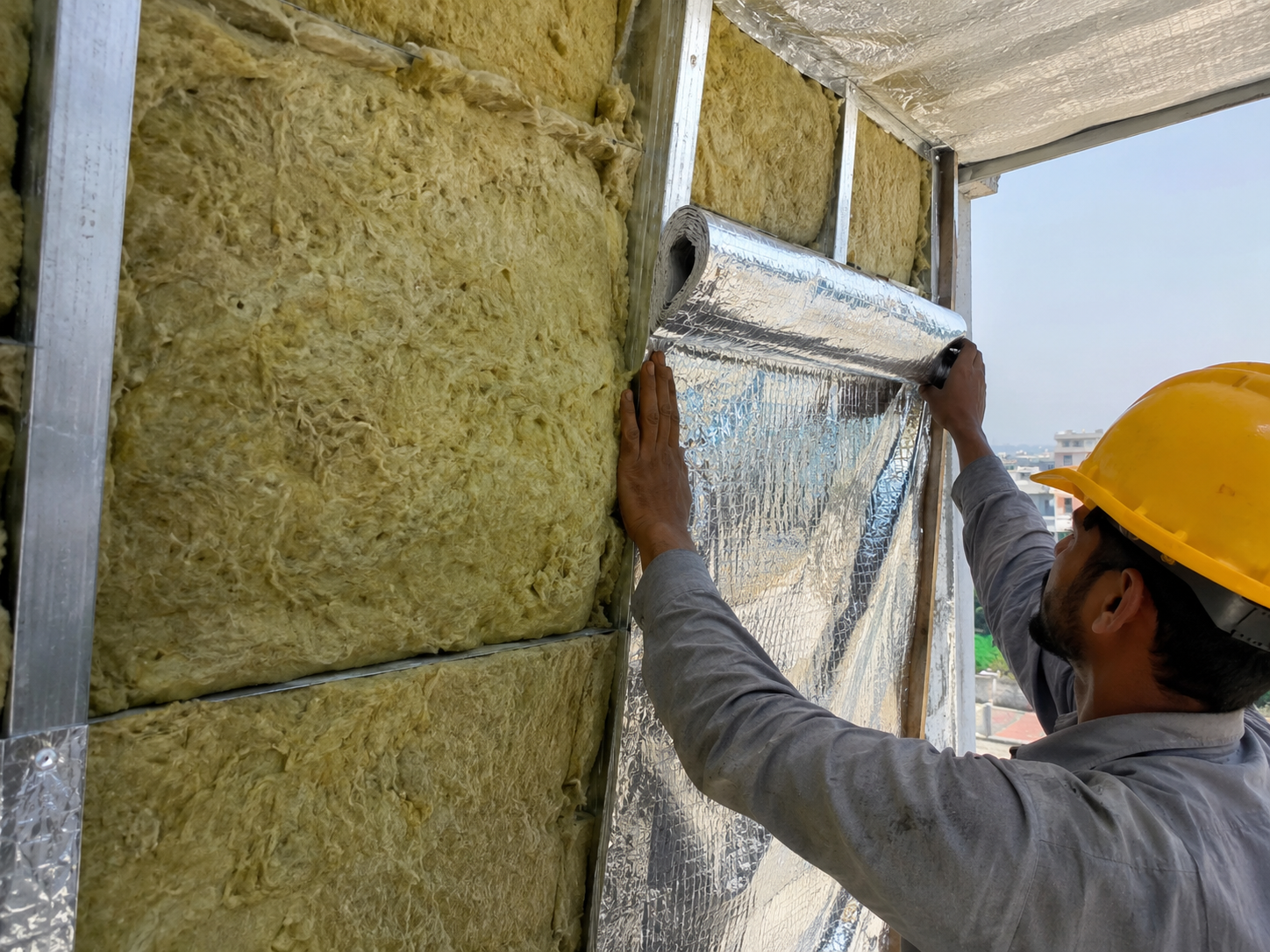
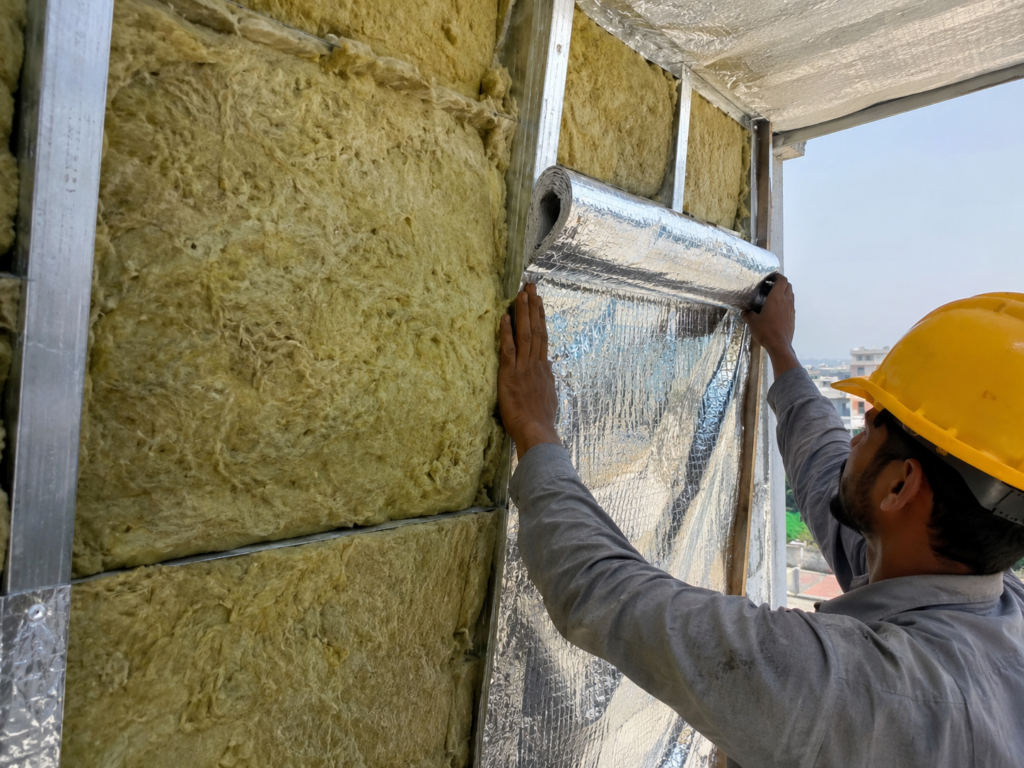
A vapor barrier is a thin layer of insulating material (polyethylene film, foil or special coating) that is placed on the walls, ceiling or cold chamber. The principle of operation is quite simple: during the heating of the premises, humid and cold air penetrates inside through the walls or ceiling. To prevent the transfer of moisture from air to the surface of the insulation, a vapor barrier is placed above the insulation. The barrier is a protective shield that holds back warm and moist air, preventing condensation inside the insulation.
Without vapor barriers, the performance of the best insulation materials is significantly reduced due to the accumulation of moisture. This, in turn, leads to increased energy costs due to poor heat dissipation.
Why Is the Vapor Barrier Needed for Insulation in Pakistan?
The need for a vapor barrier in Pakistan arises due to several factors:
High Humidity Due to the Proximity to the Coast
In coastal cities such as Karachi, the air is often fairly humid. This factor is an indicator of future mold, which can be prevented with a vapor barrier.
Large Difference in Temperatures Between the Street and the Interior of the Structure
The temperature inside the building is usually lower than the outside due to the work of air conditioning systems. Thus, the main source of condensation is the temperature difference between unheated walls and heated interiors.
Moisture Penetration When It Is Hot and Humid Outside
During the hot season, especially during the monsoon season, the humidity is increased, which leads to an even greater temperature difference between the walls and the interior of the building.
Consequences of the Absence of Vapor Barrier With Insulation
Moisture that penetrates into the walls and ceilings when the air is warm and humid can lead to several problems, such as:
- Mold and mildew, which damage the building materials and affect the health of the occupants
- Metal corrosion that degrades metal components
- Rot and decomposition of wooden structural elements
- Wet insulation, which reduces its performance
- Peeling of paint and plaster on the walls
The consequences of poor choice of insulation and vapor barrier materials are reflected in the operating costs of the building. For example, in cold storage facilities or thermal power plants, the presence of moisture in the chambers can damage equipment and insulation materials.
Where to Apply a Vapor Barrier in Pakistan?
A vapor barrier is applied in places with the greatest temperature difference between the interior and exterior of the building:
- Insulated cold chamber (temperature difference indoors and out)
- Air conditioning systems in commercial buildings, offices, and homes
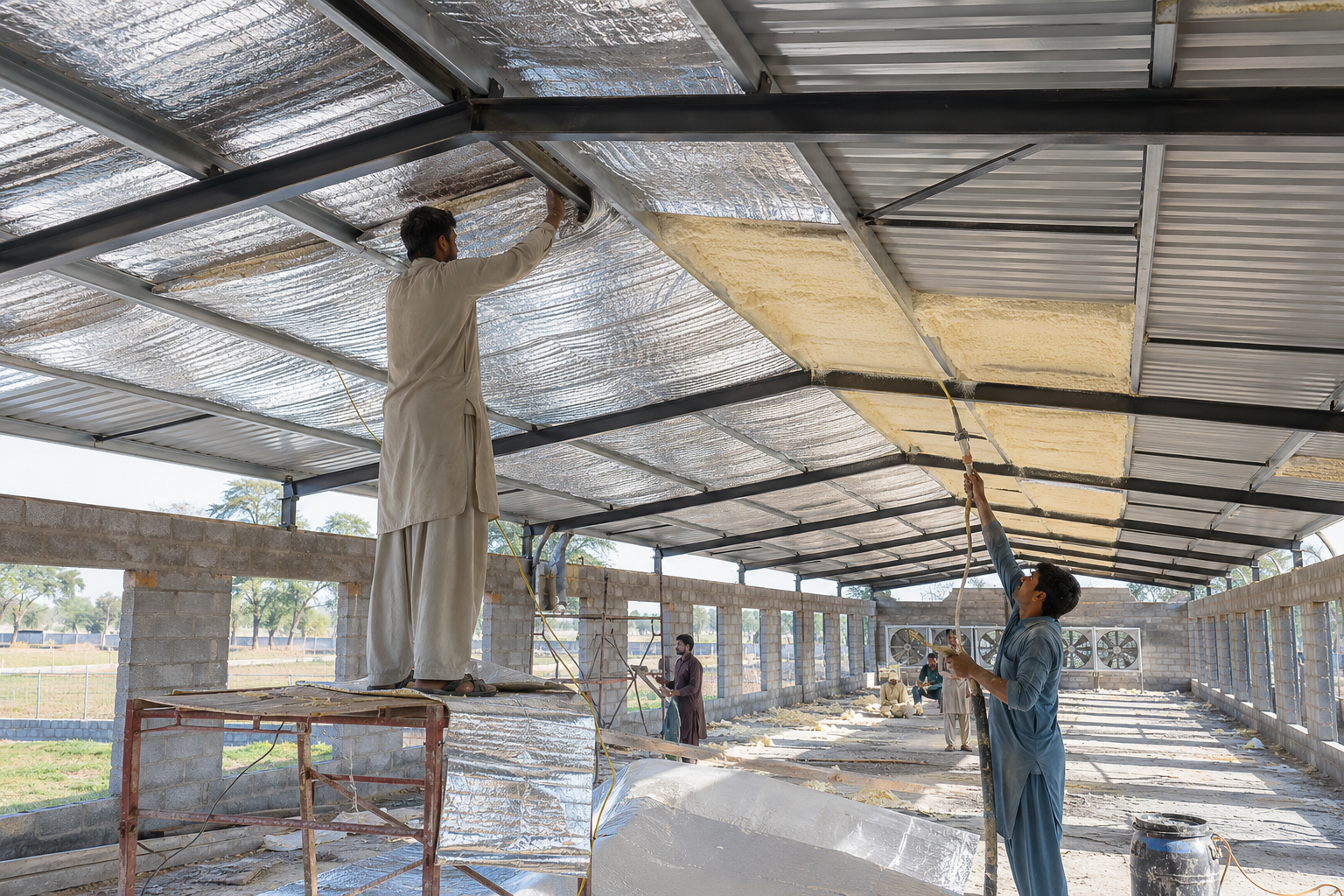
- Roof and ceiling insulation
- Pipe insulation (especially in boiler rooms)
- Clean room technology in medical facilities and laboratories
In all these cases, the combination of high-quality insulation and vapor barriers made of foil or film is the best solution for maintaining thermal efficiency of the structure.
How to Choose Materials for Vapor Barriers?
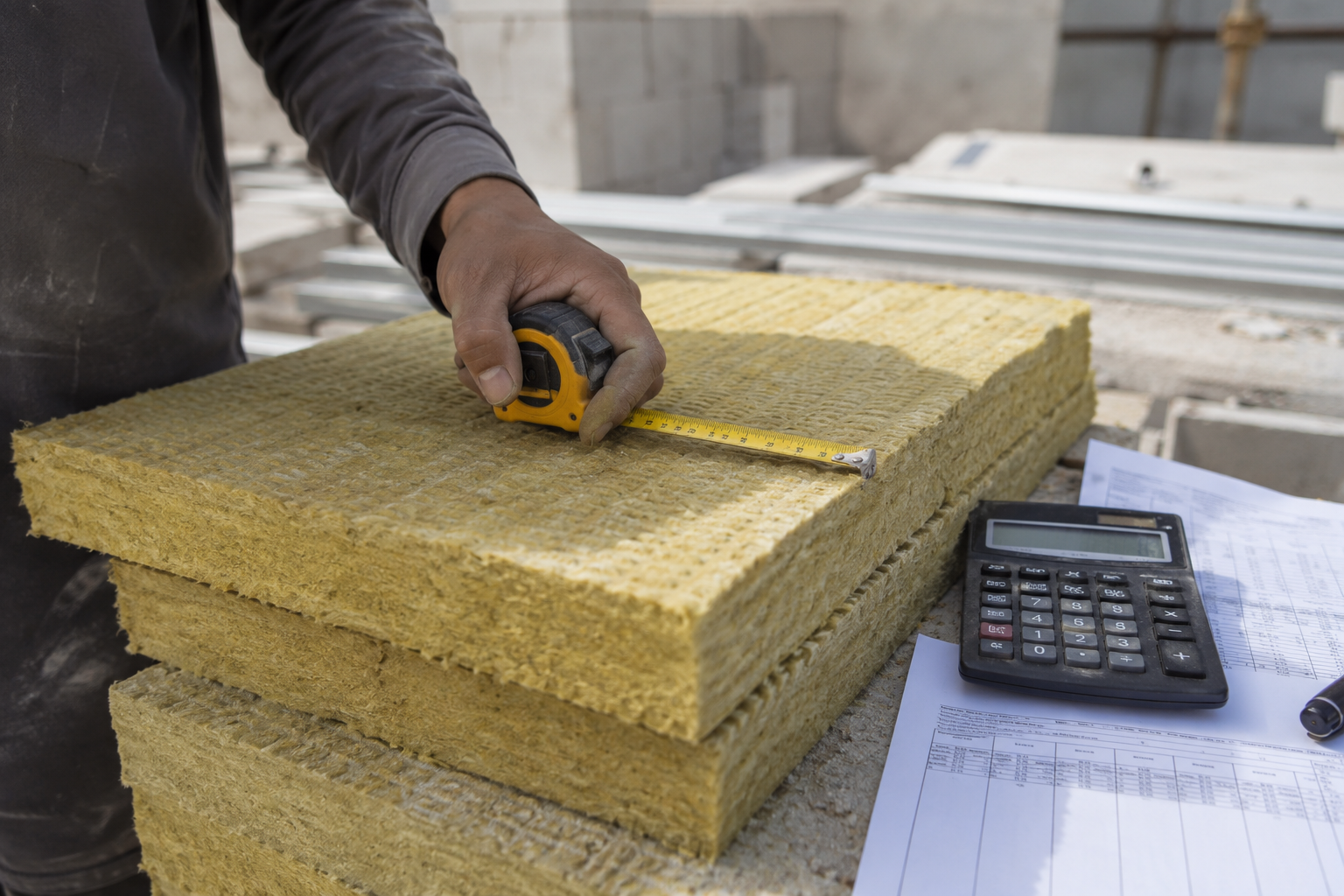
A vapor barrier is a complementary product to insulation. By itself, the insulation material cannot prevent the penetration of moist air into the internal layers of the building structure. The choice of the material for the vapor barrier should be made with the insulation: ideal insulation for cold chambers will differ from the insulation for residential buildings and offices. Ideal insulation materials are Rockwool. In combination with a vapor barrier, insulation retains its performance over the entire service life of the building.
To obtain an insulation material that meets all the requirements, it is necessary to take into account not only the climatic conditions of a particular region, but also the peculiarities of the building and the loads that it is subject to. With a large temperature difference between the interior and exterior of the structure, a layer of insulation and a vapor barrier should be applied to the surface of the walls. This solution will help reduce the transfer of heat through the insulation.
Insulation material, together with a vapor barrier, is designed to prevent heat transfer. Insulation reduces the ability of a material to conduct heat, and a vapor barrier reduces the rate of heat transfer. The two layers work together and can withstand the temperature differences typical of Pakistan. In addition, to achieve the necessary effect, these structures must be correctly installed by professionals who will take care of all the nuances during the installation of vapor barriers and insulation.
Since 1986, Pakistan Insulations (Pvt.) Ltd has been providing insulation solutions to customers in the industrial, commercial and cold storage sectors. Our products are used in a wide variety of applications, including cold storage, power plants, air conditioning systems and building construction. We are proud to be able to provide the insulation solutions our customers need.
Protect Your Building From the Inside Out
Insulation helps keep the building cool. A vapor barrier protects insulation and building materials from moisture penetration. In Pakistan’s hot and humid climate, these two elements are used in almost all constructions. The absence of a vapor barrier leads to the appearance of mold, corrosion of metals and a significant increase in energy costs.
If you are planning to build a cold chamber, house or office, be sure to consider insulation and vapor barriers for Pakistan. Get insulation advice from Pakistan Insulations for your residential or commercial building.
Frequently Asked Questions
What is the difference between insulation and vapor barrier?
Insulation reduces the transfer of heat through the material. Vapor barrier insulates the material from the penetration of moisture. These two elements have completely different purposes, and for this reason, they need to be installed in a building at once.
Do I need a vapor barrier on every structure in Pakistan?
It is necessary to pay special attention to air-conditioned buildings, cold chambers, ceilings and piping systems with significant temperature differences. The use of a vapor barrier is especially important in coastal cities with a high level of humidity.
On which side of the insulation do I need to put a vapor barrier?
A vapor barrier is needed on the side of the highest humidity, which is usually the warm side of the insulation material.
Can I add a vapor barrier to an existing building?
It is possible to add a vapor barrier to an existing building, but this requires a more involved reinforcement of the structure. To do this, it is necessary to consult with insulation specialists who will determine the method of vapor barrier application for a particular case.
What material is used for vapor barriers?
As a material for vapor barriers, one can use film, foil or special coating, the choice of which is made on the basis of the insulation and the structure into which it is integrated.
Contact Pakistan Insulations today for a free consultation and quote.
Phone: +92-21-34529722
Email: [email protected]
Website: www.pakinsulation.com