Roof Insulation for Commercial Buildings in Pakistan: Offices, Malls & Hotels
Roof insulation guide for commercial buildings in Pakistan: Why offices, malls and hotels need thermal protection from the sun
Offices, shopping malls and hotels in Pakistan experience extreme temperatures, especially in summer, and most commercial buildings were originally constructed without the benefit of roof insulation. Installing the correct insulation on a building’s roof reduces the amount of electricity needed for cooling while also increasing the comfort of occupants.
Rockwool and polyurethane foam are the two main roof insulation materials used in Pakistan, depending on the roof construction and building needs.
Commercial buildings in Pakistan represent some of the country’s largest electricity consumers. A considerable amount of this electricity is used for cooling, and the roof is the largest surface exposed to solar radiation in a commercial building.
In most office buildings, multi-storey shopping malls and hotels, the roof is a critical energy conservation area that is often under-insulated or completely uninsulated. This article guides commercial building owners and facility managers on roof insulation options and considerations for offices, malls and hotels.
Why Commercial Buildings Endure such Extreme Temperatures in Summer
Flat concrete roof construction is the most common in commercial building construction in Pakistan, but it offers little or no resistance to solar heat gain. Solar radiation is absorbed by concrete throughout the day and re-radiated into the building interior, increasing temperatures considerably.
Solar heat gain through flat roofs in commercial buildings in Pakistan can account for 30% to 50% of the total cooling load in mid-rise commercial buildings. Air conditioning systems oversized to meet the demands of such buildings waste electricity, wear out faster and break down more frequently, especially during summer.
Hotels feel the effects of solar heat gain in their top-floor guest rooms, which remain uncomfortable despite the effort of A/C systems to cool them. For malls, such temperatures create poor shopping conditions resulting in negative feedback from tenants, while in offices, solar heat loss reduces worker productivity.
A building’s roof is the largest surface exposed to solar radiation, and it can be the most effective area for conserving energy through insulation.
Roof Insulation Options for Commercial Buildings in Pakistan
The roof insulation material to use in commercial buildings in Pakistan depends on a number of factors, including roof construction, occupant needs, fire safety requirements, and budget constraints. Rockwool rigid boards and PU foam are the preferred insulation materials for commercial buildings in Pakistan.
Rockwool Rigid Boards for Flat Concrete Roofs
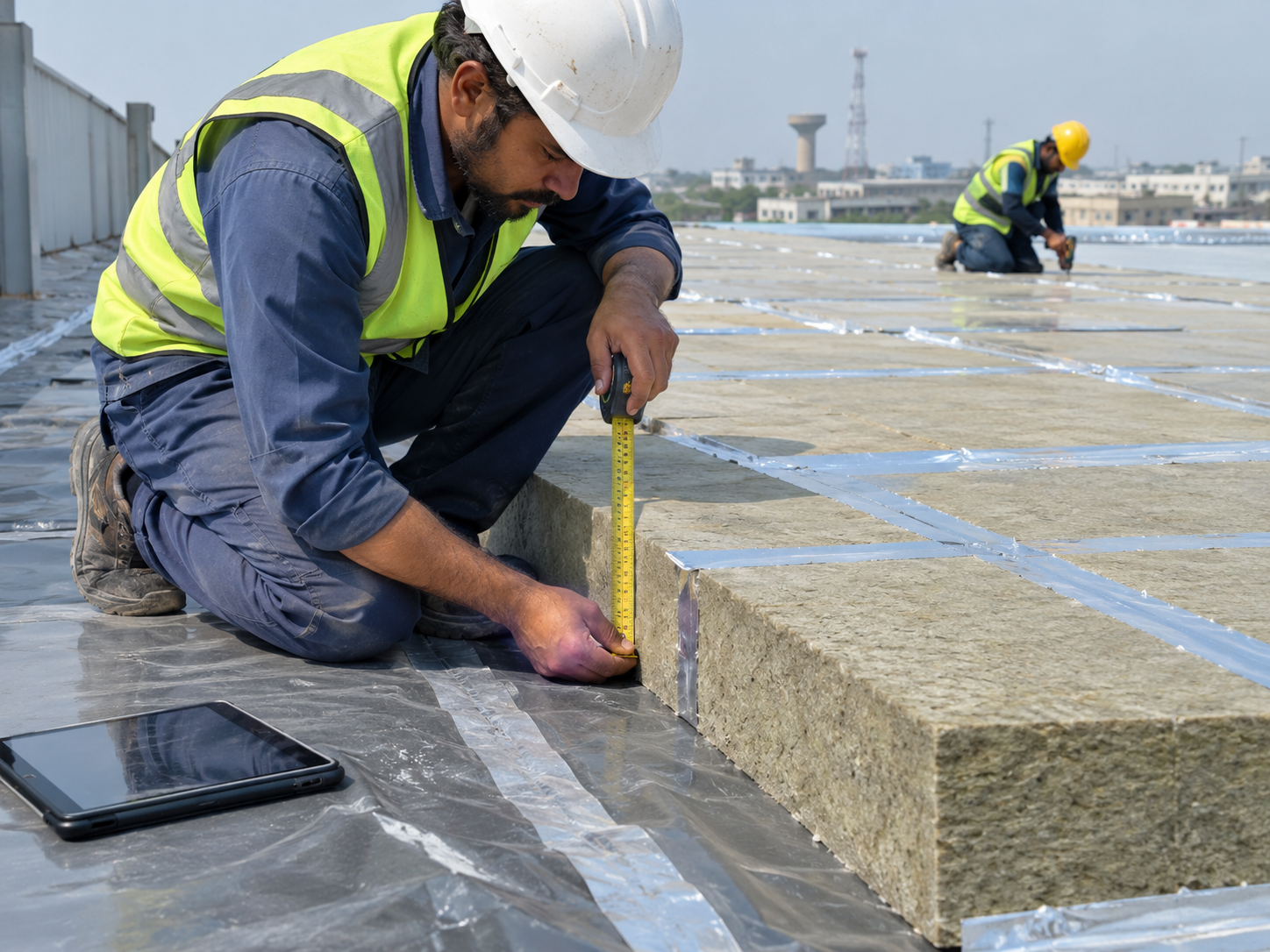
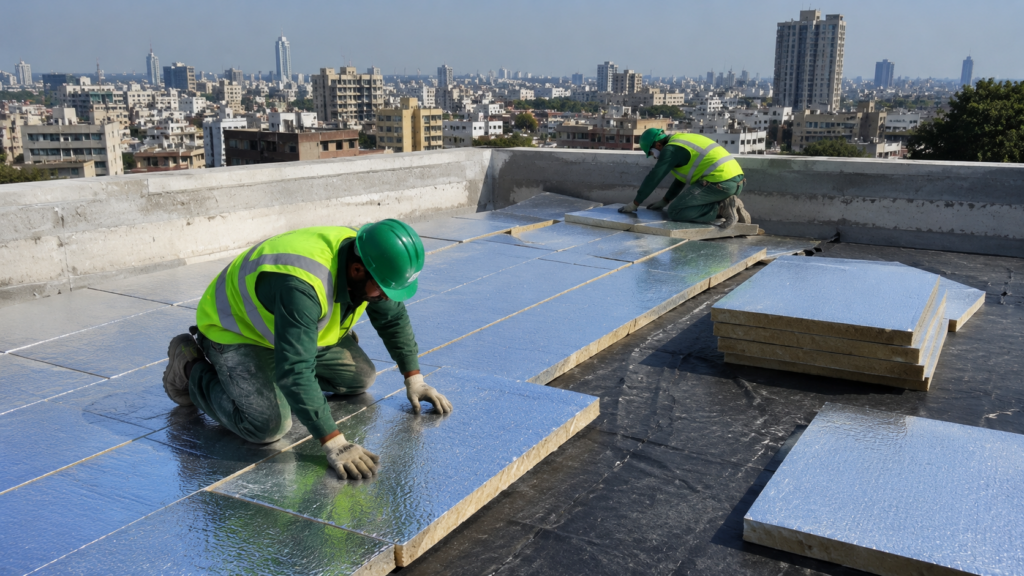
Rockwool rigid boards are the most widely used insulation material for use on flat concrete roofs in Pakistan. Rockwool boards are applied as a warm roof system on top of the structural concrete roof slab, with a waterproofing membrane and a protective screed. Rockwool Termolan insulation boards have been used in Pakistan’s commercial, industrial and infrastructure construction for over 35 years by Pakistan Insulations (Pvt) Ltd.
Rockwool rigid boards have several advantages for use as commercial roof insulation in Pakistan:
- Non-combustible: This is important in commercial buildings as fire safety is a priority in case of fire outbreaks.
- Have excellent resistance to sagging and settling, ensuring good long-term insulation values.
- Have good moisture resistance when installed according to specification, important in Pakistan’s coastal cities like Karachi.
- Provides good sound insulation benefits to reduce noise from rain and other sources.
- Good choice for roof decks where people access to the roof is frequent, as it is available in higher density grades with good compressive strength.
For offices and hotels with top floor spaces that need to be accessible, insulation boards with higher density grades (100–120 kg/m³) are recommended to allow for easier access to the roof.
Polyurethane Foam for Commercial Roof Insulation
Polyurethane foam has even better insulation properties than Rockwool. It is mostly used in commercial buildings with limited insulation thickness or with special need for higher energy efficiency. Pakistan Insulations has been supplying and installing polyurethane foam insulation since 1995.
Polyurethane foam is used for commercial building roof insulation in Pakistan for:
- Hotel rooftop mechanical rooms that require energy-efficient cooling
- Restaurant cooking areas in commercial buildings
- Cold storage rooms on building rooftops
- Commercial building insulation projects with limited thickness allowance due to weight considerations
PUF is mainly used in commercial building insulation projects where higher thermal efficiency is required, for example, in hotels and restaurants. It is important to note that standard PUF is combustible, so fire safety approval should be considered when specifying PUF for use in commercial buildings.
Roof Insulation for Office Buildings in Pakistan
Office buildings benefit tremendously from roof insulation, mostly because there is a direct relationship between thermal comfort and employee productivity. Offices are also significant electricity consumers due to the high occupancy rates, making energy conservation a priority for commercial property owners and landlords.
A well-insulated roof in an office building can reduce the cooling load by 40 to 60%, depending on the system used. This is a significant saving on electricity bills for tenants and helps to conserve natural resources.
Office building owners considering roof insulation should consider the roof first when developing an energy conservation plan before considering wall and window insulation. The roof makes up the largest surface area of a building exposed to solar radiation and is, therefore, the largest source of heat gain.
Roof Insulation for Shopping Malls in Pakistan
Large commercial malls with cooling systems throughout require significant amounts of electricity to maintain indoor temperatures within acceptable limits. Mall owners and facility managers are often looking for ways to reduce the huge electricity costs incurred in running these HVAC systems.
Roof insulation for shopping malls should address the large roof area and should be specified to reduce temperatures in top-floor dining areas, which are often uncomfortable despite cool indoor temperatures. In Pakistan, many shopping malls were constructed using metal sheet roofing or flat concrete rooves, which often offer little or no insulation.
Rockwool blanket insulation installed between the roof sheets is suitable for use in shopping malls with metal sheet roofing. The usual thickness recommended for commercial retail buildings is 75mm to 100mm, depending on the cooling requirements.
For malls with concrete flat roof construction, roof insulation using Rockwool rigid board warm roof system is recommended. This system provides the required continuous insulation needed for commercial buildings with large enclosed spaces.
Roof Insulation for Hotels in Pakistan
Compared to other commercial building types, hotels have the most stringent thermal comfort requirements as guests expect consistent indoor temperatures irrespective of outdoor temperatures. The top-floor rooms in hotels are usually the most challenging to cool and, therefore, the most affected by the lack of roof insulation.
Hotels should consider roof insulation to reduce the indoor temperatures of top-floor rooms. A well-insulated roof reduces the demand for energy to cool a building, helping to reduce high electricity costs for hotel owners and operators.
When specifying roof insulation for hotels in Pakistan, the following should be taken into consideration:
- The thermal insulation properties of the material specified should be adequate to reduce heat gain through the roof slab into the top-floor hotel rooms.
- The fire safety requirements for materials used in a hotel setting should also be considered.
- The insulation material specified should be compatible with the waterproofing membrane to prevent moisture-related problems.
- Provision should be made for access to the roof for maintenance purposes if required.
Pakistan Insulations has supplied and installed insulation solutions for commercial buildings and hotels countrywide and can advise on the most suitable roof insulation solution for different hotel applications.
Roof Insulation Considerations for Offices, Malls and Hotels in Pakistan
When specifying roof insulation for commercial buildings, the following factors should be considered:
- The Target U-value: The target U-value should be determined based on the desired level of thermal performance. Once this value has been determined, the thickness of the insulation boards should be calculated.
- Roof Construction: Flat concrete, metal sheet, and other roof constructions each have different insulation requirements.
- Fire Safety Requirements: Fire safety regulations should be considered when specifying roof insulation materials for commercial buildings.
- Vapor Control: In coastal cities in Pakistan with high levels of humidity, vapor control is vital in preventing moisture-related problems in roof insulation systems.
- Waterproofing requirements: The insulation material specified must be compatible with the waterproofing membrane specified for use with that particular roofing construction.
- Access to the Roof: If it is necessary for people to access the roof, the insulation boards must be able to withstand the additional loading.
The long-term benefits of roof insulation for commercial buildings
Installing roof insulation in commercial buildings delivers long-term benefits to the building owner by reducing the electricity needed to cool the building, improving indoor thermal comfort and reducing the deterioration of building materials.
Reduced Electricity Bills
By reducing the amount of solar heat gain through the roof, roof insulation reduces the electricity needed to cool a building. This benefit is available to all building owners and occupants of commercial buildings in Pakistan.
For example, an office building with no roof insulation in Lahore or Islamabad can be expected to reduce its electricity consumption by 40 to 60% through roof insulation, depending on the system used.
Improved Indoor Temperatures
With roof insulation, building occupants enjoy better thermal comfort, whether they are office workers, hotel guests, or shoppers in a mall. Reduced solar heat gain through the roof means that indoor temperatures can be maintained comfortably even in the hottest summer months. Thermal comfort in top-floor spaces is significantly improved when roof insulation is installed, improving the usefulness of such spaces for offices and commercial purposes.
Longer Building Life
Un-insulated concrete roof slabs subjected to extreme weather conditions are prone to faster deterioration in Pakistan. By providing thermal insulation and reducing the effects of weathering, roof insulation prolongs the useful life of commercial buildings. In addition, the indoor relative humidity in roof-insulated buildings is reduced, reducing the likelihood of roof decay.
Roof insulation is usually a cost-effective investment for commercial building owners and landlords as the reduced electricity costs recoup the initial investment in a short time.
Choosing the Right Roof Insulation Partner
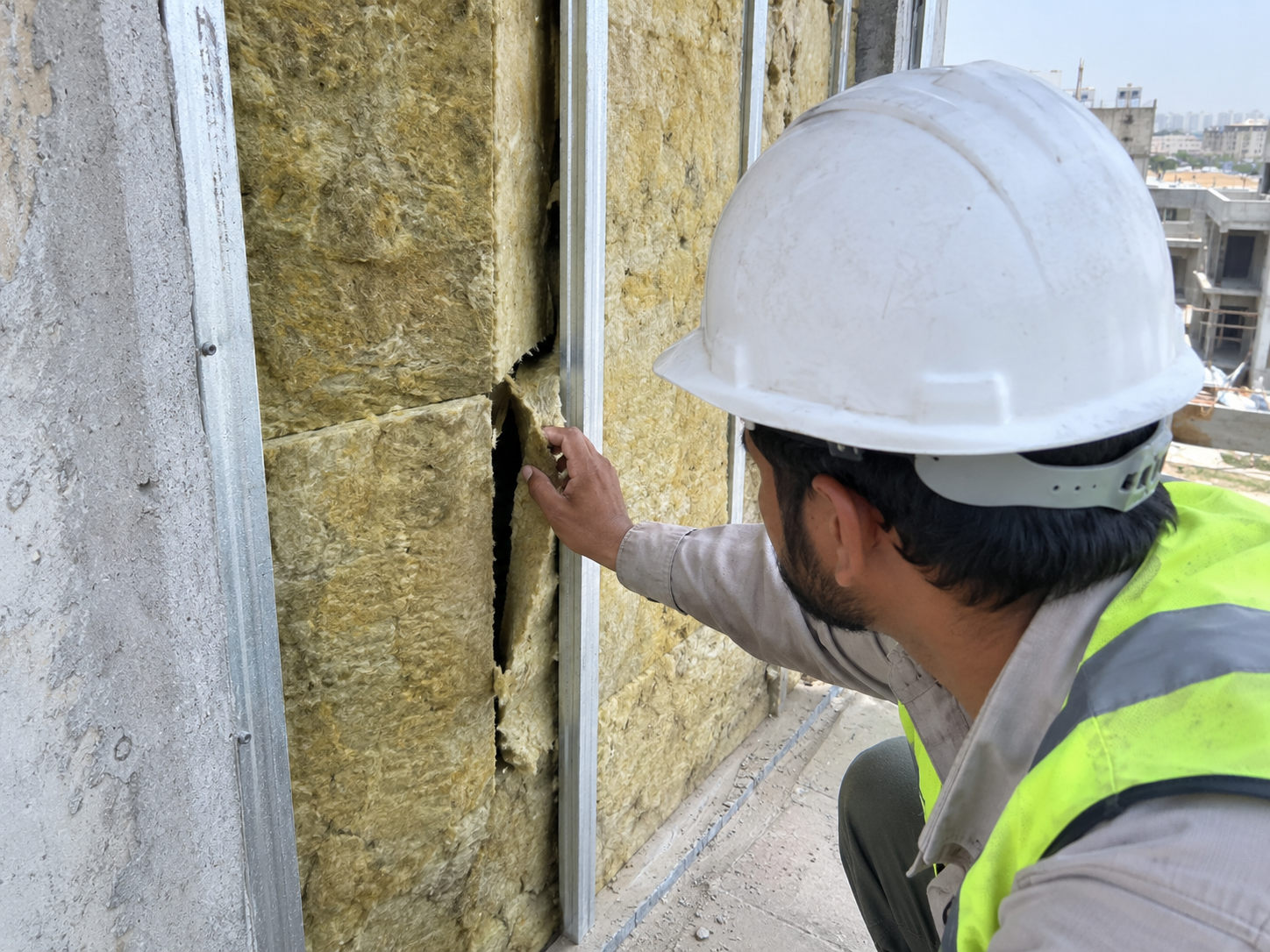
The roof insulation partner plays a critical role in delivering the expected benefits of roof insulation. A qualified insulation partner will ensure that the system is correctly installed to eliminate thermal bridging and achieve the designed level of thermal performance.
Pakistan Insulations has the expertise and experience to deliver commercial building roof insulation solutions. Pakistan Insulations has a division dedicated to manufacturing insulation materials under the Termolan brand and another that specializes in insulation installations. Our team of experts has over 35 years of experience in the insulation industry serving the commercial, industrial and infrastructure sectors.
Frequently Asked Questions on Roof Insulation for Commercial Buildings in Pakistan
What is the Best Roof Insulation for Commercial Buildings in Pakistan?
Rockwool rigid boards are the most commonly specified roof insulation for use on flat concrete commercial roofs. For commercial buildings with metal sheet roofing, Rockwool blanket insulation is the preferred choice. Polyurethane foam provides the best thermal efficiency and is used in commercial building insulation where the need is greatest, such as in hotel mechanical rooms.
How Much Can Roof Insulation Reduce Electricity Consumption for a Commercial Building in Pakistan?
The electricity saved through roof insulation depends on the thermal performance of the building before insulation and the level of performance improvement targeted. In commercial buildings without roof insulation, a correctly specified and installed roof insulation system can reduce electricity consumption by 20 to 40%. The payback period on the initial investment in roof insulation in Pakistan is usually between 2 and 4 years.
Can Roof Insulation be Retrofitted in an Existing Commercial Building in Pakistan?
Roof insulation can be retrofitted in an existing commercial building. Retrofitting flat concrete roofs requires minimal disruption to the building’s interior, and the work can be completed in as short as a week for a medium-sized commercial building.
Is Rockwool Roof Insulation Fire Safe for Use in Multi-storey Commercial Buildings?
Rockwool insulation boards are non-combustible, making them ideal for use in commercial buildings that require higher fire-safety standards. Rockwool is a suitable choice for roof insulation in multi-storey commercial buildings.
How Thick Should Roof Insulation Be For a Commercial Building in Pakistan?
The required thickness of roof insulation depends on the target U-value, taking into account the thermal performance required in the building. In commercial buildings, a target U-value between 0.4 and 0.6 W/m²K is usually recommended. Using Rockwool rigid boards on a flat concrete roof is typically recommended at 50mm to 75mm thickness.
Who Supplies and Installs Roof Insulation in Pakistan?
Pakistan Insulations is a manufacturer and supplier of roof insulation solutions in Pakistan. We specialize in commercial building roof insulation and have extensive knowledge of the most suitable materials and methods for use in different building types and locations.
Contact Pakistan Insulations
Contact Pakistan Insulations today for a free consultation and quote on roof insulation for your commercial building.
📞 +92-21-34529722
✉ [email protected]
🌐 www.pakinsulation.com