Insulation Specification for Data Centers in Pakistan: Peculiarities Compared to Industrial Buildings
Every data center project I consult on begins the same way – I’m handed a specification for a warehouse or an industrial building and asked to evaluate how viable the proposed insulation solution would be for a server hall or a server room. It never ends well because insulation requirements for data centers are fundamentally different than for standard industrial buildings. Data centers are heat-emitting machines that operate continuously 24/7/365 and cannot afford any downtime due to thermal issues. The three factors that make data centers different and drive insulation selection are:
- the criticality of the internal heat loads,
- the requirement for redundancy in cooling equipment for uninterrupted operation, and
- the increased fire-safety requirements for data center electrical rooms.
These differences add complexity to insulation specification and often are overlooked by general contractors, resulting in significantly higher OPEX for heating/cooling than budgeted.
Data Center Construction Peculiarities in Pakistan
The Pakistani data center marketplace is currently growing due to the need among telecommunication operators to host local exchanges, as well as the shifting trend among the banking sector toward localizing their core banking solutions. Additionally, numerous fintech startups are emerging as well that favor colocating their services within Pakistan rather than overseas. Each of these players has unique requirements, but all of them are faced with the same challenge: how to maintain a stable temperature within server halls, given the fact that Pakistan’s outside air temperature rarely drops below 35 degrees Celsius.
Why Warehouse Insulation Is Not Suitable for a Data Center
In industrial buildings, insulation is selected based on the need to reduce external heat gains and thus decrease the heating/cooling loads on the building’s HVAC system. For data centers, the situation is precisely the opposite: the main source of heat comes from inside the building, specifically from servers. Therefore, when selecting insulation for data centers it is vital to take into account the criticality of internal heat gains that need to be offset rather than minimized.
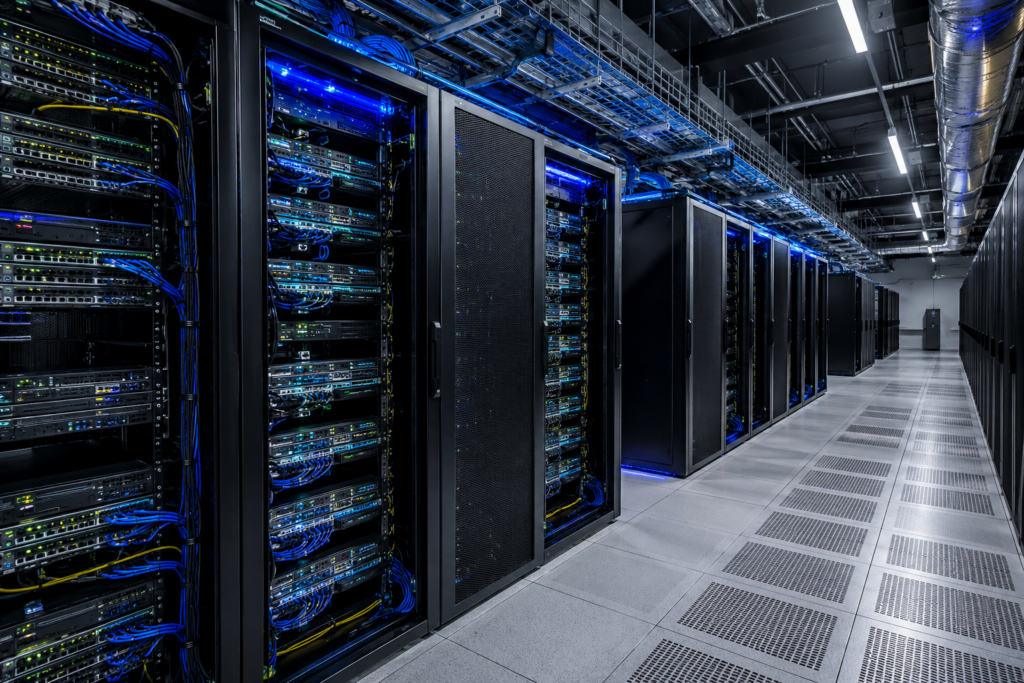
A row of servers can produce several kW of heat, so the thermal performance of a server hall is closer to that of an industrial oven than to a standard warehouse. As such, a data center’s insulation should be selected with primary consideration of the ability to maintain a narrow air temperature range and relative humidity inside the server hall, which is often difficult to achieve within industrial buildings.
Envelope Insulation: What Is It and Why Is It Important
When it comes to insulation of the building envelope, many people assume that it is unimportant for data centers, since mechanical cooling systems are usually oversized to offset the internal heat gains. This is a misconception stemming from the fact that a data center’s insulation is not selected based on the need to reduce external heat gains, but rather on the need to reduce the cooling capacity required to offset the internal heat gains. For instance, in Pakistan, an improperly insulated roof could add several percent to the annual cooling costs of an average data center, which is a considerable sum given the already high mechanical cooling costs.
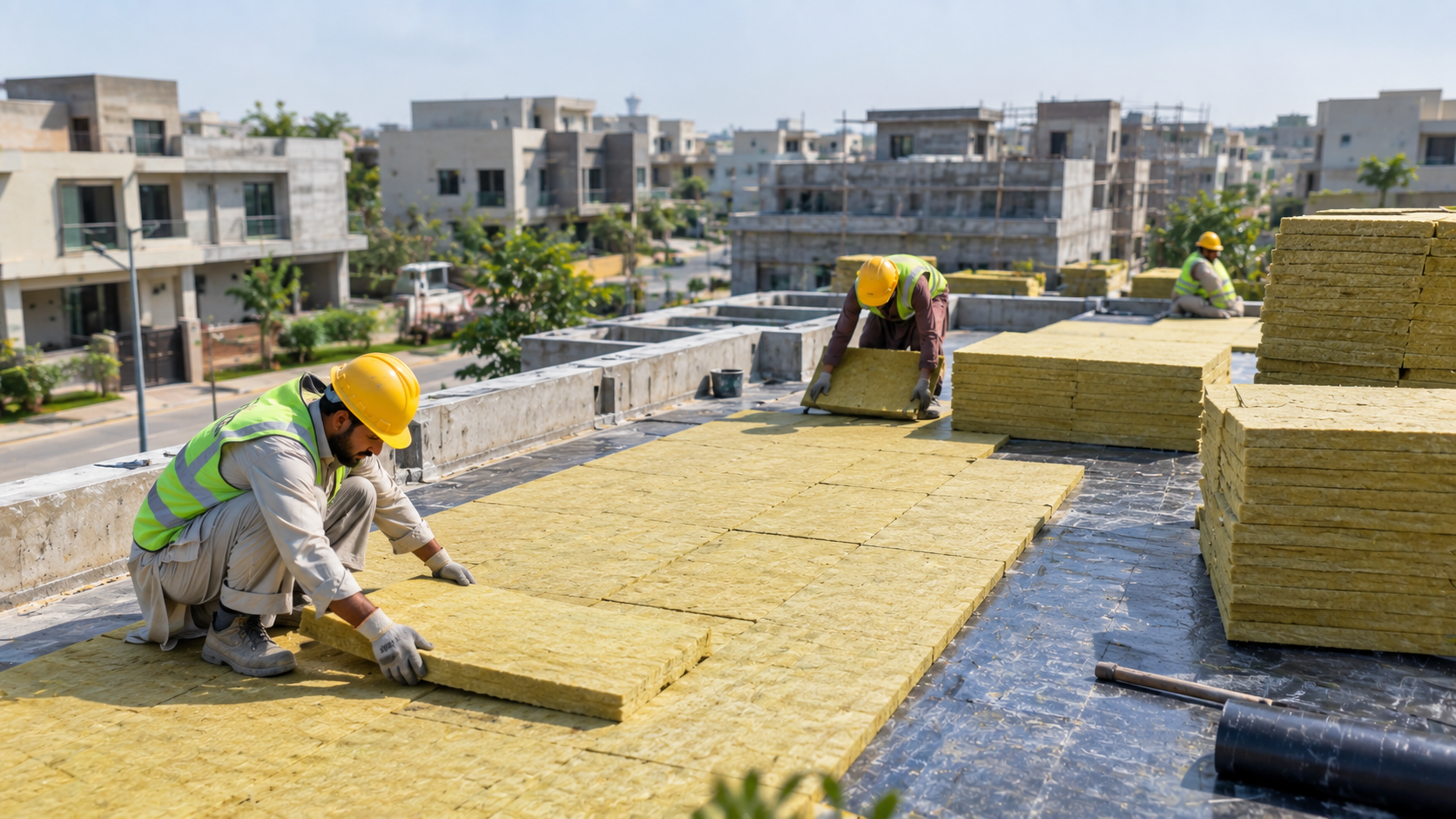
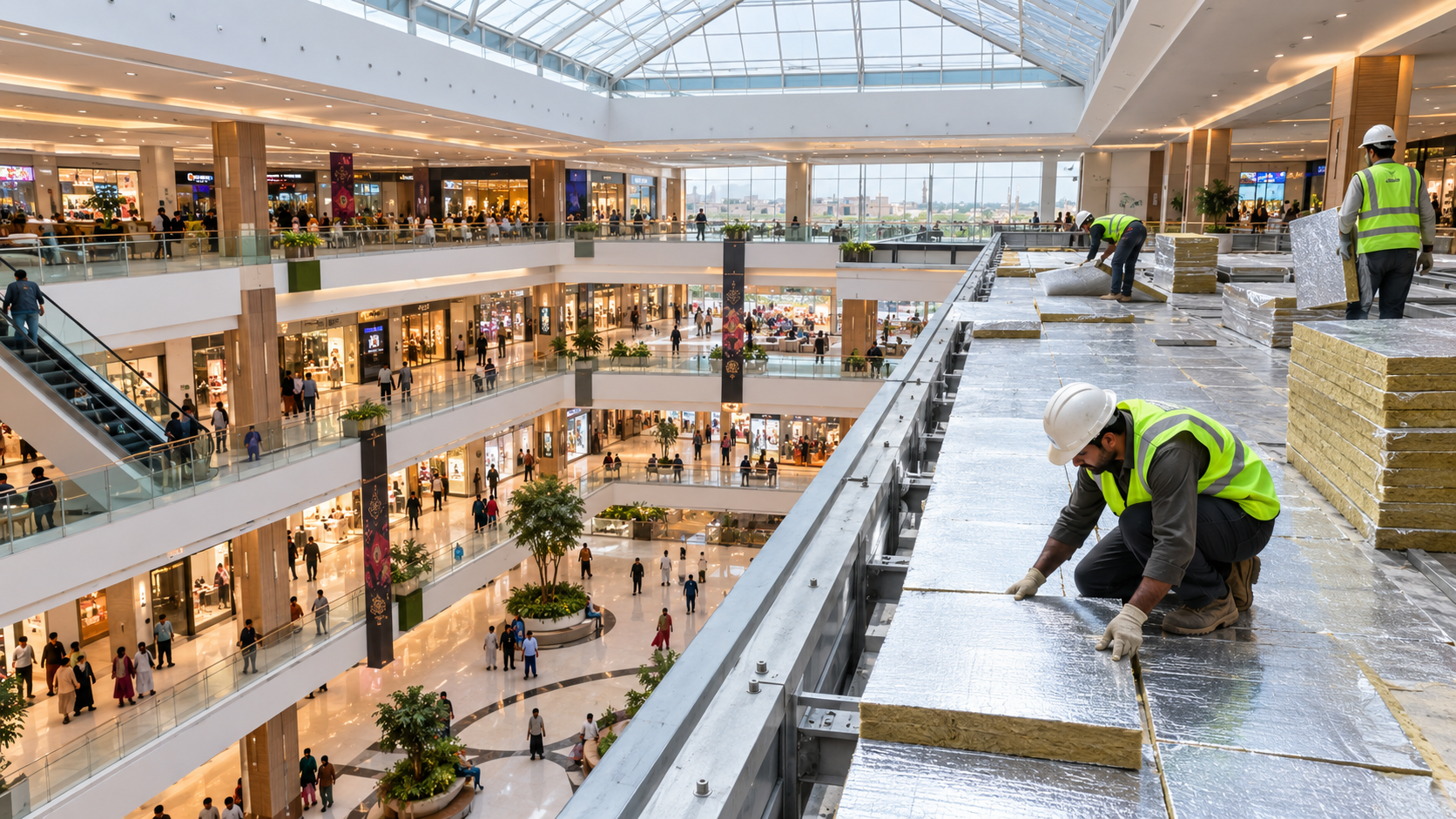
Roof insulation in particular is one of the primary concerns for any industrial facility in Pakistan due to the high ambient temperatures, but the principles of insulation selection are similar for data centers. It is common to see data centers using higher-density rockwool or rigid board insulation as compared to standard warehouses due to the need for increased performance.
Insulation for Redundancy
A data center is a building with a very high level of redundancy, with IT equipment and HVAC systems usually designed for N+1 configuration, i.e. with 100% spare capacity. Similarly, a data center’s insulation design should also be done with redundancy in mind. One of the ways to achieve it is to ensure that the building envelope insulation is continuous and does not allow for point-sources of heat losses. A well-insulated building envelope ensures that, in the case of a localized failure of the building’s cooling infrastructure, the temperature inside the server hall will not rise as quickly as it would in an improperly insulated building. This can provide sufficient time for engineers to identify and address the issue before any equipment damage occurs.
Fire-Rated Insulation in Data Centers
Fire-safety is an important consideration in any building, but it is especially critical in data centers due to the value of the equipment located within the facility. The most common and effective way to increase fire-safety in data centers is to perform compartmentation using fire-rated insulation. Fire-rated walls are constructed between server halls, electrical rooms, and battery rooms to ensure that in the case of a fire, it will be confined to one building section and will not spread to other parts of the data center. Rockwool is the insulation of choice for fire-rated construction due to its superior fire-resistance performance. Fire-rated walls are common in Pakistan as well, especially in data centers with customers in the banking or international business sectors that have higher safety requirements.
Acoustic Insulation: An Underappreciated Benefit of Data Center Insulation
Servers and other IT equipment are noisy, and so are CRAC units and generators. In order to mitigate excessive noise pollution, many data centers use acoustic insulation, typically made of rockwool, in their mechanical rooms and generator rooms. An additional reason for acoustic insulation is noise complaints from residents in the surrounding area if a data center is located near a residential district. Generator rooms in particular benefit from acoustic insulation due to the high noise output of diesel engines.
Humidity Control and Insulation
Modern servers are sensitive to temperature and humidity fluctuations and can suffer from hardware faults due to condensation forming on internal components. This is an important consideration for insulation selection, particularly vapor barrier specification, since improper insulation can result in condensation forming on the surface of the insulation material or inside the insulation layer. The presence of water inside insulation layers and wall cavities poses a significant risk of short circuits and subsequent equipment failure. Thus, humidity control is an increased concern in data centers as compared to standard industrial buildings.
Raised Floors and Slab Insulation in Data Centers
One of the common designs used in Pakistani data centers is raised floors with space underneath utilized for routing cables and, in some cases, for cooling air distribution. For such data centers, additional consideration must be given to floor insulation. Slab insulation is necessary in raised floor data centers to prevent ground temperatures from negatively impacting the cooling performance of the data center.
Common Mistakes in Data Center Insulation
The most common mistake in data center insulation is to specify the insulation according to the standard for industrial buildings with little or no consideration given to enhanced internal heat gains, higher redundancy levels, or specific fire-safety requirements. The second most common mistake is to specify fire-rated insulation but fail to inspect the continuity of fire-rated insulation around all service penetrations, since these are the weak points in any fire-rated construction. The third most common mistake is to select lower density insulation materials on the basis that mechanical cooling will offset the heat gains anyway. This is a mistake because mechanical cooling equipment is usually selected on the basis of internal heat gains. Therefore, reduced external heat gains will result in reduced mechanical cooling costs and thus reduced OPEX for the data center.
Why This Is Important in Pakistan
The importance of proper data center insulation in Pakistan is driven by the higher outside air temperature, which increases the cooling burden on data centers, as well as the requirement for uninterrupted power supply, which often results in data centers operating their generators in addition to the main power supply. The combination of these factors makes proper insulation selection even more important for data centers in Pakistan than in other countries. At the same time, as more and more local data centers are built to host national telecommunication exchange centers, banking infrastructure, and cloud computing services, we are likely to see even more of these specialized facilities being built in Pakistan. As such, the importance of proper insulation selection for these facilities is paramount.
FAQ
Is insulation for data centers different from standard commercial?
Yes, it is. Data centers have significantly higher internal heat gains due to servers, require redundancy in power supplies, and impose higher fire-safety requirements, thus dictating more stringent selection criteria for insulation products.
What type of insulation material is used in fire-rated walls in data centers?
Rockwool is the insulation of choice for fire-rated walls in data centers due to its superior performance at elevated temperatures. Fire-rated walls in data centers are used to separate server halls, electrical rooms, and battery rooms.
Does insulation reduce cooling costs in data centers?
Yes, proper insulation reduces external heat gains, which in turn reduces the cooling burden on the data center’s mechanical systems. Therefore, a well-insulated data center will have lower operating costs for cooling.
Why is humidity control important for data centers?
Fluctuations in humidity can lead to condensation forming on server components, which can cause short circuits and equipment damage. Therefore, humidity must be carefully controlled within data centers.
Do data centers in Pakistan need special insulation around generators?
Since generators are a potential source of fire, they typically are enclosed within rooms with fire-rated insulation walls. Additionally, acoustic insulation is needed to reduce the noise output of the generators, especially in the case of data centers located near residential areas.
Contact Pakistan Insulations today for a free consultation and quote.
Phone: +92-21-34529722
Email: [email protected]
Website: www.pakinsulation.com