Cold Storage Insulation in Karachi: An Effective Summary
Summary: Due to Karachi’s high levels of coastal erosion and humidity, the efficiency and life span of average cold storage insulation and materials greatly deteriorates. For cold storage in Karachi, there are some insulation materials that can be relied on more than others, such as rigid, closed-cell spray polyurethane foam insulation (SPF) and rigid PIR (polyisocyanurate) panels that are sealed. Corrosion resistant fasteners, vapor barriers, and routine maintenance are essential.
Establishing cold storage within Karachi comes with different challenges than Lahore and Islamabad. Because of Karachi being along the Arabian Sea, your cold storage is constantly challenged by extreme levels of humidity combined with erosive, salt-laden coastal air. This leads to corrosion, mold, and the insulation materials breaking down rapidly.
This leads to expensive systems that cost way more to run and maintain, because they break down and have to be repaired before the system’s expected life.
This guide will help educate you on why Karachi’s cold storage insulation systems are leading to a breakdown — mold and corrosion, extreme humidity — and provide the best systems and installation methods for cold storage insulation that last the longest.
Why is Karachi So Challenging for Cold Storage Insulation?
Typical humidity levels in Karachi are between 60 to 90%, with some months even higher. Monsoon months of July and August can have humidity levels that are higher. In cold storage, high ambient humidity results in warm, moist air trying to move in.
Moisture can cause substantial damage to any food-grade cold storage insulation. As moisture leaks through your insulation and collects within the panels, it completely destroys the insulation’s R-value and begins to rot the surrounding structure. Eventually, that trapped moisture becomes a haven for bacteria and mold.
This only gets worse with salt air. Facilities in SITE Town, the Korangi Industrial area, and within close proximity to the port will see the most damage. As salt particles in the air speed the oxidation process for metals and ruin adhesives and coatings, they will completely destroy the galvanized steel sheathing on insulation panels. What would normally last 15 to 20 years in an inland city will completely corrode in 5 to 8 years in Karachi.
Which Insulation Materials Work Best for Cold Storage in Karachi?
Closed Cell Spray Polyurethane Foam (SPF)
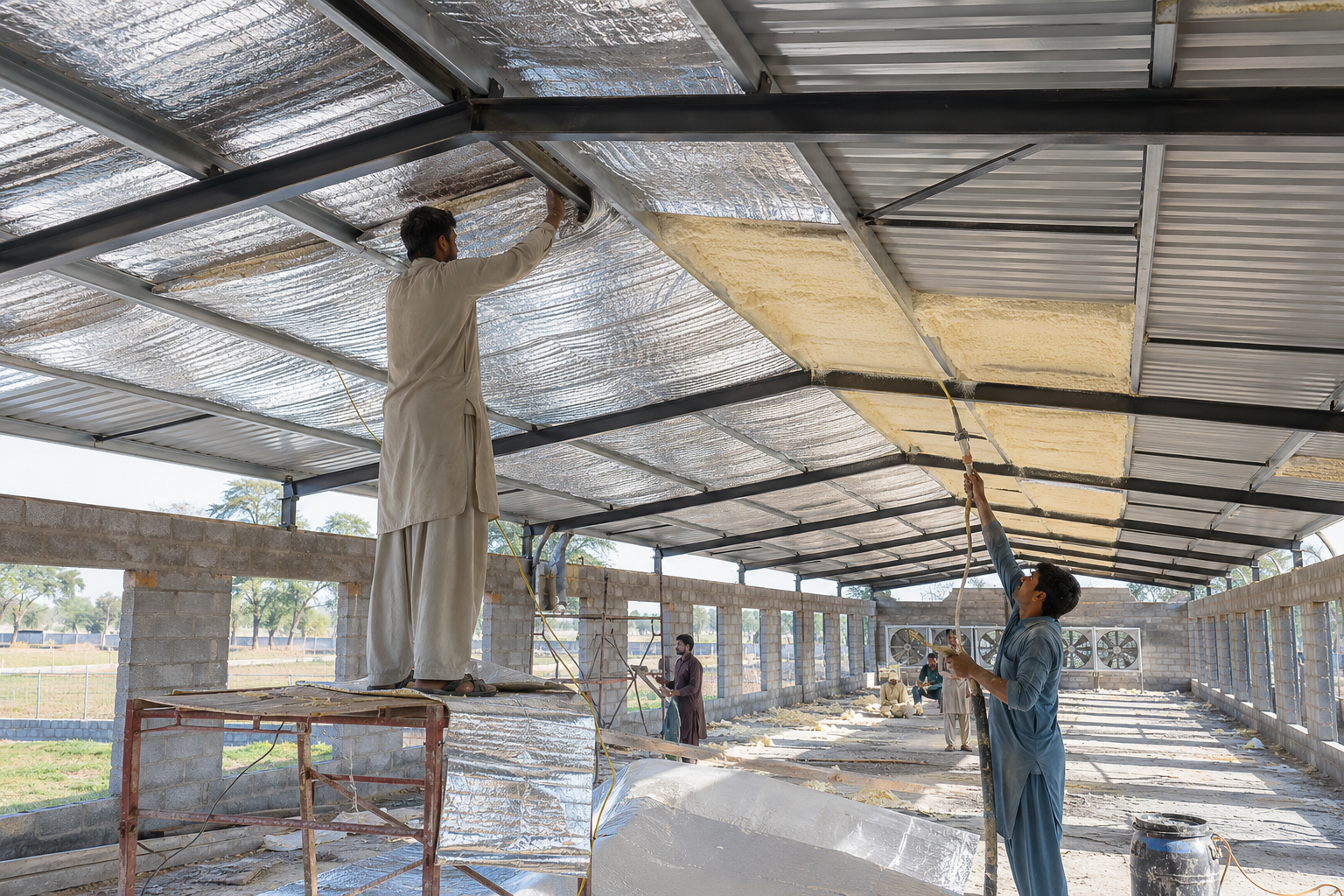
Closed-Cell SPF is the best option if you are looking for insulation for a cold storage unit that will be extremely effective in a high-humidity environment. Since water vapor will not be able to chemically penetrate the cell structure and won’t collect in the air gaps, closed-cell SPF will eliminate both of those problems. Also, since closed-cell SPF adheres directly to the substrate, the gaps will be eliminated.
Closed-cell SPF provides Karachi cold storage facilities with:
- A high R-value per inch (generally R-6 to R-7) requiring thinner applications.
- Vapor resistance, potentially eliminating the requirement for a vapor barrier.
- Seamless application, preventing the joint vulnerabilities in panel systems.
The only concern is cost. SPF is expensive when compared to rigid boards since it requires special equipment and trained personnel to apply.
Polyisocyanurate (PIR) Panels
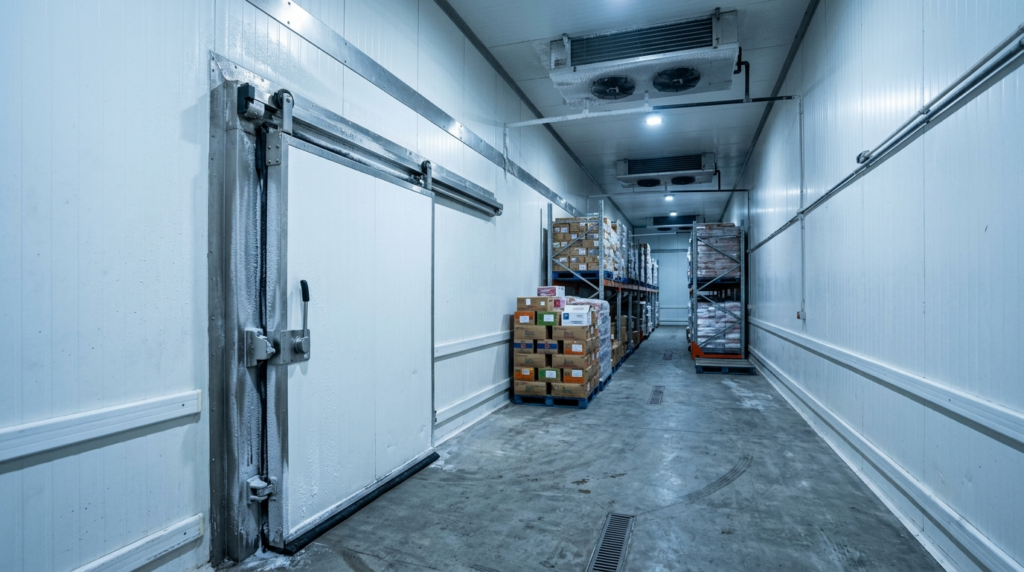
PIR panels provide an excellent thermal performance (R-5.6 to R-8 per inch) and come in a variety of facings in stainless steel, aluminum, and food grade steel with embossing. These are the most popular panels for prefabricated cold rooms and industrial cold storage in Pakistan.
In Karachi, the choice of facing is very important. In a salt-air environment, stainless steel or precoated aluminum facings outperform standard galvanized steel. The additional cost is justified by the additional years of service.
The weak point of a panel system is the joint sealing. In high humidity environments unsealed or poorly sealed joints allow the ingress of moisture, degrading the insulation from the inner side. Joints should be sealed with a high performance polyurethane sealant or EPDM gaskets and be checked annually.
Expanded Polystyrene (EPS) and Extruded Polystyrene (XPS)
EPS is easily available in Karachi and cheap, therefore it is a popular insulation choice for smaller or budget cold rooms. In a coastal city however, the vapor permeability and moisture absorbing nature of EPS is a significant disadvantage. In Karachi cold storage, without a robust vapor barrier and careful quality of work, EPS insulation will provide poor thermal performance over time.
XPS offers better performance than EPS in humid environments thanks to its lower moisture absorption, although it also isn’t able to outclass closed-cell SPF or quality PIR panels in long-term performance in Karachi.
As a rule of thumb, use EPS or XPS only when a high performance vapor barrier system will be provided and plan for a high replacement and inspection rate.
Which installation elicits the best performance?
Material selection is only one component especially when insulation is known to fail prematurely when installed incorrectly.
In Karachi, a vapor barrier is essential
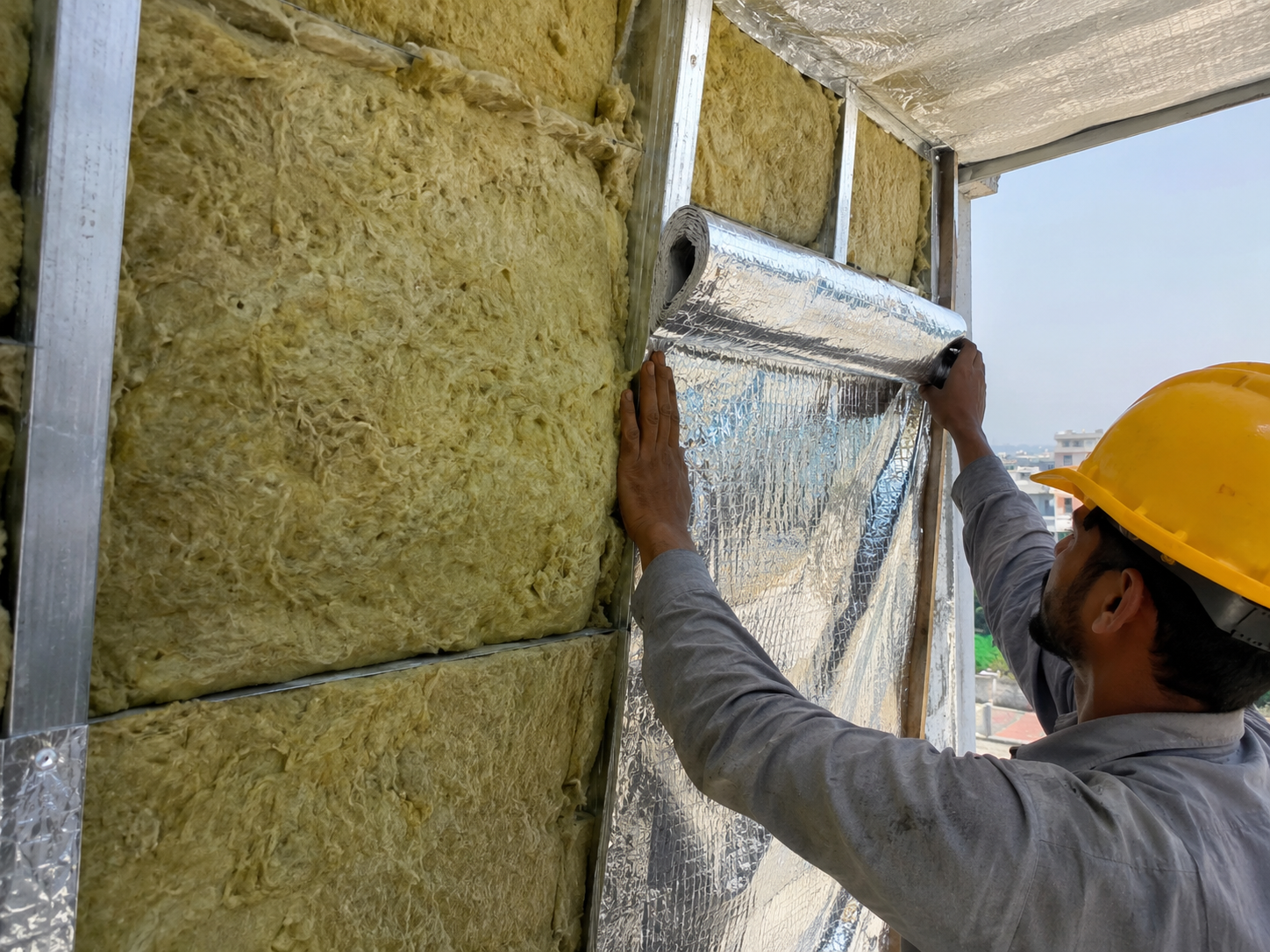
A vapor barrier is a must for cold storage in high humidity, coastal areas and needs to be installed on the warm side of the insulation. Use a continuous high perm vapor barrier and tape all seams with vapor tape. Any piping or structural members that penetrate the vapor barrier must also be sealed.
Vapor barriers installed on the wrong side or with unsealed seams will only worsen the insulation assembly by trapping moisture.
Salt Air Corrosion fasteners and frames
In a salt air environment, standard carbon fasteners will corrode. Fully specify either stainless steel or galvanized fasteners for the cold storage structure, fasteners for the panels, the racking system, and the door frame. While these materials will offer an additional cost, they will be far less than dealing with failed fasteners due to corrosion.
Drainage and Condensation Management
Defrost cycles of cold storage in Karachi, and the openings of cold storage doors will cause condensation and demand a sophisticated drainage design. Defective drainless designs will allow water to collect against insulated wall, increasing moisture ingress from the floor. A damp proof membrane and insulation beneath the slab, combined with a drain flange and designed sloping floors toward the drain, are industry standards.
How Often Should Cold Storage Insulation Be Inspected in Karachi?
Considering the environmental conditions of Karachi, it is suggested storage facilities should have inspections more than twice a year, especially in coastal storage and in the industrial area storage facilities where salt air is predominant.
Look for the following signs for each scheduled inspection:
- Exposed corrosion
- Patches of frost formation
- Deterioration of the sealant
- Condition of the door seal
Failure to detect these problems will result in more expensive repairs and a compromised cold chain.
Checklist for Cold Storage Insulation in Karachi
Make sure you check these before you install a cold storage insulation system in Karachi:
- Materials for coastal humidity? Closed-cell SPF or PIR with salt resistant facings.
- Vapor barrier? Continuous warm-side with sealed penetrations.
- Fasteners and frames? Stainless steel or hot dip galvanized.
- Panel joint seals? Polyurethane sealant or EPDM gaskets.
- Floor drains? Sloped to drains with a damp-proof membrane under the slab.
- Inspections? At least once a year, but twice a year if you’re close to the coast.
General Questions
What insulation is best for cold storage in Karachi?
The best closed-cell spray polyurethane insulation for cold storage in a coastal, humid, salt environment is closed-cell SPF. Of the panel-based systems, the best PIR systems are the ones that have moisture-resistant, stainless steel, or pre-coated aluminum facings. Both facings resist moisture and are much better than EPS or standard fiberglass.
Why is cold storage insulation near salt air a problem?
Salt air and salt water have a corrosive effect on exposed metal insulation facings. It also breaks down adhesives and sealants, especially in a highly salt air environment. Karachi’s port and coastal industrial zones have a higher salt air problem and need to use salt resistant materials and coatings.
How can I fix condensation issues in my Karachi cold storage?
Seal seams for a fully seamless barrier that installs on the warm side of your cold storage insulation as a continuous vapor barrier. Check all door seals and gaskets. Seal gaskets prevent the inflow of warm moist air. It’s important to design a drainage system to avoid pooling condensation and to insulate condensate.
Is EPS insulation good for cold storage in Karachi?
With a strong vapor barrier that decreases moisture absorption, EPS insulation can be used in Karachi cold storage. EPS insulation is susceptible to increased moisture absorption and decreased thermal performance in a coastal storage environment. Consider closed-cell SPF or PIR for long term cold storage solutions.
How often should I check my cold storage insulation in Karachi?
You should conduct a minimum of an annual inspection for cold storage facilities in Karachi. Facilities in coastal areas should be inspected a minimum of every 6 months. Cold spots, visible corrosion, and deterioration of joint seals and vapor barrier seals should be checked.
Get Expert Cold Storage Insulation Advice
Pakistan Insulations (Pvt.) Ltd. has been supplying and installing cold storage insulation solutions across Pakistan since 1986. Whether you are building a new cold room or upgrading an existing facility in Karachi, our team can recommend the right system for your environment and budget.
📞 +92-21-34529722
✉ [email protected]
🌐 www.pakinsulation.com