Clean Room Construction in Pakistan: Pharma, Food & Healthcare Facilities Requirements
A clean room is not merely a space that is cleaned frequently. It is an engineered environment where airborne particle concentration, temperature, humidity and pressure are all controlled within defined limits — and where the building envelope itself plays a critical role in maintaining those conditions.
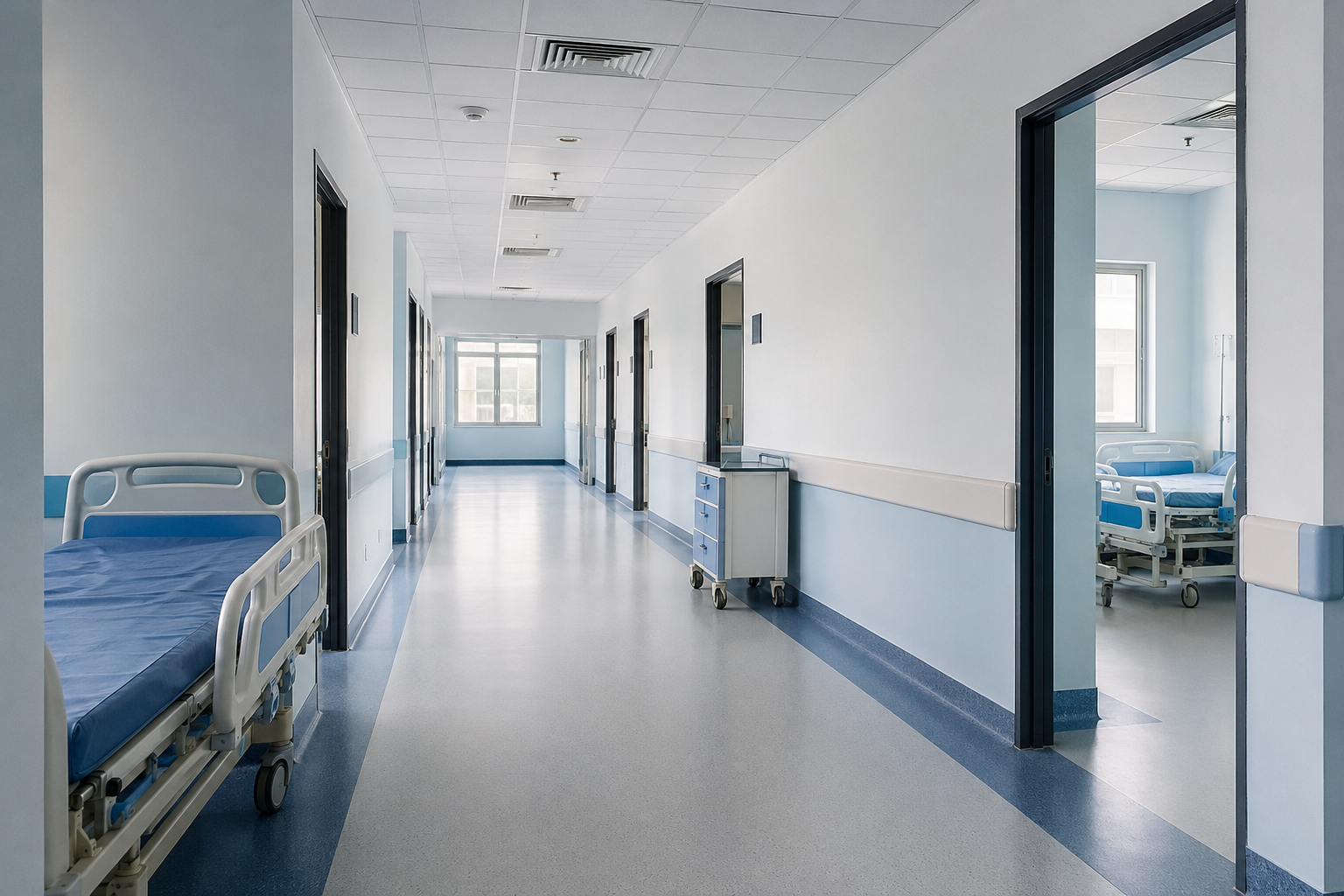
Pakistan’s pharmaceutical industry is thriving, fueled by a combination of domestic demand and export ambitions. International customers are increasingly demanding that food processors prove they have cleanliness certificates. Hospitals are springing up all throughout the nation. All three industries need cleanrooms — and all three routinely construct them wrong, then spend years dealing with the fallout: failed audits, contamination occurrences, expensive retrofits and sometimes regulatory shutdowns.
This guide will look at what clean rooms really need, how ISO classifications function, what the building envelope must provide, and where clean room projects in Pakistan most often go wrong.
What a Clean Room Is — and What It Isn’t
A clean room is a place where the number of airborne particles of a certain size is controlled to a predefined maximum concentration. Everything else — the smooth walls, the positive pressure, the gowning rules, the HVAC design — is there to support that one measured outcome.
The performance of a clean room is based on the building envelope. Before the HVAC system can keep the particle counts down, the room has to be sealed effectively enough that air does not seep in from uncontrolled regions. Before you can regulate temperature, the insulation must be good enough so the HVAC is not fighting heat gain from outside. Surfaces must be smooth, jointless and chemically resistant before they can be cleaned efficiently.
A clean room constructed with the wrong panel specification, improper insulation or insufficient sealing at joints and penetrations will not pass a certification audit — no matter how good the HVAC system is. The building and the HVAC system are partners. Get the construction wrong and no amount of costly air handling equipment will cure it.
ISO Cleanroom Classifications
Clean rooms are classified according to the maximum permissible concentration of airborne particles based on ISO 14644-1. Pharmaceutical plants in Pakistan are governed by WHO GMP and DRAP requirements which reference these ISO classes. Food processing and medical device manufacturers are increasingly bound by international buyer requirements associated with the same standards.
| ISO Class | Max Particles / m³ ≥0.5µm | Normal Application in Pakistan |
|---|---|---|
| ISO 5 (Class 100) | 3,520 | Sterile drug filling, surgical implants |
| ISO 6 (Class 1,000) | 35,200 | Aseptic processing, eye care goods |
| ISO 7 (Class 10,000) | 352,000 | Pharma manufacturing, medical devices |
| ISO 8 (Class 100,000) | 3,520,000 | Food manufacturing, electronics, cosmetics |
| ISO 9 (Indoor air) | No limit | Controlled corridors/gowning areas |
This classification drives the HVAC design, the pressure cascade between zones, the gowning requirements and the construction standard for panels, seals and finishes.
The Building Envelope: Clean Room Panel Requirements
Easy to Clean, Smooth Surfaces
Clean room panel surfaces must be resistant to repeated wiping with cleaning agents and disinfectants. The finish must be smooth enough to prevent particle retention, chemically resistant, and devoid of apparent joints, gaps or fissures at wall-to-wall, wall-to-ceiling and wall-to-floor interfaces.
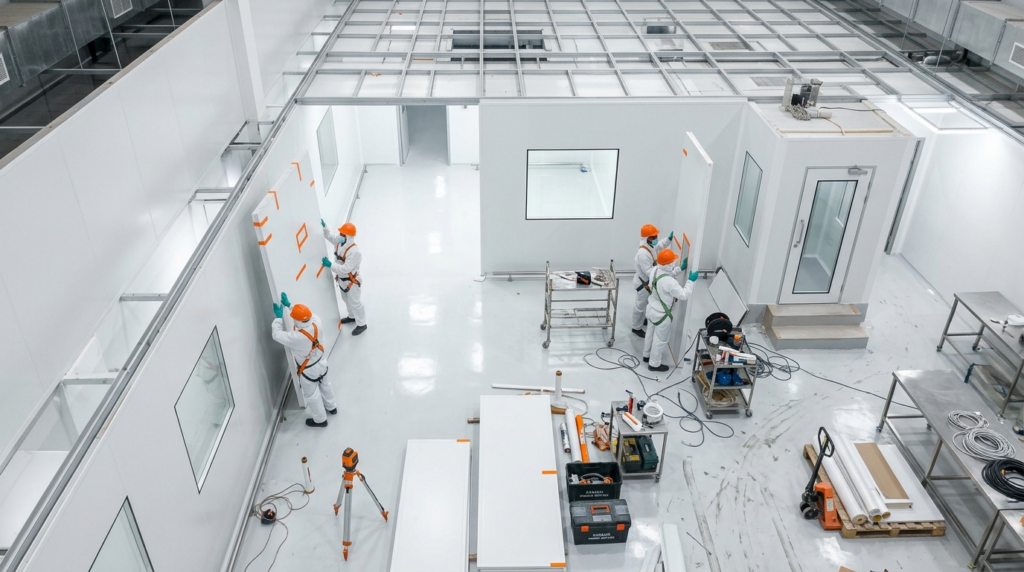
For most Pakistani pharmaceutical and food facilities, the typical standard is PUF sandwich panels with smooth steel or GRP facing. Panels are connected with flush joints and sealed with food or pharma-grade silicone during installation.
Thermal Performance
Clean rooms must maintain very specific temperature ranges — often 18°C to 22°C for pharmaceutical manufacture. In Pakistan’s environment with ambient temperatures of 42°C to 45°C in summer, the clean room envelope must be well insulated to prevent the HVAC system from being overwhelmed by heat gain.
PUF panels at 100mm thickness produce a U-value of around 0.2 W/m²K — suitable for most clean room applications in Pakistan when paired with adequately sized HVAC. Thicker panels of 120mm to 150mm are specified when the ambient temperature differential is extreme or energy efficiency is a priority.
Airtightness
A clean room must be fully sealed. Every connection between panels, every penetration for electrical conduit, piping or HVAC ducting, every door frame — these are possible air leakage channels. When air enters from uncontrolled zones, it carries unfiltered particles directly defeating the particle count management the HVAC is trying to achieve.
Airtightness is assessed through pressurisation testing — the space is pressurized above ambient and pressure loss is monitored. This test is performed before commissioning and must be repeated after any alteration of the envelope.
Fire Performance
This is where many Pakistani clean room projects make a critical specification mistake. PUF panels have outstanding thermal performance and smooth cleanable surfaces — yet PUF is flammable. Fire resistance is not optional in pharmaceutical and healthcare clean rooms. DRAP GMP requirements, hospital building laws and international pharma standards all mandate fire-rated construction.
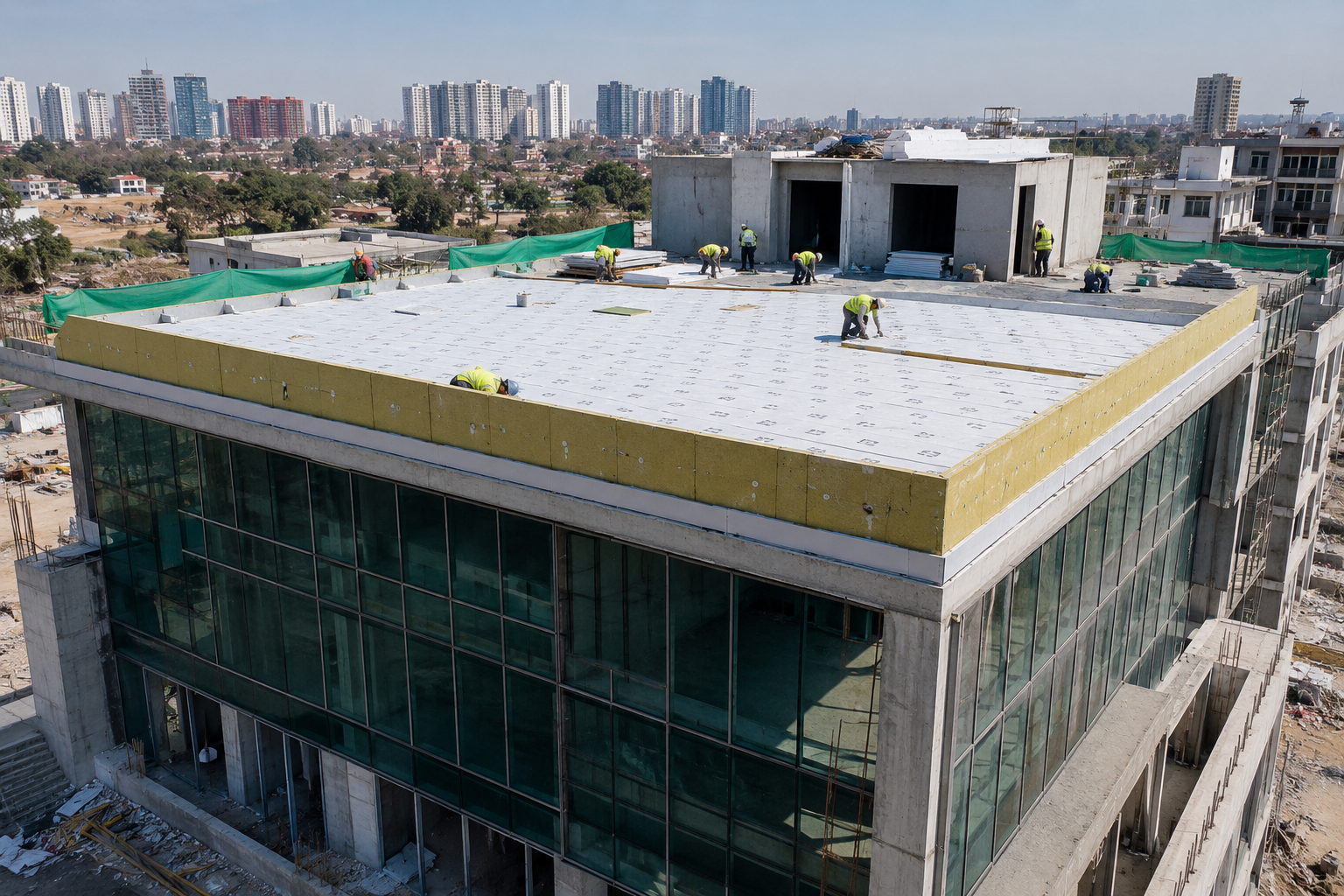
The solution is fire-rated PUF panels or Rockwool-core panels for areas where full non-combustibility is required. Most well-specified Pakistani pharma clean rooms combine PUF panels in manufacturing areas with Rockwool-based fire-rated assemblies at compartment boundaries, fire exits and electrical areas.
Airlock Design and Pressure Cascades
A clean room is not an island. The system operates as a pressure cascade — a succession of zones at increasing pressure so that air always flows from the cleaner zone outward to less clean zones.
In a pharmaceutical plant, the highest-pressure zone is typically the most critical manufacturing section such as sterile filling, surrounded by increasingly lower-pressure zones — secondary packing, corridors, gowning rooms, and eventually the uncontrolled building outside. Pressure differences between zones are minor, generally 10 to 15 Pascals, but must be maintained continuously.
Airlocks connecting zones are as crucial as the rooms themselves. An airlock must have interlocking doors so both cannot be opened simultaneously, its own HEPA-filtered supply air, and must be constructed to a quality level equal to the cleaner of the two zones being separated. Poorly designed airlocks are one of the most common reasons for clean room certification failure in Pakistani facilities.
Floors, Ceilings and the Details that Fail Audits
Floors
Clean room flooring must be smooth, chemically resistant, non-porous, anti-static where applicable, and coved at the wall junction — a curved transition rather than a right-angle corner — to eliminate crevices that collect contamination. Epoxy resin flooring is the norm in Pakistani pharmaceutical and food plant clean rooms. The cove detail must be produced in the same material, not a separate plastic coving strip which creates a joint that harbours infection.
Ceilings and Walls
A standard clean room ceiling is a flush panel system with HEPA filter units, illumination and supply/return air terminals all in one plane — no exposed structure, no gaps around light fittings, no apparent fasteners to collect dust. All elements of the ceiling plane must be flush and sealed.
In ISO 5 and higher unidirectional flow clean rooms, the entire ceiling is essentially one large HEPA filter with laminar downward airflow across the full room. The ceiling structure must sustain the weight of many HEPA units and associated ducting while preserving the flush, sealed plane below.
Service Penetrations
Every pipe, conduit, duct and cable entering a clean room is a possible contamination and air leakage channel. Services must enter as few times as feasible through specialized penetration points with sealed sleeves. Exposed pipes within a clean room create cleaning difficulties and particle shedding risks. Services are routed in the ceiling void above the panel system wherever practicable, with only supply/return points accessing the clean area.
Typical Failures in Pakistani Clean Room Projects
- Wrong panel specification for ISO class: ISO 5 and 6 rooms need flush joint, high quality panels with minimum surface roughness. Standard sandwich panels with visible joint lines do not qualify.
- PUF panels where fire resistance is required: The most common serious mistake. Fire-rated construction is nearly always required in pharmaceutical and healthcare clean rooms.
- Poor joint sealing: Panel joints sealed with the wrong sealant or left partially exposed create both air leakage and contamination traps. Only pharmaceutical or food-grade silicone should be used.
- Right-angle wall-floor junctions: A 90° angle at the wall-floor junction is a contamination buildup point that cannot be thoroughly cleaned. Coving is a functional requirement for every ISO 7 or higher space.
- Non-compliant doors: Standard steel doors with visible gaps, non-cleanable surfaces and no interlocking mechanism are not acceptable for clean rooms.
- No qualification strategy from the beginning: A clean room must be designed following its qualification procedure — IQ, OQ, PQ. Projects that do not plan for certification from day one always encounter costly specification gaps later.
Pakistan Insulations for Clean Room Projects
Pakistan Insulations supplies insulated panel systems that make up the walls, ceilings and floors of clean room building envelopes — PUF sandwich panels for conventional thermal and hygienic performance, and Rockwool-based fire-rated assemblies for places where non-combustibility is required.
We also insulate the clean room’s HVAC ductwork with Rockwool duct liner and external duct insulation to prevent condensation on supply ducts carrying cooled air through unconditioned ceiling voids.
The insulation specification for a clean room project cannot be taken from a catalogue without regard to the ISO class, fire standards, temperature difference and HVAC design. At the design stage we work with project engineers and HVAC consultants to ensure the building envelope and HVAC system are defined as an integrated system.
Constructing a clean room facility in Pakistan? Contact our technical team to discuss your project:
- Phone: +92-21-34529722
- Email: [email protected]
- Website: www.pakinsulation.com