How Insulation Is Reducing Fuel Costs at Pakistan’s Power Plants
TL;DR: Massive fuel consumption in Pakistan’s power facilities might be slashed by industrial insulation on pipelines, boilers and turbines. Proper thermal insulation cuts down on heat loss, makes for better energy use and may lower fuel bills by up to 30%. It is one of the most cost-effective upgrades accessible to plant operators.
Pakistan’s energy industry is in serious difficulty. Fuel prices are climbing, grid reliability is uncertain and energy suppliers are under pressure from all directions. Industrial insulation is among the most underutilized technologies available to plant owners looking for a practical, proven approach to reducing operating costs.
This is not a theoretical solution, thermal insulation is proved to minimize fuel use, heat loss and maintenance costs at power producing facilities all over the world. There has never been a greater need for investment in excellent insulation for thermal, combined-cycle and industrial power plants in Pakistan.
In this post we break out how insulation works in a power plant setting, where you are losing the most heat, and what forms of insulation would give you the most return on investment.
Heat Loss: Pakistan Power Plants’ Invisible Fuel Cost
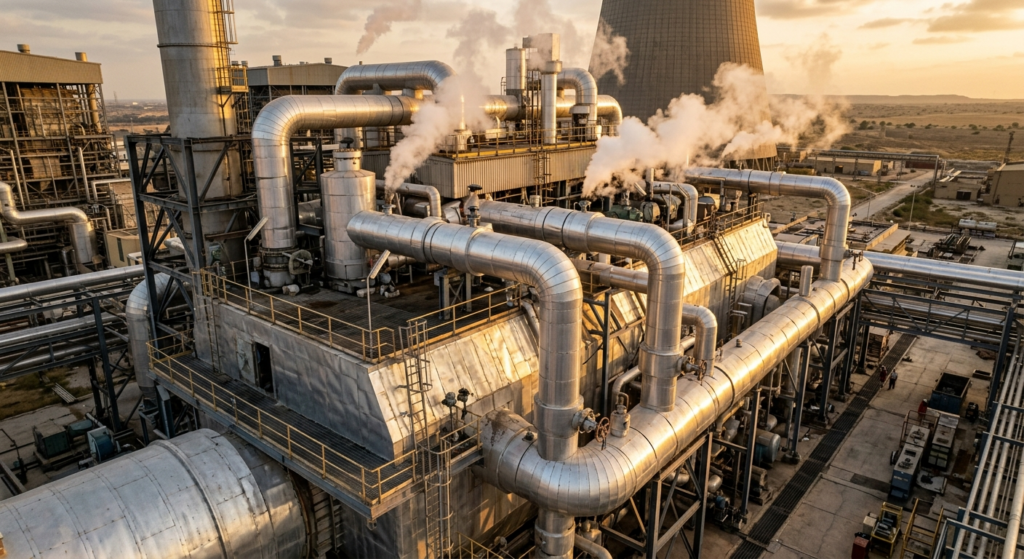
All the heat that leaks out of an uninsulated or poorly insulated surface is lost fuel. In a thermal power plant, steam and hot fluids are conveyed via kilometers of piping at temperatures that can exceed 500°C. Without sufficient insulation, a lot of the thermal energy seeps out to the surroundings before it even gets to the turbine or heat exchanger.
According to the U.S. Department of Energy, surface radiation and convection losses in uninsulated steam systems can account for 10 to 30 percent of the total heat produced. For a medium-sized power plant in Pakistan using furnace oil or natural gas, both of which have experienced a sharp rise in price in recent years, this means the loss of millions of rupees worth of fuel per year.
The math is simple: cut heat loss, cut the amount of fuel needed to maintain operating temperatures, and cut costs.
The most heat wasted in Pakistani power plants
Knowing where heat loss occurs is the first step to fixing it. The main loss areas of most thermal power plants are as follows:
Steam & Hot Water Lines
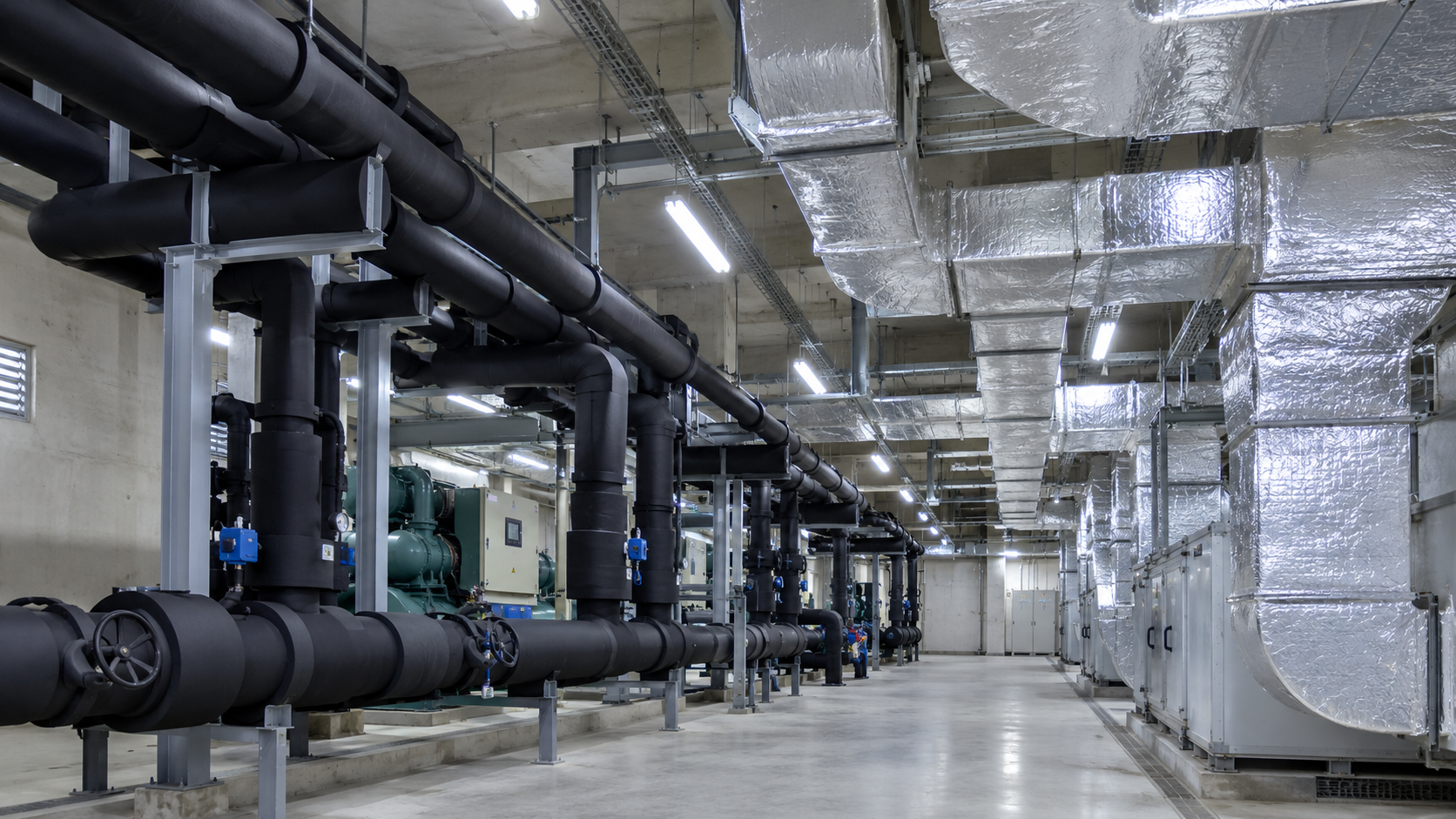
The biggest causes of heat loss in any plant are the high pressure steam lines from boilers to turbines. Any bare pipe at 300°C will radiate a considerable quantity of energy — a short length of pipe will. These pipes are insulated with jackets of mineral wool or calcium silicate to keep the heat where it belongs, in the steam.
Furnace Walls and Boiler Shells
The furnace walls and boiler shell are at a very high temperature. If the refractory and insulation are not enough, heat is lost through the walls and the burner has to work harder to maintain the correct temperature. This raises the fuel consumed per unit of energy created directly.
Valves, Fittings, and Flanges
They are frequently disregarded because they are thought to be difficult to insulate. Removable jackets are manufactured for valves and flanges particularly. If a huge valve on a high temperature line is left exposed, it can lose as much heat as many metres of uninsulated pipe.
Exhaust Ducts and Turbine Housings
The primary sources of heat loss in combined-cycle power plants and industrial cogeneration systems are turbine casings and exhaust ducts. Insulating these surfaces helps to minimize heat stress on neighboring equipment and captures energy for possible recirculation back into the process.
The Right Insulation Materials for Power Plant Applications
Not all insulation can withstand the high temperature, high humidity and mechanically demanding environment of a power plant. The most widely employed solutions in Pakistan’s industrial and energy sectors are:
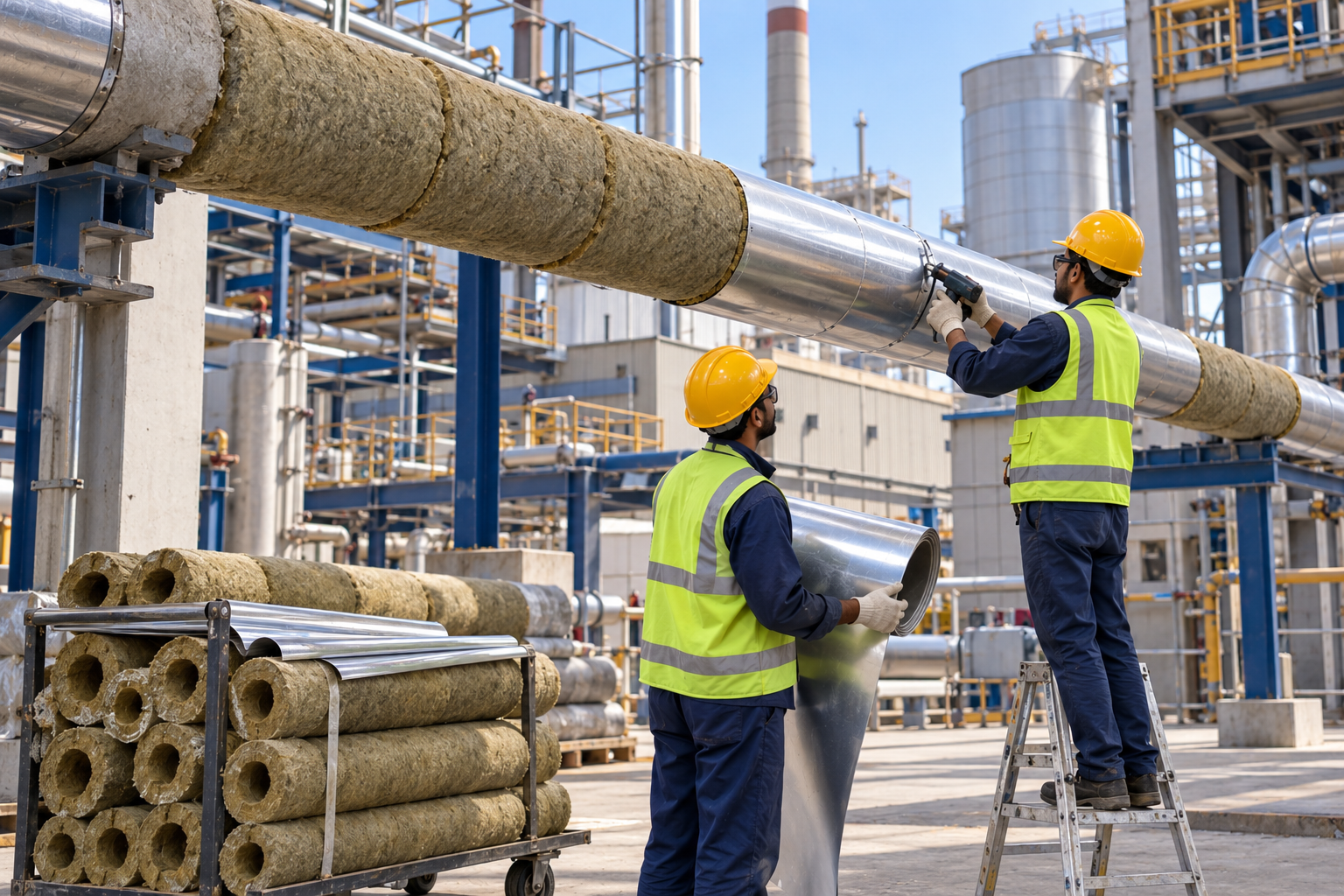
- Mineral Wool (Rockwool and Glass Wool): The industrial insulating work horse. Non-combustible, heat resistant up to 750°C, excellent thermal performance. Found commonly in steam lines, boiler surfaces and ductwork.
- Calcium Silicate: Used for high-temperature applications over 400°C. Calcium silicate boards and pipe sections are good in compression and are ideal for surfaces subject to mechanical forces or foot traffic.
- Ceramic Fibre: For the most extreme temperatures — furnace linings, burner blocks, expansion joints where temperatures exceed 1,000°C. Ceramic fibre blankets and modules are lightweight and permit fast heat-up and cool-down cycles.
- Aerogel Insulation: Gaining popularity in Pakistan’s industrial sector. Aerogel blankets are very good at resisting heat at considerably lower thicknesses than typical materials, which is ideal for space-constrained installations around valves and complicated pipes.
The decision relies on the operating temperature, mechanical exposure, moisture risk and budget. A trained insulation contractor may conduct an energy audit to identify what materials will give the greatest return for each application.
What can insulation really save a power plant?
The potential savings are considerable and well demonstrated. The National Insulation Association (NIA) asserts that insulating a single 6-inch steam pipe at 400°C over a 30-metre length may save the equivalent of thousands of dollars per year in fuel expenses — per pipe run.
Multiply this over a whole site — hundreds of metres of pipe, many boilers, and plenty of valves and fittings — and the overall save is significant. Industry standards suggest a 15 to 30 percent fuel savings is possible for thermal power plants with a full insulation improvement. Payback durations generally range from one to three years.
A 10 percent thermal efficiency boost offers a significant contribution to the operating bottom line for Pakistani power plants facing high furnace oil prices or restricted gas allocations.
How an insulation upgrade project goes
- Thermal Energy Audit: An engineering team performs infrared thermography and surface temperature measurements to determine the regions of greatest loss across the building.
- Material Selection: The insulating materials and thicknesses are selected based on the operating circumstances to meet the required heat loss objectives.
- Installation: Qualified insulation applicators install and secure insulation systems on pipelines, boilers and equipment. Valves and flanges have detachable jackets to provide maintenance access.
- Verification: A thermal image is taken after installation to check that heat loss has been minimized to desired levels.
- Maintenance Programme: Insulation systems have to be regularly inspected and repaired, particularly in places vulnerable to moisture ingress or mechanical damage.
By working with an experienced insulation supplier and contractor that understands the unique needs of Pakistani industrial settings, the proper materials may be chosen and installed for long-lasting performance.
Is the investment worth it?
Yes, in a nutshell. More so given the current energy economics of Pakistan. With fuel costs being so volatile and energy efficiency being a growing factor in plant sustainability, insulation is among the few changes that pays for itself in direct operational savings, rather than having to develop revenue to justify the outlay.
Insulation retrofits are often carried out in stages during planned maintenance outages with minimum disruption to operations, unlike equipment overhauls or fuel switching activities. The materials are locally accessible, installation procedures are well known and performance results are predictable.
Thermal insulation should be high on the list of capital improvement priorities for plant operators and energy management.
FAQs
What is the fuel saving potential of insulation in a power plant in Pakistan?
When placed correctly, industrial insulation may minimize heat loss by 15 to 30 percent, which means lower fuel usage. The actual savings will vary depending on the existing condition of the plant’s insulation, operating temperatures and the extent of the retrofit.
What portions of the power plant are most benefitted by insulation?
The highest savings are generally in steam pipes, boiler shells, furnace walls and high temperature valves and flanges. These components run hot 24/7 and are the greatest cause of radiative heat loss in most facilities.
What is the most utilized insulating material in Pakistan power plants?
Mineral wool (Rockwool and glass wool) is the most extensively used, because of its cost-effectiveness and performance across a wide range of temperature. Calcium silicate is utilized for high-load, high-temperature surfaces. Ceramic fiber for high temperature furnace applications.
How long does it take to pay back an insulation upgrade?
The payback period for power plant insulation retrofits is typically between one and three years, depending on fuel prices, project scale and present heat loss levels. And ROI may be as much as 30 percent a year.
Will the insulation installation process involve a lot of downtime?
Most insulation work may be done during planned maintenance downtime. Removable jacket systems are usually installed and removed on valves and flanges without the requirement to shut down the system and hence minimise disturbance to the plant operations.
Looking for pipe and equipment insulation for your power plant or industrial facility?
Pakistan Insulations manufactures Rockwool pipe sections, mattresses and high temperature insulation systems for power plants, refineries and industrial buildings all around Pakistan.We have been supplying and installing insulation to PARCO, Rousch Power and Babcock-Hitachi.
For a thermal energy assessment and specification consultation contact:
📞 +92-21-34529722
✉ [email protected]
🌐 www.pakinsulation.com