Insulation for Food Processing, Dairy & Bakery in Pakistan
Food Processing can be a tricky application. Within one building you may have a chiller running at a few degrees above freezing, an oven or pasteurisation unit running very hot, daily washing of the floor and an auditor looking at your ceiling just as much as your production line. I have seen good insulation specified for the wrong reasons. Or low grade insulation failing within a year due to this application. It’s not only about the product you’re using but what you’re covering it with and sealing it with.
Hygiene
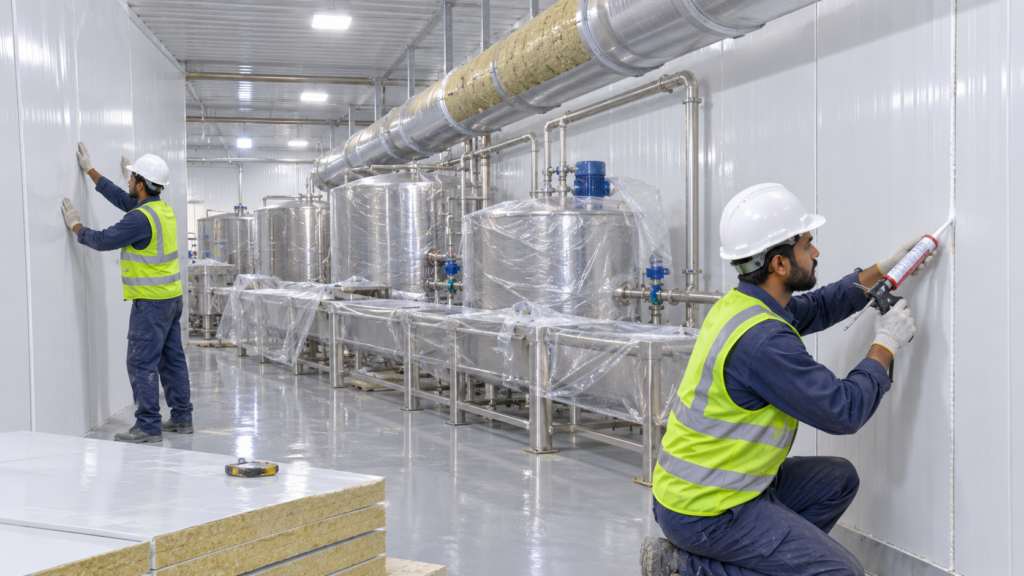
Within a production area, you need to avoid anything that will release fibres, trap dust or absorb water. Any loose fill or open faced Insulation should be avoided near open product. The insulation should be smooth, sealed and easy to clean. This is why pre finished insulated panels with a coated steel finish are commonly used in Food Processing plants. Any gaps should be avoided by ensuring tight joints and seals.
Where possible (for example fire rated walls or hot equipment) mineral wool should be completely enclosed behind a sealed face.
Washing
Materials can suffer greatly from daily washing. Water will get into any gaps and sit. If your insulation is absorbent it will lose its performance and encourage mould growth. The entire system should be waterproof in wet areas. Sealed joints on panels, coved edges around wall/floor joints, sealed edges and pipework with a cladding.
Cold Rooms
All dairies, meat & fish plants, bakeries with proofing & cooling rooms and any plant with a cold store will have a temperature differential. Cold surfaces will cause condensation when exposed to warm and damp air. This will cause dripping onto product, mould growth on ceilings and a slippery floor. Using a continuous layer of insulation with a good vapour barrier will prevent the cold surface getting too cold to cause sweating. Joints, doors & pipework should also be considered. These are usually where problems occur. See our guide to vapour barriers for further information.
Steam, Hot Water & Process
Pasteurisers, CIP lines, boilers, fryers & ovens will all run hot. Leaving steam & Hot Water pipework exposed will cause you to waste fuel and make the room uncomfortable. In a bakery this can be a challenge. Pre formed rockwool pipework insulation with a smooth metal cladding is commonly used. Insulating oven walls, roofs & ducts will help keep the heat in the process and not the working area. Valves & fittings should have removable covers.
Fire
Bakeries & fried food plants are hot environments and contain flour dust, oil & fuel. It is important to use non-combustible mineral wool in hot areas. Fire rated panels/walls should also be used if required by the building. Foam that is combustible should not be used in the core of panels or in the ceiling above fryers or ovens. Confirm with the panel manufacturer to ensure the panel has a good fire rating.
Audits
Whether it’s a food authority, certification body or international buyer they will ask similar questions. Are the surfaces smooth & easy to clean? Are there any gaps, cracks or damaged panels? Is there condensation or mould? Is the pipework & equipment covered? Is the cladding intact? If the insulation has been specified with these factors in mind then it won’t usually be an issue. But if it’s an afterthought then it can be.
Common Issues
- Using standard building insulation in a washdown area.
- Unsealed panel joints, edges & penetrations.
- Not considering condensation on cold room doors & pipework.
- Exposing steam pipework & valves.
- Not considering fire ratings of panels.
- Damaged panels/cladding.
Why It Matters in Pakistan
The food & dairy industry is booming in Pakistan with more plants being used to supply supermarkets, exporters & big buyers that will inspect. Energy costs can be high with many plants having chillers & boilers running all day. Using good quality insulation will reduce these costs, keep the building clean & dry & pass inspections. Specifying it at the design stage will save you a lot of money compared to having to sort it later where production will have to be stopped.
FAQs
What type of insulation is used in Food Processing?
Pre finished insulated panels with sealed coated steel finishes are commonly used. Pre formed rockwool with metal cladding is used on hot pipework & equipment.
Can mineral wool be used in food production areas?
Yes as long as it is completely enclosed behind a sealed face.
How do I prevent condensation in a dairy or cold room?
Use continuous insulation with a sealed vapour barrier. Ensure joints, doors & pipework are considered.
Does insulation matter in food safety audits?
Yes. They will want to know surfaces are smooth & easy to clean, joints are sealed, cladding is intact & there is no condensation or mould.
Is foam insulation safe to use in a bakery?
It depends on the location & fire rating of the whole panel. It would be better to use non-combustible insulation near ovens & fryers.
Contact Pakistan Insulations today for a free consultation and quote.
Phone: +92-21-34529722
Email: [email protected]
Website: www.pakinsulation.com