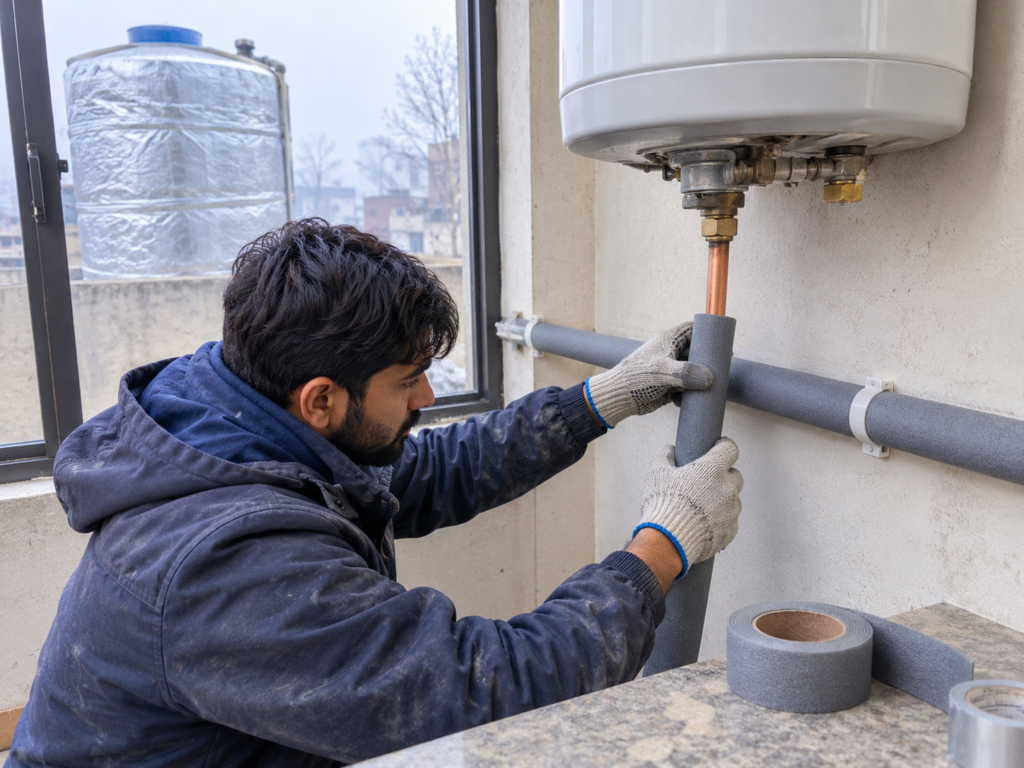
Saving on Gas – Geyser, Water Tank & Pipework Insulation
Although people tend to focus on their heating system when trying to reduce gas costs, few consider the geyser, roof and/or yard water tank and pipework which distributes hot water around a property. In fact, a significant amount of gas is consumed by a property for hot water and there is often considerable heat wastage. Fortunately, there are low cost, relatively simple solutions to these problems.
Sources Of Hot Water Wasteage
Heat is wasted both from the water tank, and through the geyser casing whilst it is waiting to be used. It is also wasted from pipework as hot water is pumped around to the kitchen and/or bathrooms and so there may be a lengthy wait for water to heat. Further, tanks on a roof or in a yard can suffer from heat wastage, particularly on cold nights. Again, this causes the geyser’s burner to have to work harder and for a greater period of time. All these sources can be addressed by adding insulation.
Important Notes On Geyser Insulation
Please take time to read this information. A gas geyser comprises a burner, flue and air inlets. None of these components should ever be obstructed. Incorrectly covering a geyser can hinder the flow of air to the burner, cause back-drafting and/or conceal important safety devices. Poorly ventilated gas equipment can produce dangerous levels of carbon monoxide and so particular care must be taken in Pakistan, especially in winter.
- Never cover a geyser’s flue, vent, burner, air inlets or pilot button.
- Always adhere to the manufacturer’s guidelines. Do not add a jacket if this is not permitted.
- Only use insulation appropriate for the equipment as not all insulations are suitable for high temperatures, for example, those close to a geyser’s burner and/or flue.
- If in any doubt always consult a qualified professional. Do not take risks.
Typically and safely, electric storage and storage water tanks can be insulated (provided the manufacturer permits this). For a gas storage geyser, a professional can also guide you as to which areas can be safely insulated. Generally this will be the tank body but never the burner and flue.
Storage Or Instant Geysers
Storage geysers continually maintain a reservoir of hot water and so suffer from heat wastage throughout the day. Insulating can therefore help to limit this. Instant (tankless) geysers heat water as and when it is required and consequently have minimal heat wastage. However, here again, pipe insulation provides the greatest benefits. Understanding which geyser you have will help to target insulation effectively.
Pipework – The Easy Option
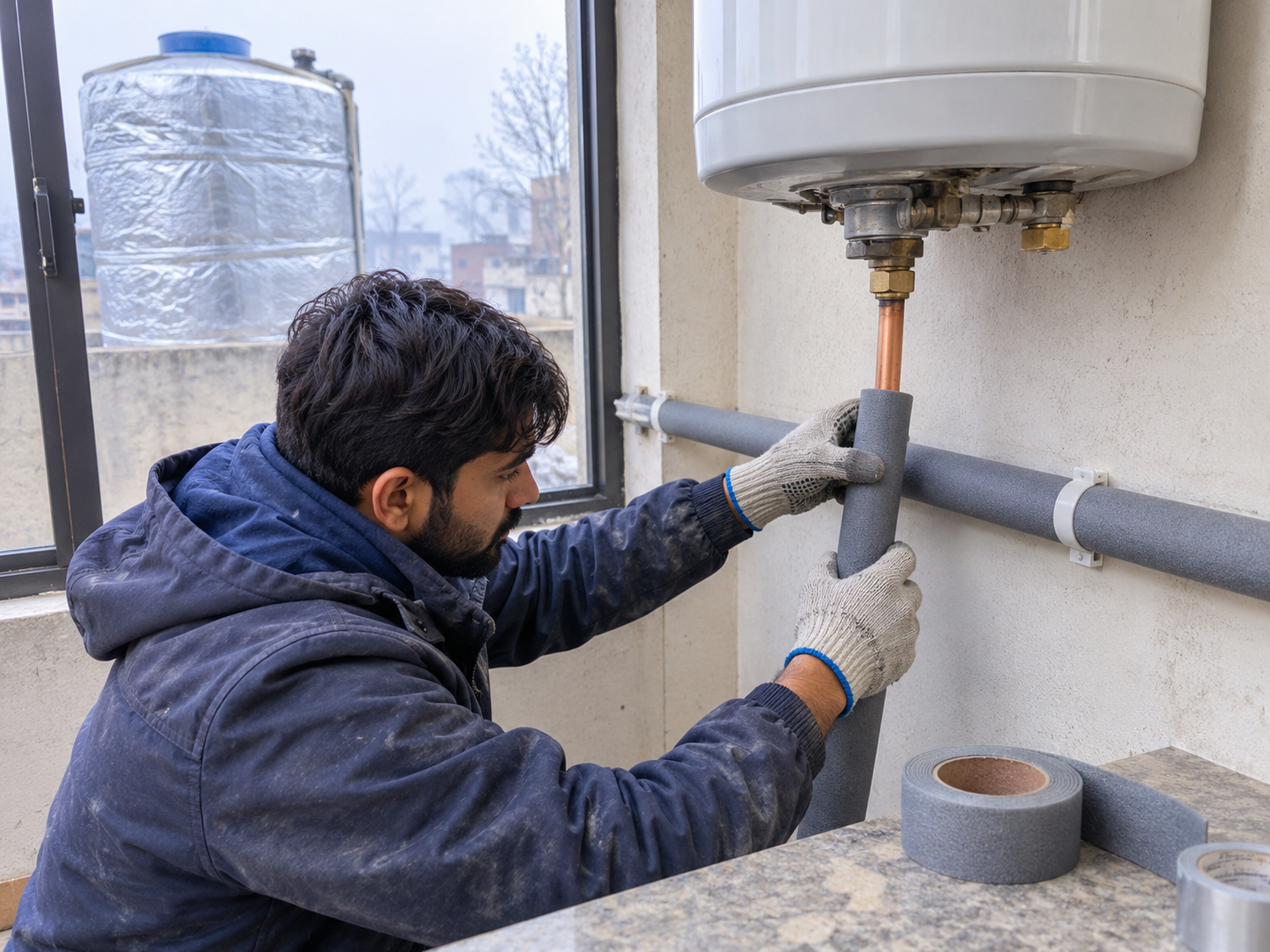
Pipe insulation is generally the easiest and safest form of insulation. Insulate the initial part of the pipe closest to the geyser together with any pipe passing through a chilly area e.g. roof, cavity wall, basement or external wall. Pre-formed foam pipe covers can be clipped or slipped over pipes. Mineral wool is also used, although for higher temperature pipes. Ensure that the insulation is suitable for the pipe’s temperature and that it also covers pipe joints and corners as these are prone to heat wastage.
As well as saving on gas, insulating pipes ensures that water is both hotter and quicker to reach the tap. Consequently, less is wasted.
Roof And Yard Water Tanks
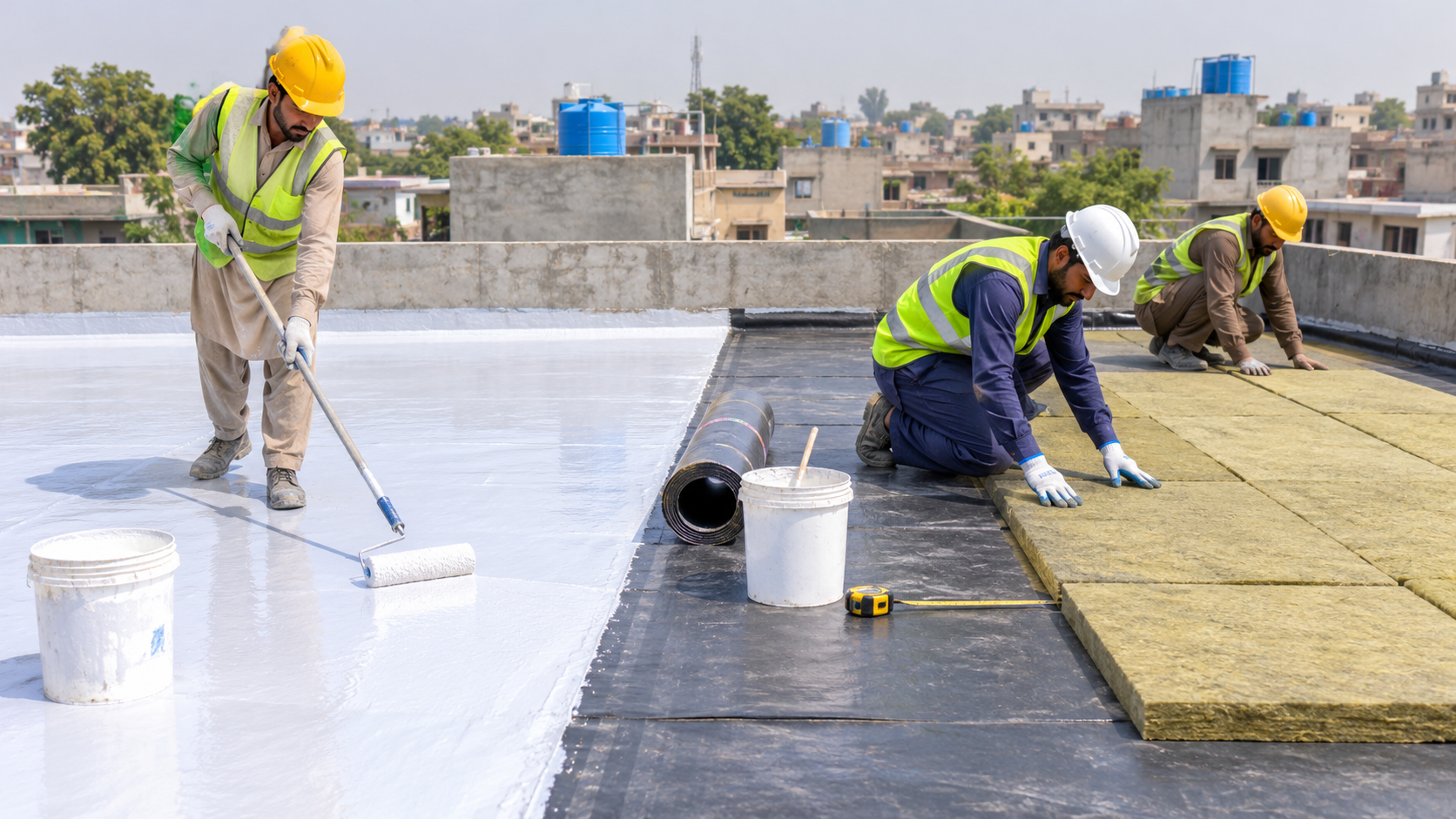
Water tanks on a roof heat up during summer and then rapidly lose heat on cold winter nights. Furthermore, in northern regions, tanks can even freeze. Insulating and then weather-proofing a tank, together with insulating and weather-proofing the attached pipework, can help to stabilise a tank’s temperature. Always use dry, weather and sunlight proof insulation. As previously mentioned, damp insulation is ineffective. Ensure that a tank’s lid remains on and that it can still be accessed for cleaning.
Northern Freezing Pipes
In locations such as Murree, Gilgit, Chitral and Swat, and similar, external pipework can become frozen and then crack. Adding pipe insulation helps to limit heat wastage and so can be beneficial, especially during brief periods of light freezing. However, it will not prevent pipes from freezing in extended periods of intense cold as, again, insulation only limits heat wastage and does not generate heat. Additional steps should also be taken to protect pipes in cold regions. Wherever possible, avoid running pipes along external walls. During extremely cold weather, permit a small flow of water to continue and ensure that drainage systems are emptied for unoccupied buildings. Local plumbers can provide further guidance.
Simple Winter Guide
- Review the instruction manual for your geyser.
- Add insulation to the initial part of the hot water pipe closest to the geyser.
- Weather-proof and insulate any pipe (hot or cold) which goes through a cold area.
- Weather-proof and insulate roof and yard water tanks.
- Reduce the geyser’s thermostat to a desirable level. As previously mentioned, hotter water is more prone to heat wastage.
- Ensure that vents, flues and air inlets are unobstructed.
- Also think about fitting a carbon monoxide detector.
How Much Will I Save On My Gas Bill?
This will vary depending on the geyser type, pipe length, and ambient temperature around the geyser and also on hot water usage patterns. Although genuine savings can be made, be wary of people who state specific figures without assessing your circumstances. Typically, however, the return on investment is rapid given the low cost of insulation. Plus, as indicated above, tap hot water is both hotter and more swiftly available.
Larger Properties
Again, the same concept can be applied on a larger scale. Institutions including hostels, hospitals, hotels, factories and bakeries all have central heating and so hot water is pumped around extensive pipework. Once again, due to the length of pipe, heat wastage can accumulate. Usually, rockwool pipe insulation, either metal or weather-proofed, is fitted. Valves and pipe fittings also typically have removable pipe jackets. Information on boiler and pipe insulation can be found in our related guides.
Common Queries
Can I insulate my gas geyser?
Provided that the manufacturer permits this, yes. However, never cover a geyser’s burner, flue, vents, air inlets or buttons. Please consult a qualified professional if in doubt.
Will pipe insulation help me to save on gas?
Yes. It limits heat wastage along the pipe and so enables hotter water to be delivered to taps. Again, therefore, there is less water wastage.
Can pipe insulation prevent my pipes from freezing?
Whilst it limits heat wastage, pipe insulation can be helpful in preventing freezing during light freezes. However, it will not prevent freezing in extended periods of intense cold. Again, additional methods should be adopted to further protect pipes in cold areas.
Should I insulate my roof water tank?
Generally, yes. Particularly in cooler regions. Again, ensure that you use weather and water proof insulation and that the tank remains accessible.
Which pipe insulation should I use?
For most households, foam pipe covers are typically used for hot water pipes. Mineral wool is utilised for higher temperature pipes. Confirm that the insulation is suitable for the pipe and remember to insulate pipe joints and corners.
Contact Pakistan Insulations now for a no obligation consultation and quotation.
Phone: +92-21-34529722
Email: [email protected]
Website: www.pakinsulation.com