Insulated Prefabricated Buildings, Mobile Cabins & Site Offices in Pakistan
You will know how hot steel cabins can get from personal experience if you’ve ever been in one during the Summer months of June. Site Offices, labour camps, security rooms and container offices are used throughout Pakistan in all sorts of applications such as construction, power plants, mines and highways. They are a quick, cheap solution to erecting temporary accommodation. The users of the cabins are expected to concentrate, sleep and work in a small steel box in the heat of 45°C. Insulation will often be the first thing to go from the budget, and will be requested as soon as the first summer hits.
Why Steel Cabins Get Hot
Steel is a great conductor and has low thermal mass. This means that an exposed steel roof will absorb the sun and transfer the heat directly to the room underneath. As the walls will also be exposed to the sun (on the sunny side) there is not much to offset the heat. The air con will be running full blast and you will see a large increase in your electricity/fuel costs. Especially if the site is being used with a generator.
During the winter months, in the Northern areas, you will also lose heat very quickly.
Sources of Heat
- Roof – By far the largest source of heat. This should be addressed first.
- Walls – Especially on the west/south side during the afternoon.
- Floor – Usually not a problem. However, if the cabin is built on a frame you will lose/gain heat from underneath.
- Windows/Doors – Poor seals and single glazed windows will allow heat and dust in.
Solutions
Insulated Sandwich Panels
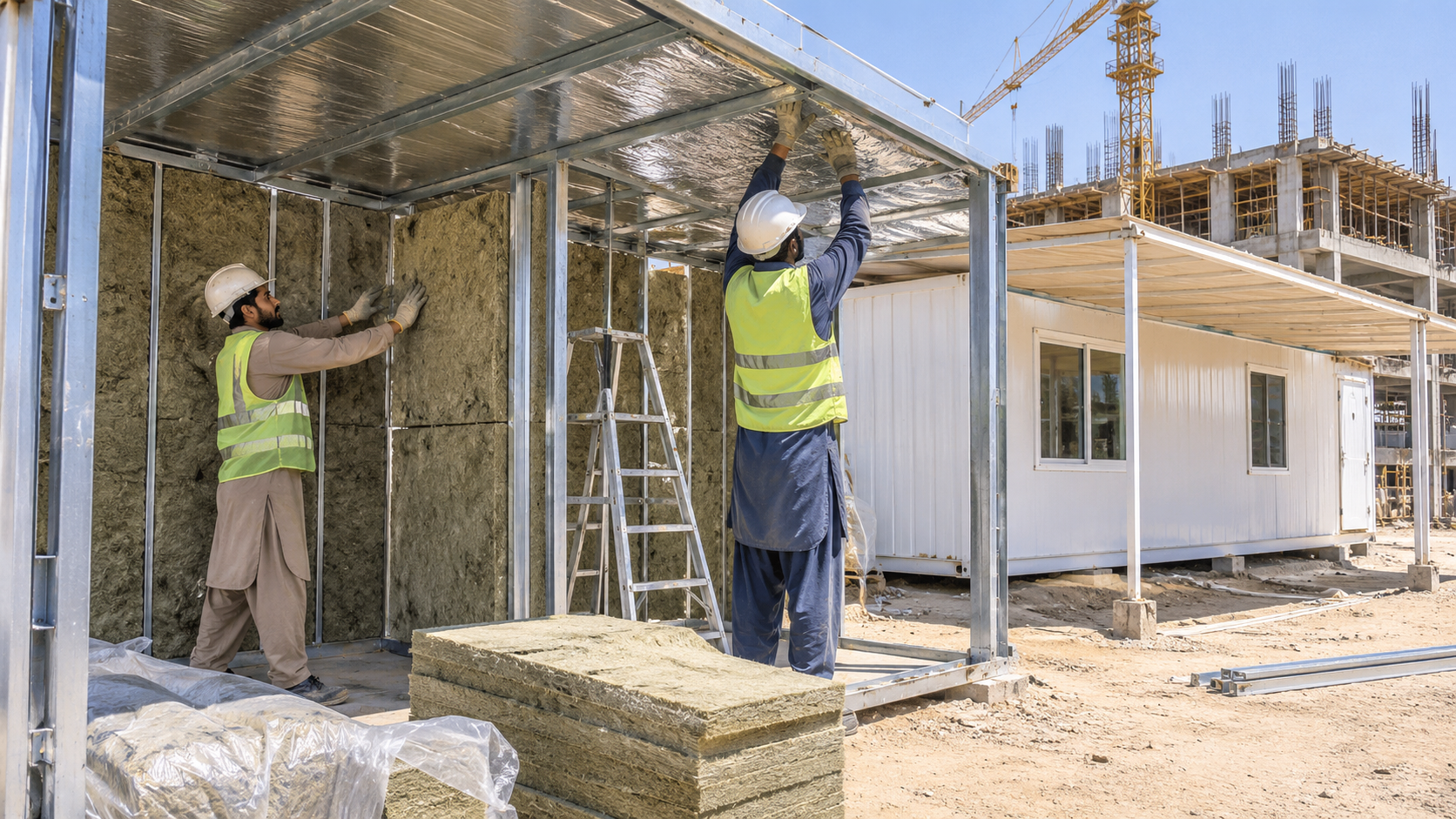
If you’re building new cabins, the cleanest option would be to use factory made insulated sandwich panels. These have the steel sheets and insulation combined in one panel. Easy to install and easy to clean. The insulation can be EPS, PU or PIR foam or mineral wool. Foam will give great thermal performance depending on the thickness. Mineral wool is non-combustible and it will also help with noise. If you have sleeping areas, or cabins with kitchens, electrical panels or generators, it’s worth looking at the whole panel’s fire resistance.
Insulate Existing Cabins
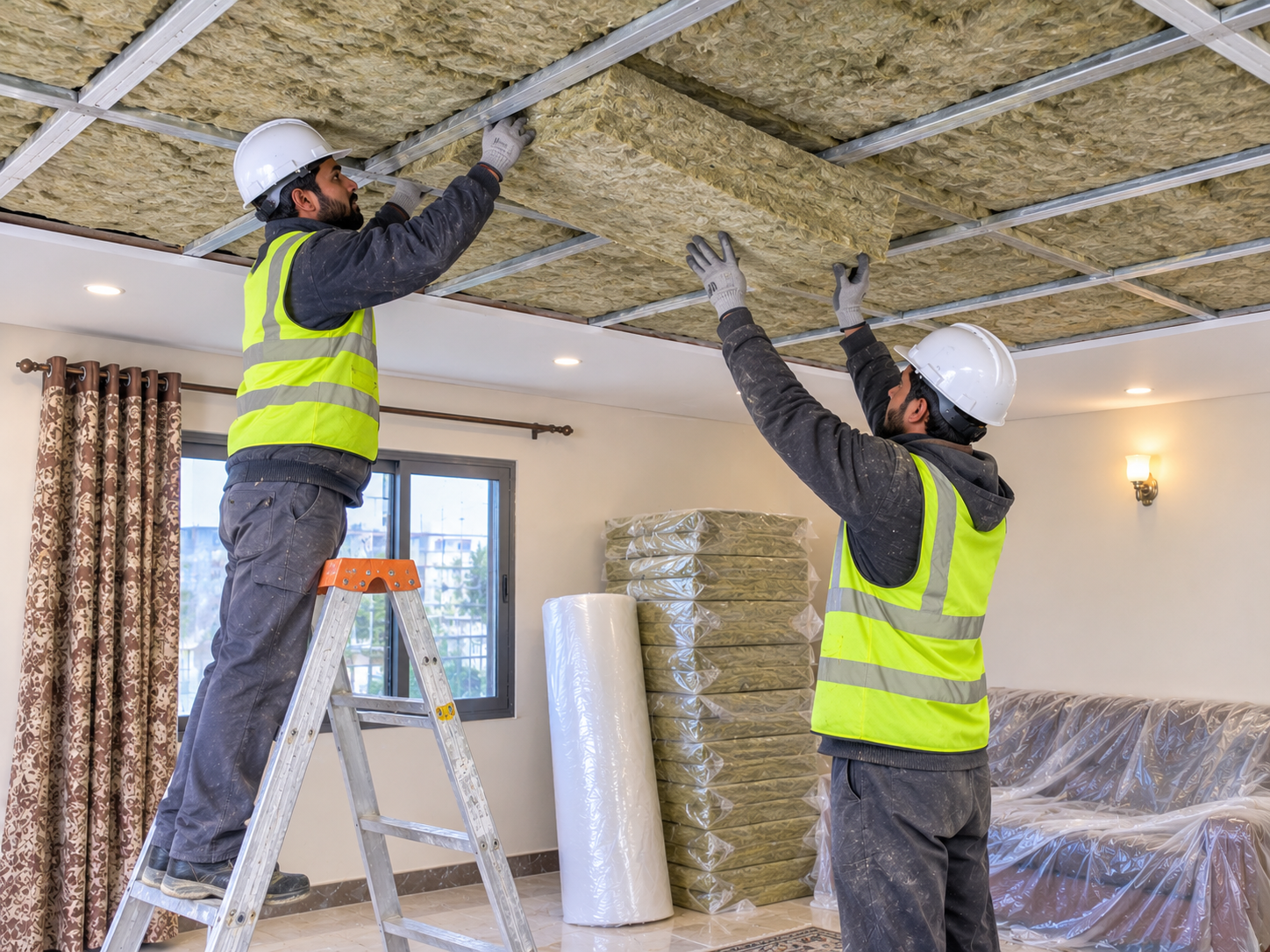
Existing steel cabins can be upgraded from the inside. Usually mineral wool or glass wool will be fixed between a light frame. You can add a vapour resistant liner if required and then finish with a liner board. It does take up some internal space but it makes a massive difference. If you can only do one area, insulate the roof first for the best return.
Reflective Foil
Adding insulation with a foil face will reflect some of the radiant heat from the roof. This should be used with an air gap and proper insulation.
Easy Fixes
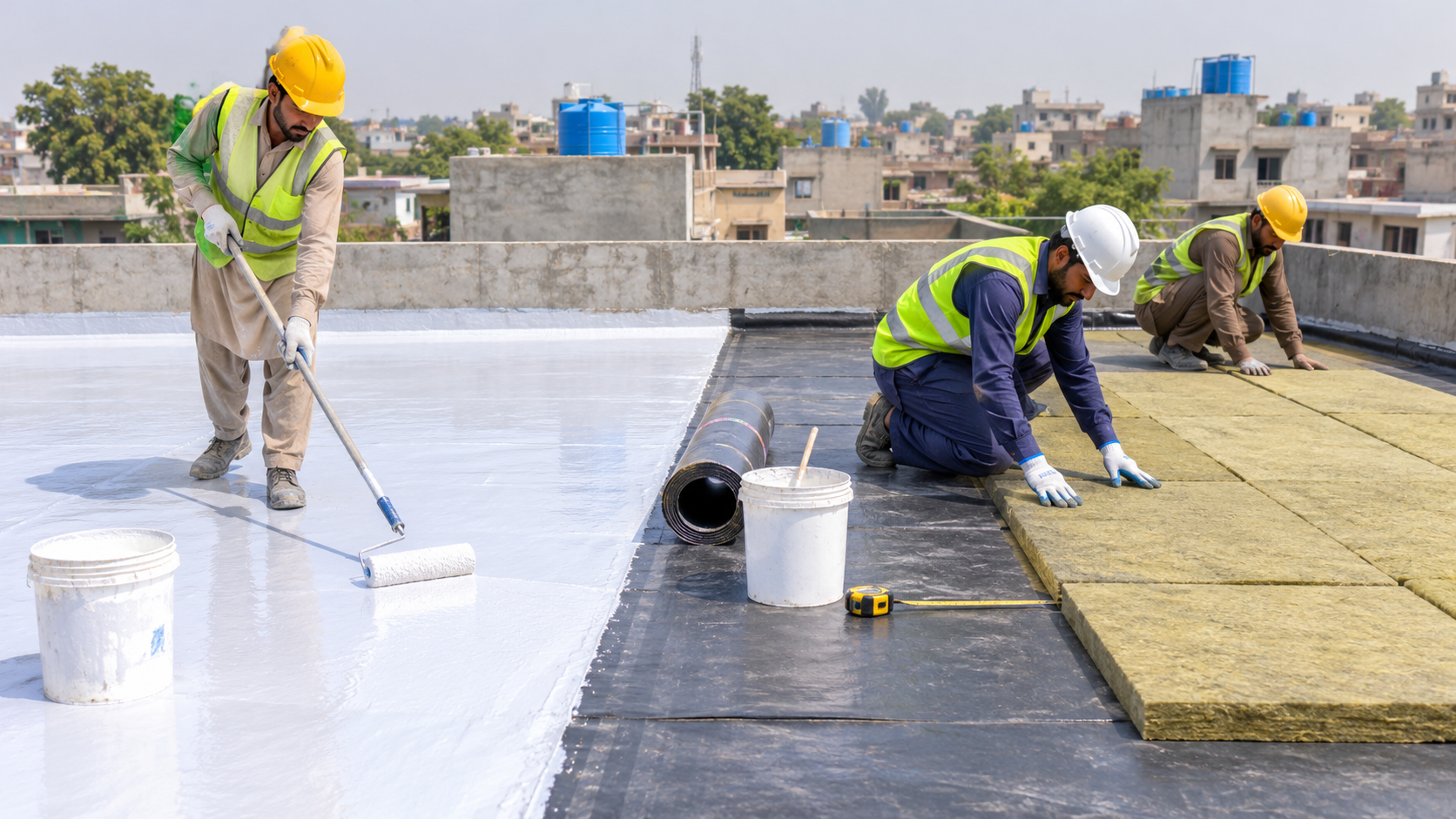
Adding another sheet to the roof, adding a shade canopy, using pale reflective paint and having an air gap under the roof will all help to reduce the amount of heat the insulation has to work against. These will work well.
Condensation in Steel Boxes
Steel will get cold during cool nights. If the air is humid it will also get damp. If the cabin is air conditioned it can also get cold inside meaning moisture will build up behind the linings and cause dripping. Adding a continuous layer of insulation with a sealed vapour barrier will help. Usually it will be at the joins, corners and around windows.
Fire, Noise & Safety
As labour camps are used for sleeping and cooking and temporary buildings can have dodgy wiring it’s worth thinking about what you’re putting in the walls. Using mineral wool in sensitive areas as it is non-combustible is a good idea. If you have a cabin near a generator or heavy machinery adding acoustic insulation will help make it easier to relax and make phone calls.
Portable Cabins
If you have a portable cabin you need to ensure the insulation stays in place. Ensure the boards are properly attached, if the batts sag there will be gaps at the top. Avoid anything that can soak up water. A durable system will pay for itself over multiple moves.
Will It Pay Off?
Often yes. Large projects will have cabins for years. The reduction in cooling costs, especially if it’s powered by a diesel generator, can pay for itself quickly. The staff will be more comfortable and productive and there will be fewer complaints to the Project Manager. However, if it’s only going to be used for a few weeks it doesn’t make as much sense. Few Site Offices are only used for a few weeks.
Common Errors
- Only insulating walls and not roof.
- Using open cell or paper faced insulation which will soak up moisture.
- Gaps at joins, doors and windows.
- Not considering fire resistance in sleeping/cooking areas.
- Going cheapest without considering if it can Be Moved.
FAQ’s
How can I cool my container office?
Start with insulating the roof. Either insulate, add shading or both. Insulate the walls, seal any gaps, use reflective paint and upgrade windows/door seals.
What is the best insulation for Prefabricated buildings?
If building new the cleanest option would be factory made sandwich panels. If upgrading existing cabins mineral wool/glass wool in a light frame is a good option.
Will adding insulation help prevent condensation in steel cabins?
Yes, if it is added as a continuous layer with a sealed vapour barrier. Usually it will be at the gaps and joins.
Is Foam insulation safe to use in Labour Camps?
Depends on the whole panels fire resistance. It’s better to use mineral wool in sleeping/cooking areas as it is non-combustible.
Will adding insulation reduce fuel usage for generators?
Yes. As there will be less heat gain the air cons won’t be running as much reducing the load on the generator and therefore the fuel cost.
Contact Pakistan Insulations today for a free consultation and quote.
Phone: +92-21-34529722
Email: [email protected]
Website: www.pakinsulation.com