Insulation for Shopping Malls & Retail Complexes in Pakistan
Walking into any new shopping mall in Lahore, Karachi or Islamabad, the first thing you notice is the air-conditioning: all at full blast, just to make the building habitable throughout the day. To most mall developers, a significant chunk of the building’s cooling load is essentially fighting heat that insulation could have kept out at a fraction of the cost.
Why Malls Are Harder to Cool Than Homes
Retail buildings have a distinct thermal signature compared to a house. Large uninterrupted roof spans, high footfall and continuous lighting and equipment add load beyond what is coming into the building envelope itself. A mall with a poorly insulated roof and envelope can have power bills far more expensive than they need be, with envelope work done correctly at construction stage.
Where the Heat Load Comes From in a Commercial Building
With single or double story retail buildings featuring large flat RCC or metal deck roofs as standard, the roof is by far the most significant source of heat gain, with a large surface area being exposed directly to the sun for much of the day. Glass facades and storefronts contribute significantly to the heat load, with South and West facing elevations being at greatest risk.
Service areas including plant rooms, generator rooms and ducting running through the building are also a significant source of heat gain, and energy loss in the case of ducting, if left uninsulated.
Roof Insulation: The Single Biggest Lever for Cooling Costs
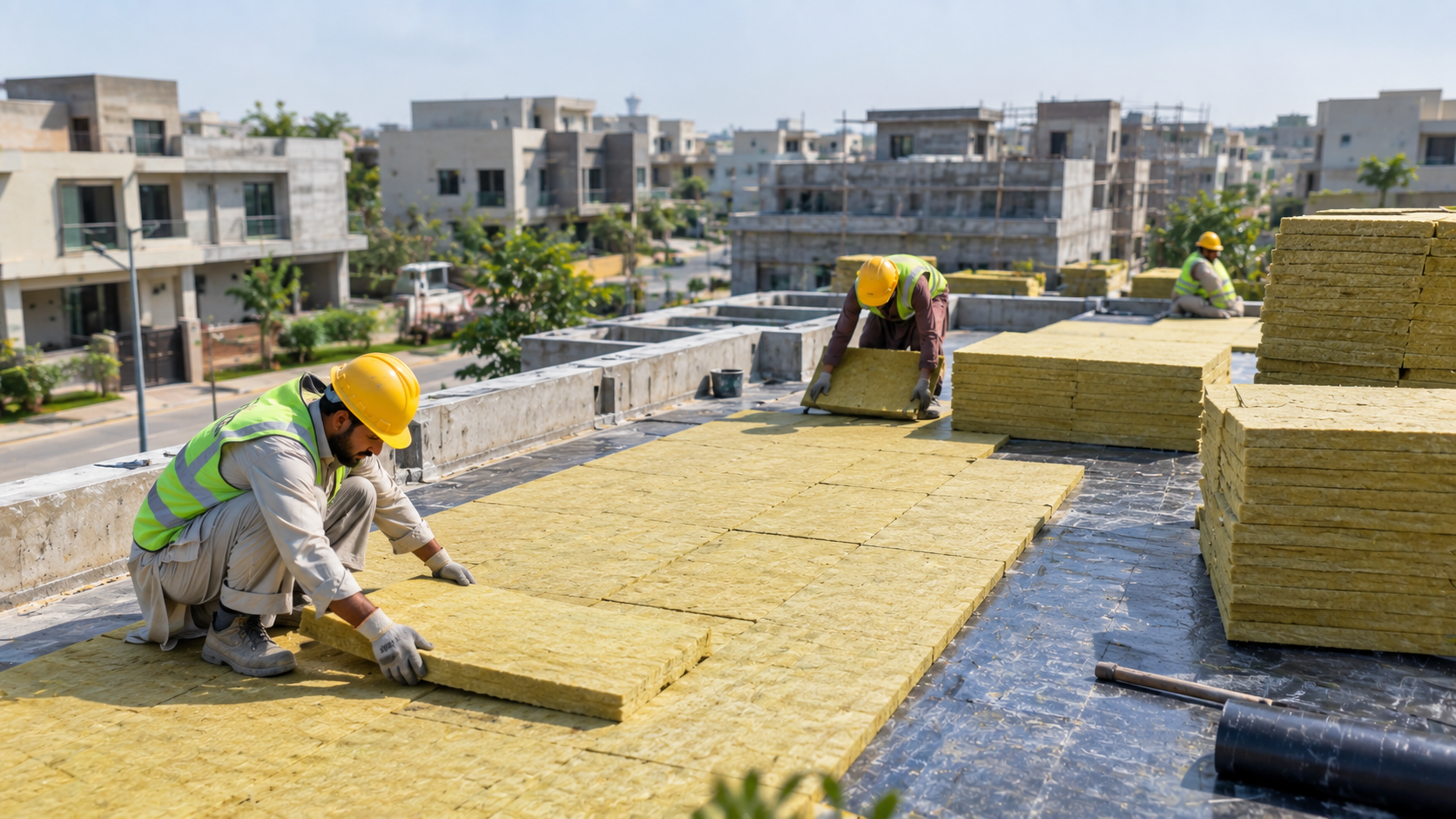
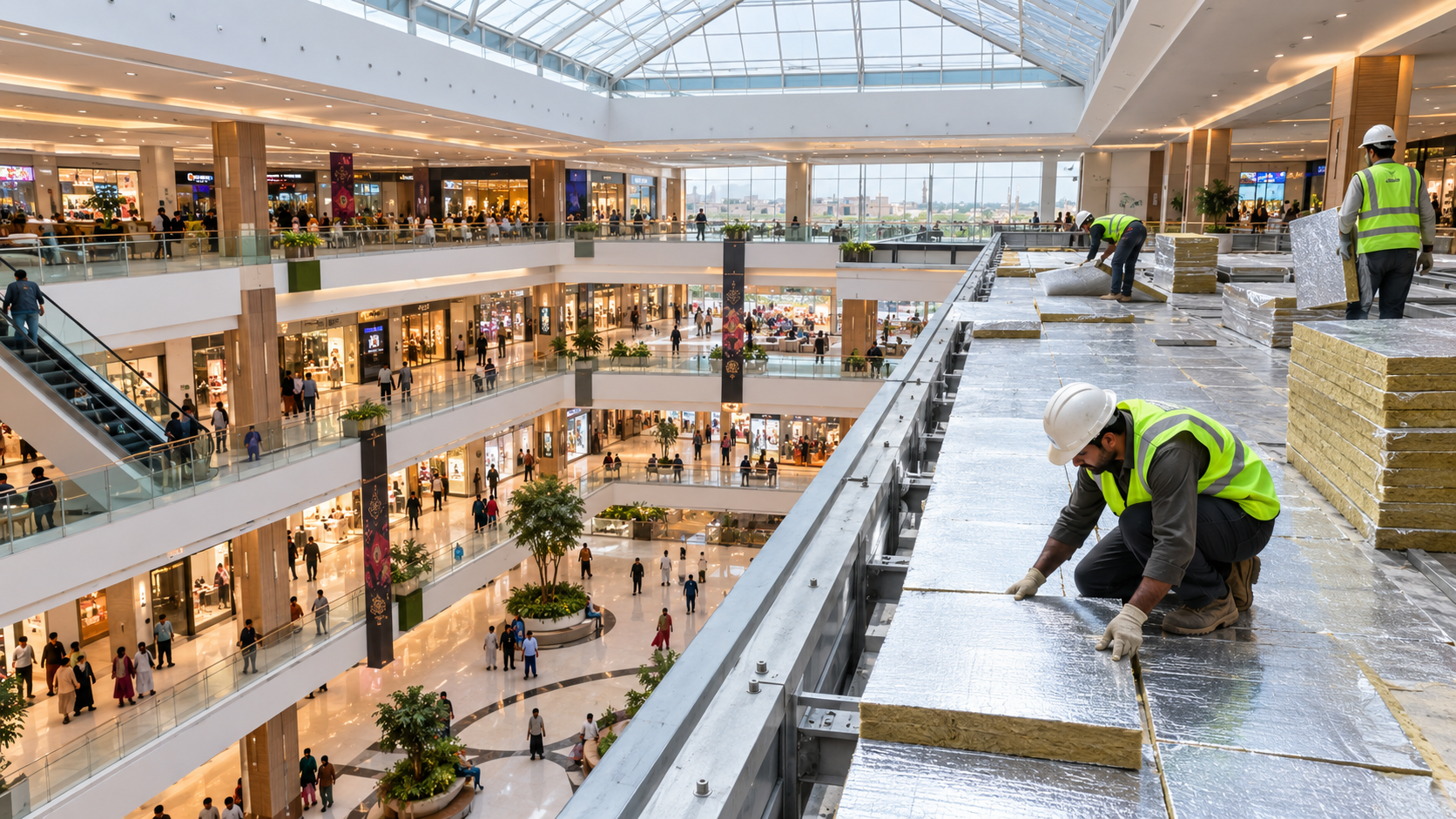
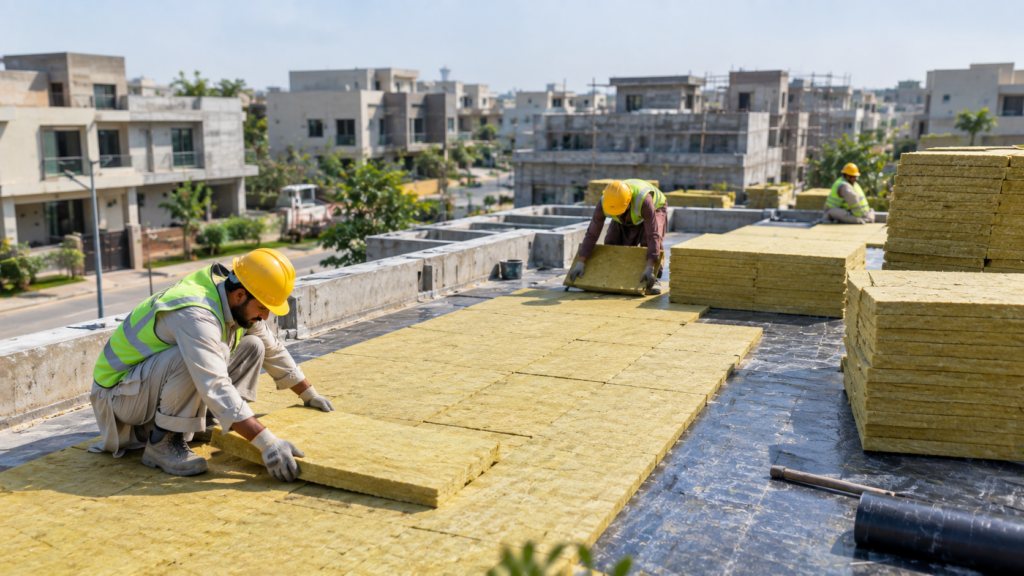
For a large-footprint retail building, roof insulation is where the biggest single decrease in cooling load comes from. Rigid insulation board or rockwool integrated into the roof build-up, beneath the waterproofing membrane or as part of a metal deck roofing system, significantly decreases the amount of heat radiating down into the sales floor below. On such a large building, the difference between an insulated and uninsulated roof becomes visible on the monthly electricity bill.
Wall & Facade Insulation: Best When Done at Design Stage
Wall insulation for a commercial structure offers a much more cost-effective return when specified before construction rather than retrofitted afterwards. A cavity wall system filled with rockwool or glass wool, or an external insulation and cladding system on solid block walls, significantly decreases heat gain through opaque wall sections. Where large glazing is unavoidable for storefront visibility, insulated wall sections elsewhere in the building help offset the load the glass itself is letting in.
Duct Insulation: An Overlooked Line Item
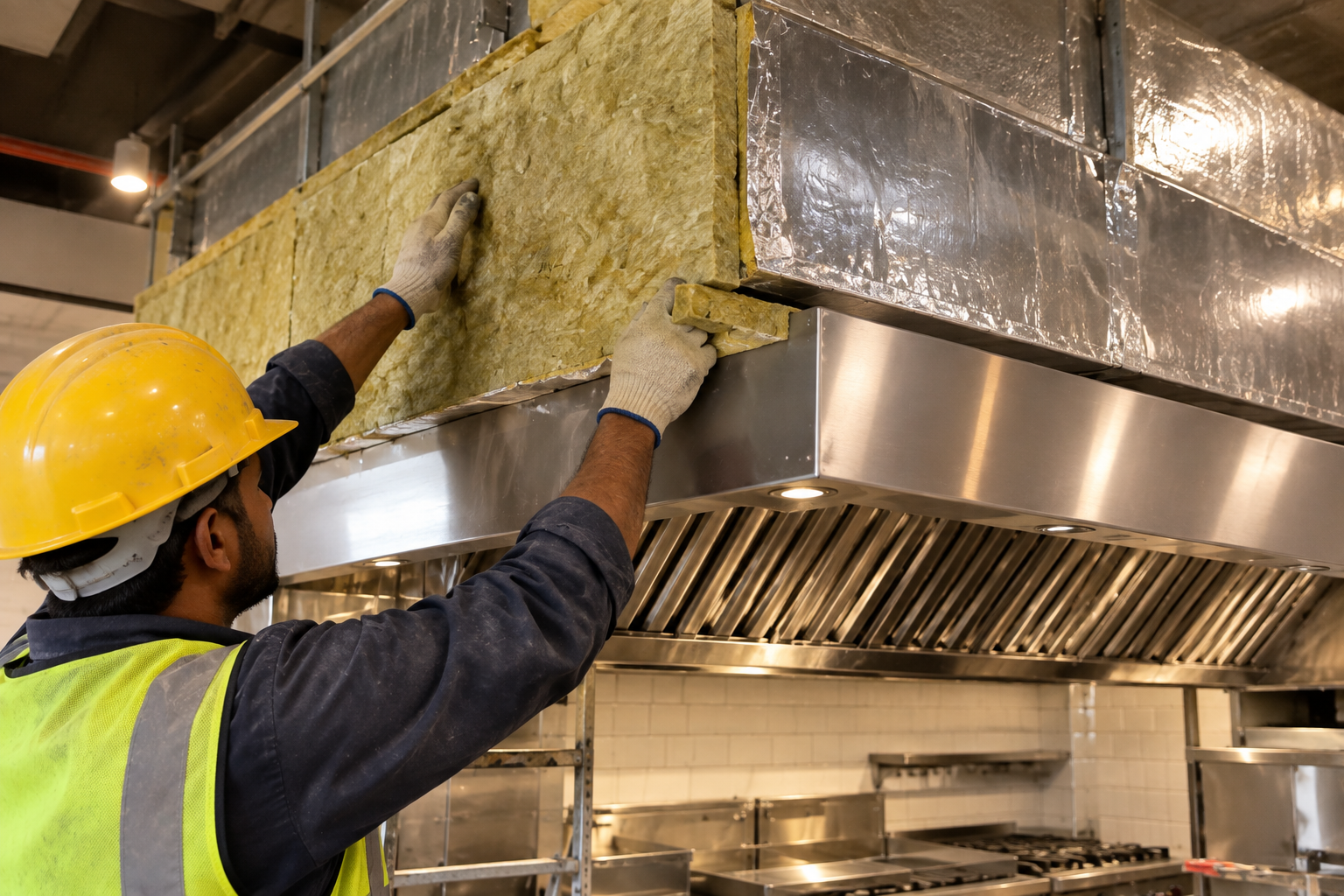
HVAC ducting running through non-conditioned spaces such as ceiling voids, service corridors and plant rooms, with duct insulation left out, loses a surprising amount of cooling capacity having to be made up by the chiller plant in order to achieve the same temperature at the sales floor. Wrapping supply ducts in glass wool or rockwool duct insulation, as a comparatively small cost against the overall HVAC budget, is a direct improvement to the efficiency of the system the building is paying for.
Acoustic Insulation for Malls & Retail Complexes
Malls and retail complexes are by nature noisy environments — food courts, cinemas, generator rooms and mechanical plant co-exist with anchor stores and quieter retail units. Rockwool’s acoustic performance makes it an excellent option for partition walls between noise-generating tenants (food courts, cinemas, gyms) and the rest of the building, as well as around plant rooms and generator enclosures where noise transmission is a common tenant complaint.
Rockwool vs. Glass Wool for Commercial Buildings
For general cavities and duct wrap, glass wool remains a solid budget option, with rockwool generally being the preferred option in a commercial setting where fire safety codes are stricter — around plant rooms, generator enclosures, fire-rated partition walls and escape routes — in addition to its acoustic performance in noise-sensitive zones such as food courts and cinemas.
Budgeting Insulation Into a Commercial Build
On a project the scale of a shopping mall or retail complex, insulation is a rounding error against the overall construction budget, yet has a direct effect on the ongoing cost of running the building for its entire operational life. Developers who consider insulation to be part of the mechanical and envelope budget, rather than an optional extra decided after the design is locked in, end up with lower HVAC costs and fewer tenant complaints once the building is operational.
The Most Common Mistakes
The most common mistakes on commercial projects are oversizing HVAC plant to compensate for a poorly insulated envelope rather than fixing the envelope itself, leaving duct insulation as an afterthought as budgets tighten towards the tail-end of construction, and only considering acoustic insulation after tenants start complaining about noise from neighbouring units.
Why This Matters as Pakistan’s Retail Sector Expands
New malls and retail complexes continue to open across Lahore, Karachi and Islamabad, and rising electricity tariffs mean the operating cost gap between a well-insulated and poorly-insulated commercial building will only widen over time. For developers, getting the envelope, roof and duct insulation right at design and construction stage is significantly cheaper, and far more effective, than retrofitting it once the mall is operational and leased out.
FAQs
Do shopping malls in Pakistan typically include insulation by default?
In many cases roof and duct insulation is included at a basic level, but envelope and acoustic insulation are frequently value-engineered out unless the developer specifically requests them.
What’s the single most cost-effective insulation upgrade for a mall?
Roof insulation, given the large surface area of a typical mall roof exposed to direct sun, followed closely by duct insulation which improves the efficiency of the HVAC system that’s already been paid for.
Should a mall use rockwool or glass wool?
Both have their place, with glass wool suitable for general cavities and duct wrap, with rockwool being preferred around plant rooms, generator enclosures, fire-rated walls and noise-sensitive tenant zones such as food courts and cinemas.
Does insulation actually reduce HVAC running costs in a commercial building?
Yes, with reduced heat gain through the roof, walls and ductwork meaning the chiller plant has to work less to maintain the same indoor temperature, visible on the electricity bill over the building’s operational life.
Is acoustic insulation necessary in a shopping mall?
It’s worth prioritising around food courts, cinemas, gyms and mechanical plant rooms where noise transmission to neighbouring retail units is a common source of tenant complaints.
Contact Pakistan Insulations today for a free consultation and quote.
Phone: +92-21-34529722
Email: [email protected]
Website: www.pakinsulation.com