Fire Safety Compliance for Pakistani Warehouses: Legal Requirements
Short answer: In Pakistan warehouses, provincial building codes, factory laws, and civil defense laws govern fire safety. Owners must have fire extinguishers, hydrants, and alarms; install emergency exits and keep evacuation routes clear; and pass inspections by the local fire and labor departments. Failure to comply may result in fines, closure of the warehouse, and imprisonment when a fire causes injury or death.
Warehouse fires are a common occurrence in Pakistan. They make the news every few months with warehouses full of textiles, chemicals, and packaging being torched with damages amounting to the millions. Even worse is that these fires result in injuries and deaths that safety systems could avoid.
The issue is that fire safety in Pakistan is spread out over multiple laws and regulations at the provincial level. Because of this, many warehouse owners are unaware of the legal requirements until an inspector shows up or an incident happens. This blog simplifies for you the requirements, the implicated agencies, and the measures needed to ensure your warehouse complies with the law and keeps your employees safe.
What Laws Apply to Fire Safety in a Warehouse in Pakistan?
Fire safety in warehouses is a combination of several legal systems that are intertwined. To determine which ones pertain to you, you must consider your location and the type of goods you are storing.
Key Legislations and Regulations
- Factories Act, 1934: Still active in a lot of Pakistan, this Act has basic requirements for industrial premises relating to firefighting equipment, fire exits, and escape routes. Section 33-C addresses firefighting specifically.
- Provincial Building Codes: After the 18th Amendment, labor and building regulations became provincial subjects. Punjab, Sindh, Khyber Pakhtunkhwa and Balochistan each have their own rules and amendments.
- Pakistan Building Code (Fire Safety Provisions) 2016: A national framework created by the Pakistan Engineering Council providing detailed fire safety provisions for buildings including warehouses.
- Civil Defence Regulations: Fire safety and certification inspections are usually handled by the local civil defense department.
Since regulations differ by province, always confirm specific requirements with the provincial labor department and local fire brigade.
What Is the Legal Requirement for Fire Safety Equipment in a Warehouse?
The law requires a multi-tiered approach to fire protection for warehouses. The specifics may differ based on the size of the warehouse and what is stored, but the bulk of the requirements remain the same.
Fire Hydrants and Extinguishers
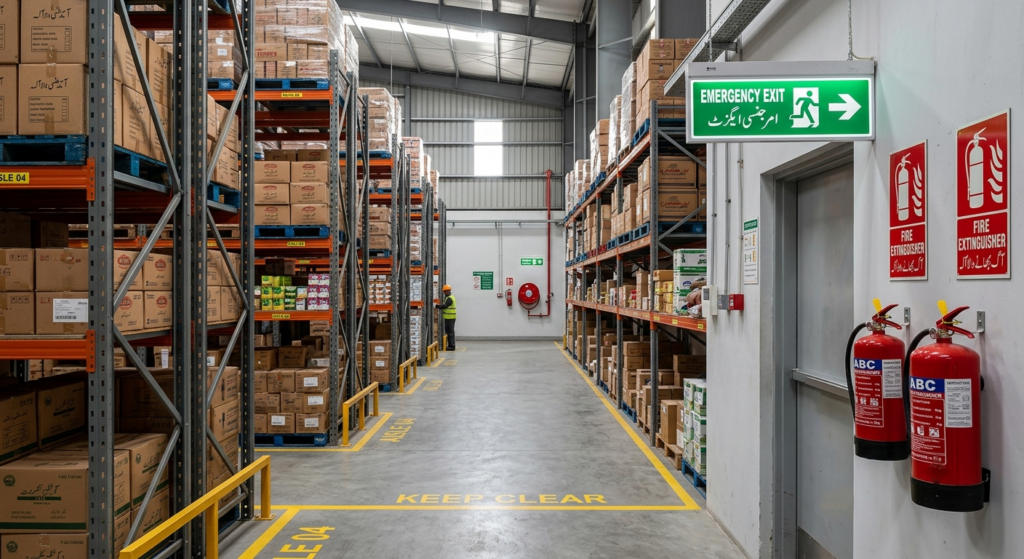
Fire extinguishers must be portable and provided at convenient locations throughout the warehouse. The type matters — water extinguishers for ordinary combustibles, CO2 for electrical fires, and dry powder for chemical fires. Fire hydrants with hose reels connected to a guaranteed water supply are usually required in larger warehouses.
Fire Alarms and Detection Systems
Storage spaces can become very large and allow fires to grow out of control without an automatic detection and alarm system. Many provincial building safety codes now require automatic detection and alarm systems for warehouses larger than a specified size.
Automatic Sprinkler Systems
Warehouses storing large quantities of combustible materials, packaging, and chemicals are almost always required to have automatic sprinkler systems. Sprinkler systems are one of the most effective ways to control the spread of a fire.
Emergency Exits and Signage
Emergency exits must be clearly marked and available for use during working hours. Evacuation route signage should be visible and preferably illuminated.
What Does Fire Safety Compliance Mean Day to Day?
Fire safety compliance is an ongoing requirement — not a one-time installation. Here’s what a compliant warehouse looks like in practice:
- Aisles and exits are not obstructed by stored goods.
- Fire safety systems are maintained — extinguishers are refilled and alarms are tested regularly.
- Staff are trained in fire safety and the use of fire extinguishers, with periodic fire drills conducted.
- A written and posted fire safety and evacuation plan is in place.
- Storage is maintained below safe limits with separation distances between stored goods.
Which Agencies Inspect Warehouses and Issue Compliance Certificates?
Depending on your province and city, various agencies may inspect your warehouse:
- The local fire brigade or rescue service (e.g., Punjab’s Rescue 1122), which may issue a No Objection Certificate (NOC) after evaluating firefighting readiness.
- The Civil Defence department, which issues some fire safety certifications.
- The provincial labor and factories department, which administers the Factories Act and conducts safety inspections.
- The relevant development authority or municipal body, which grants building plan and occupancy approvals.
Most warehouse operators must obtain a fire safety NOC to legally operate. The certificate confirms that the required standards are met.
What Happens When Warehouse Operators Fail to Comply?
The law considers failure to comply with fire safety regulations a serious issue. Penalties include:
- Fines under the Factories Act and provincial regulations.
- Premises sealed until compliance is achieved.
- Suspension or non-renewal of operating license.
- Criminal liability for negligence if there are injuries or fatalities due to a fire.
Aside from the legal implications, the costs of a warehouse fire — lost inventory, damaged assets, halted operations, insurance complications — far exceed the costs of compliance.
How Should Warehouse Operators Maintain Compliance?
- Obtain a fire safety audit and report.
- Use licensed vendors to install and update fire safety equipment.
- Obtain your fire safety NOC from the local fire department.
- Train your staff and conduct regular fire drills.
- Maintain records and schedules for upcoming inspections and equipment renewals.
Frequently Asked Questions
Are Small Warehouse Facilities in Pakistan Required to Obtain a Fire Safety NOC?
In most cases, yes. Requirements vary with building size, but small warehouses deemed commercial will most likely need a fire safety NOC from local authorities. Always check with your local authorities as requirements do vary.
What Are the Fire Safety Compliance Costs for Warehouses?
Costs are highly variable depending on the size of your facility and what systems you currently have in place. However, the cost of compliance is always less than the cost of fire damage or a safety violation.
How Frequently Must Warehouses Undergo Fire Safety Inspections?
Fire extinguishers require servicing approximately once a year. Alarms need to be tested more frequently. Official NOC renewals are most often on annual cycles, but this is governed by your province and local authorities.
Which Authorities Issue Fire Safety Certificates in Pakistan?
It varies by region. In Punjab, Rescue 1122 and Civil Defence are common. In Sindh and other provinces, the local fire brigade, civil defense, and the labor department handle fire safety certification and inspections.
What Causes Warehouse Fires in Pakistan?
Electrical faults, poor storage of flammable materials, obstructed ventilation, and poor maintenance are the most common causes — most of which are preventable with proper safety systems, correct storage practices, and regular inspections.
📞 +92-21-34529722
✉ [email protected]
🌐 www.pakinsulation.com